



Last updated: October 1, 2026
Travelers ask this question all the time: should I visit the Smoky Mountains or the Blue Ridge Mountains? The two places sit close together on the map, and both promise misty ridges and mountain views.
But they give you very different trips.
Here is the short answer. The Great Smoky Mountains are a national park. You go there to hike, watch wildlife, and explore historic valleys.
The Blue Ridge Parkway is a 469-mile scenic road. You go there to drive, stop at overlooks, and take short hikes along the way.
Here is the twist most people miss: the Smoky Mountains are actually part of the Blue Ridge Mountains. The Blue Ridge is the whole mountain range.
The Smokies are one section of it, protected as a national park. The parkway is a road that runs along the range.
So you are not really picking between two mountain ranges. You are picking between a national park trip and a scenic road trip.
Smoky Mountains vs Blue Ridge Mountains at a Glance
- Pick the Smokies if you want big hikes, black bears and elk, historic sites like Cades Cove, and a classic national park trip.
- Pick the Blue Ridge Parkway if you want a relaxed driving trip with an overlook every few miles, short waterfall hikes, and small mountain towns.
- Cost: both are free to enter, but the Smokies require a parking tag ($5 a day) and the parkway is completely free.
- Crowds: the Smokies are the most visited national park in America, with about 11.5 million visits in 2025. The parkway spreads people out over 469 miles.
- Best move: visit both. The parkway ends right at the Smokies, so many travelers combine them in one trip.
| Feature | Great Smoky Mountains | Blue Ridge Parkway |
|---|---|---|
| What it is | National park (522,000 acres) | 469-mile scenic drive |
| Location | Tennessee and North Carolina | Virginia and North Carolina |
| Entry cost | Free, but parking tag required ($5/day) | Free, no tag or fee |
| Highest point | Kuwohi, 6,643 feet | Richland Balsam, 6,047 feet |
| Best for | Hiking, wildlife, history | Driving, overlooks, short hikes |
| Crowds | Very busy, especially Cades Cove | Busy in October, calm otherwise |
| Dogs | Only two trails allow dogs | Leashed dogs welcome on trails |
| Gateway towns | Gatlinburg, Pigeon Forge, Cherokee | Asheville, Blowing Rock, Roanoke |
The Key Difference: National Park vs Scenic Road
The Great Smoky Mountains National Park covers more than 522,000 acres across Tennessee and North Carolina. Congress established it in 1934.
It protects ancient forest, historic farmsteads, and some of the most diverse wildlife in North America.
You enter through gateway towns like Gatlinburg, Pigeon Forge, or Cherokee, then explore by car, on foot, or at historic sites.
The Blue Ridge Parkway is a different kind of destination. It is a road, not a park you enter.
The 469-mile route connects Shenandoah National Park in Virginia to the Smokies in North Carolina.
You drive it in sections, stopping at overlooks, visitor centers, and trailheads. There are no entrance stations and no fees.
For a full route plan, see our Blue Ridge Parkway road trip guide.
Think of it this way. The Smokies are a place you go into. The parkway is a road you travel along. Many travelers do both, because the parkway literally ends at the edge of the national park.
Location and How They Connect
The Smokies sit on the Tennessee-North Carolina border, about 50 miles west of Asheville. The three main entrances are Gatlinburg and Townsend in Tennessee and Cherokee in North Carolina.
The Blue Ridge Parkway runs from Virginia down through North Carolina. Its southern end, milepost 469, meets US-441 near Cherokee, right at the Smokies boundary. Newfound Gap Road (US-441) then crosses the national park between Cherokee and Gatlinburg.
This connection makes a combined trip easy. You can drive the parkway south, finish at Cherokee, and roll straight into the Smokies.
Or you can base yourself in Asheville, drive parkway sections by day, and visit the Smokies on a separate day. The drive from Asheville to the Cherokee entrance takes about an hour.
Scenery and Views
Both places serve the classic layered-ridge look, but the experience differs.
In the Smokies, the famous “smoke” is real. It is water vapor rising from the dense forest, and it hangs over the ridges most mornings.
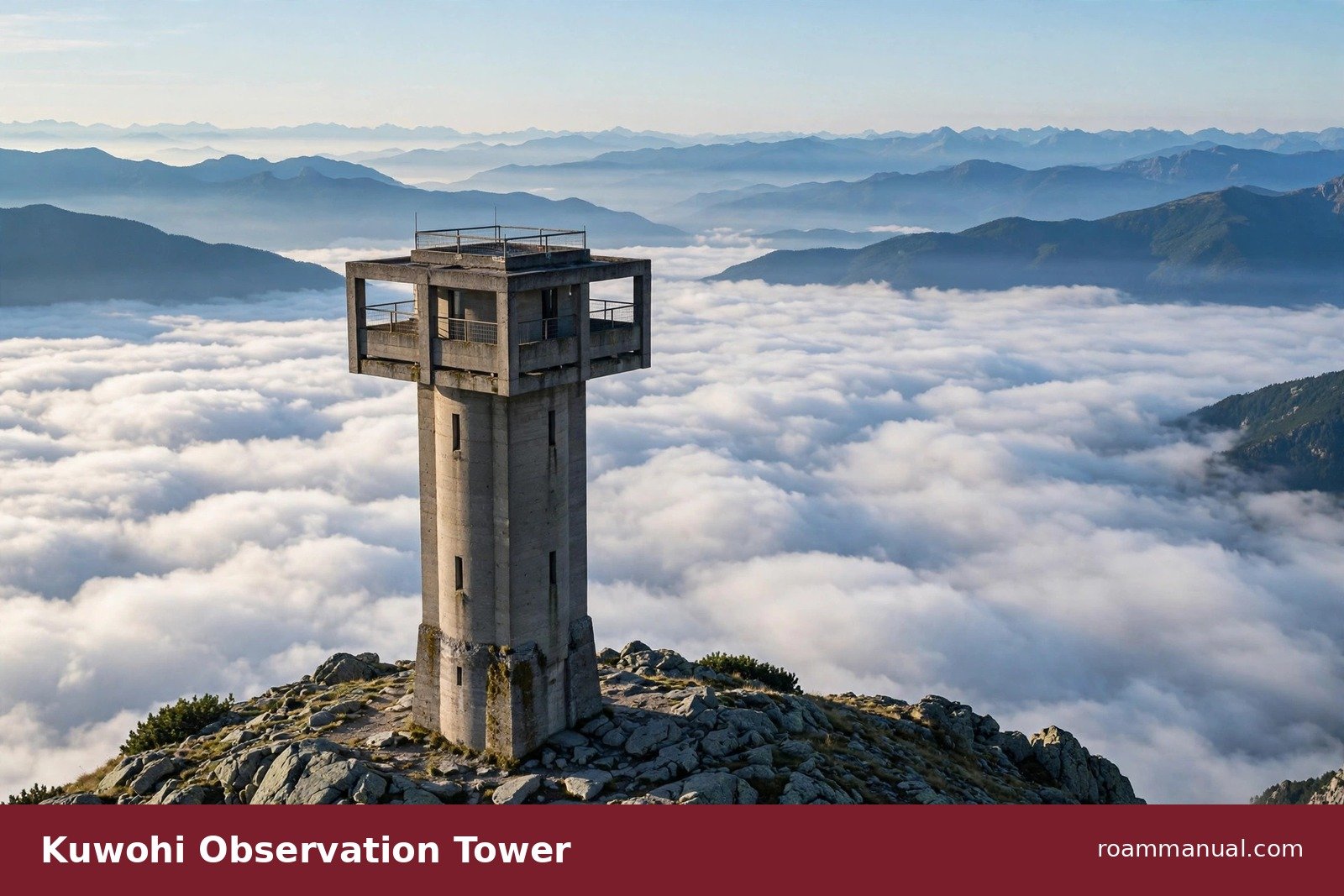
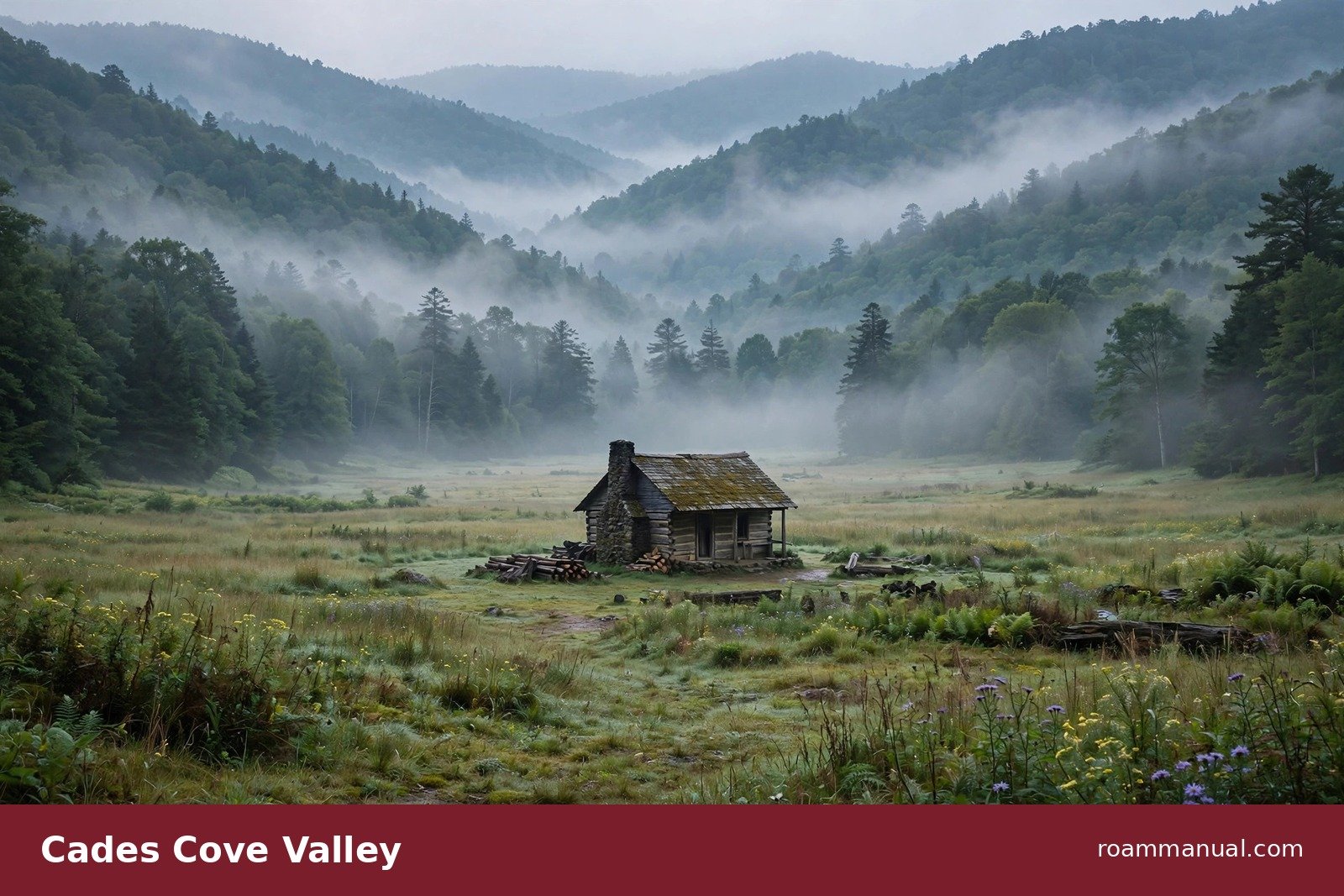
The best wide views come from high points like Kuwohi (6,643 feet), the highest peak in Tennessee, and from open valleys like Cades Cove, where meadows sit ringed by mountains.
Note that the peak was officially renamed from Clingmans Dome to Kuwohi in 2024, restoring its Cherokee name, which means “mulberry place.”
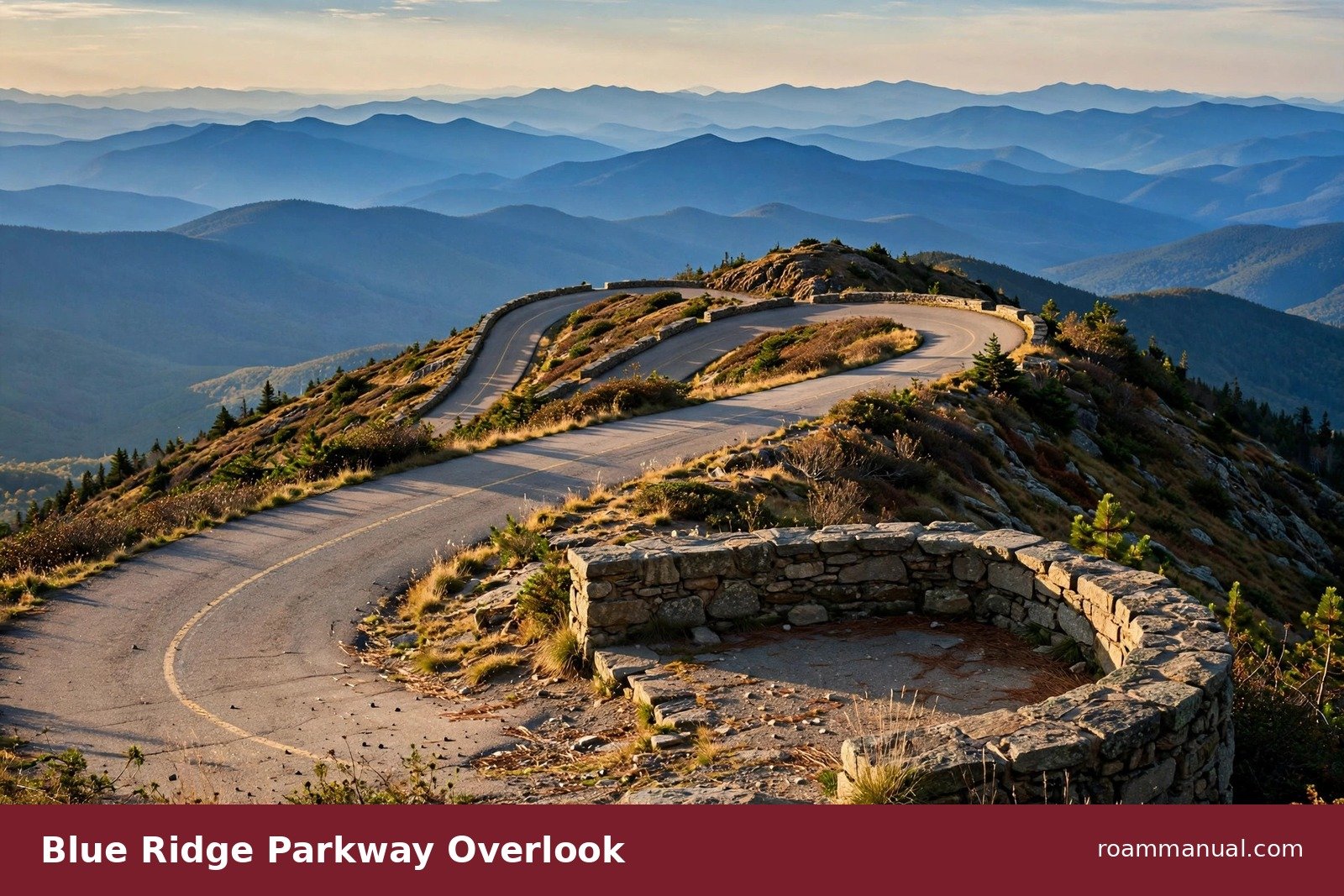
On the parkway, the views come to you. The road was designed for sightseeing, with more than 200 overlooks along its length. You pull over, step out, and the vista is right there.
Highlights include:
- The Linn Cove Viaduct at milepost 304.4
- The long views from Craggy Gardens
- The high-elevation stretch near Mount Mitchell, the tallest peak east of the Mississippi
If you want maximum views with minimum effort, the parkway wins. If you want deep forest scenery and mountain valleys, the Smokies win.
Hiking: Big Trails vs Short Walks
This is where the two trips split most clearly.
The Smokies offer more than 800 miles of hiking trails. You can walk to waterfalls, climb to fire towers, and hike a section of the Appalachian Trail, which crosses the park.
Popular hikes include:
- The Alum Cave Trail toward Mount LeConte
- The walk to Kuwohi’s observation tower
- The 8-mile round trip to Ramsey Cascades, the tallest waterfall in the park
Serious hikers can spend a week here and never repeat a trail.
The parkway is built for shorter outings. Most hikes near the road run 1 to 3 miles round trip.
You can reach these spots without a full day of walking:
- Linville Falls (milepost 316.4)
- Crabtree Falls in North Carolina (milepost 339.5)
- The boardwalk views at Rough Ridge
For the full list, see our Blue Ridge Parkway waterfalls guide.
Hiking Takeaway
- Serious hikers: choose the Smokies for long trails and backcountry options.
- Casual walkers: choose the parkway for short hikes with big payoffs.
- Families with small kids: the parkway’s easy overlooks and short trails are simpler to manage.
Waterfalls
Both destinations have waterfalls, but the parkway makes them easier to reach.
Along the parkway, ten notable falls sit on or near the road:
- Linville Falls drops through a rugged gorge.
- Crabtree Falls slides 60 feet over mossy rock.
- Graveyard Fields has two falls within a short walk of the parking area.
Most need only a short hike, and a few are visible from overlooks.
In the Smokies, waterfalls tend to hide deeper in the forest:
- Ramsey Cascades, the park’s tallest, needs an 8-mile round-trip hike.
- Grotto Falls and Laurel Falls are shorter walks and popular with families.
- Abrams Falls in Cades Cove is a moderate 5-mile round trip.
The reward is real, but you work harder for it.
Wildlife
The Smokies are one of the best places in the eastern United States to see wild animals. About 1,900 black bears live in the park, one of the highest densities in the East.
Elk returned to the park in 2001 and now graze in the fields at Oconaluftee and Cataloochee, especially at dawn and dusk.
White-tailed deer, wild turkeys, and synchronous fireflies in June add to the show.
Cades Cove is the top wildlife spot. The 11-mile one-way loop passes open meadows where bears, deer, and turkeys feed.
Go early in the morning for the best chance of sightings, and expect slow traffic when a bear appears near the road.
The parkway has wildlife too, but it is a roadside experience. You may see deer at overlooks, hawks riding thermals, and wildflowers in spring.
It is pleasant, but it is not a wildlife destination the way the Smokies are.
Crowds and Best Time to Visit
The Smokies are the most visited national park in America, with about 11.5 million recreation visits in 2025. Summer and October bring the biggest crowds.
Cades Cove loop can take 2 to 4 hours on a busy day, and parking at popular trailheads fills by mid-morning.
The park stays open year-round, but some roads close in winter.
The parkway handles crowds differently. Traffic spreads across 469 miles, so it rarely feels packed except at famous overlooks in October.
Sections of the road close in winter, especially at high elevations, and the park service posts closures on its conditions page. Spring brings wildflowers with light traffic, and early fall offers color without peak-weekend pressure.
For fewer people in both places, visit on weekdays and arrive before 9 a.m. Late April through May and September are sweet spots for mild weather and thinner crowds.
Cost Comparison
Neither place charges an entrance fee, which is rare for destinations this popular.
In the Smokies, you need a parking tag if you park anywhere in the park for more than 15 minutes.
Tags cost:
- $5 a day
- $15 a week
- $40 a year
You can buy them online in advance or at visitor centers. There is no entrance fee and no timed-entry reservation.
The Blue Ridge Parkway is completely free. No tag, no fee, no reservation. You pay only for gas, food, and lodging.
Lodging costs differ by gateway town. Gatlinburg and Pigeon Forge have hundreds of cabins and hotels at many price levels, but peak weekends sell out early.
Asheville and Blowing Rock serve the parkway with boutique hotels and rentals that also book fast in October. In both areas, midweek stays cost less.
Cost Takeaway
- Cheapest trip: the parkway, with zero fees and free overlooks all day.
- Smokies budget: add $5 a day for the parking tag, plus higher lodging demand near Gatlinburg.
- Save money: travel midweek, book lodging early, and pack picnic lunches for both trips.
Fall Colors
Both places rank among the best fall color destinations in the East, and they peak at slightly different times.
In the Smokies, color starts at high elevations in late September and works down to the valleys by late October into early November. Kuwohi and Newfound Gap turn first. Cades Cove and the lower valleys finish the season.
On the parkway, the high country near Grandfather Mountain and Craggy Gardens usually peaks in mid-October. Lower sections follow in late October. Our Blue Ridge Parkway fall colors guide breaks down the timing by milepost.
If you visit in mid-October, you can catch peak color in both places in one trip. Base in Asheville, drive the parkway’s high sections, then cross into the Smokies for the valleys.
Where to Stay
For the Smokies, most visitors stay in Gatlinburg or Pigeon Forge on the Tennessee side.
Gatlinburg sits right at the park entrance with walkable streets. Pigeon Forge is larger, with more hotels, dinner shows, and family attractions.
On the North Carolina side, Cherokee is quieter and close to Oconaluftee’s elk fields. Bryson City is another calm base.
For the parkway, Asheville is the most popular base, with the most lodging and food options near the southern half.
Blowing Rock and Boone serve the northern North Carolina sections. Roanoke works for the Virginia end.
Parkway lodging inside the corridor is limited to a few historic lodges, so most travelers stay in towns and drive in each day.
Can You Visit Both in One Trip?
Yes, and many travelers do. The two connect at Cherokee, where the parkway’s southern end meets the national park. A simple 5-day plan looks like this:
- Days 1 to 2: Drive the southern parkway sections from Asheville. Stop at Craggy Gardens, Mount Mitchell, Linville Falls, and Crabtree Falls.
- Day 3: Finish the parkway at Cherokee. Watch for elk at Oconaluftee in the evening.
- Day 4: Cross Newfound Gap Road into the Smokies. Hike to Kuwohi or a waterfall trail.
- Day 5: Drive the Cades Cove loop early, then exit through Townsend or Gatlinburg.
This combo gives you the parkway’s easy views and the Smokies’ deep trails in a single week. If you have only a long weekend, pick one. If you have five days or more, do both.
Smoky Mountains vs Blue Ridge Mountains: FAQs
Are the Smoky Mountains part of the Blue Ridge Mountains?
Yes. The Great Smoky Mountains are a subrange of the Blue Ridge Mountains, which are part of the Appalachian Mountains. When people say “Smoky Mountains vs Blue Ridge Mountains,” they usually mean the national park versus the Blue Ridge Parkway.
Which is better for a first visit?
First-time visitors who love hiking and wildlife usually pick the Smokies. Travelers who want a relaxed trip with constant views usually pick the parkway. If you have five or more days, visit both.
How far apart are they?
They touch each other. The Blue Ridge Parkway ends at milepost 469 near Cherokee, North Carolina, right at the Smokies boundary. From Asheville, the Cherokee entrance to the Smokies is about an hour’s drive.
Is there an entrance fee for either?
No. Both are free to enter. The parkway has no fees at all.
The Smokies require a parking tag if you park for more than 15 minutes:
- $5 a day
- $15 a week
- $40 a year
Which has better fall colors?
Both are excellent. The parkway’s high sections usually peak in mid-October, while the Smokies’ valleys peak from late October into early November. A mid-October trip can catch color in both.
Can I bring my dog?
The parkway is the better choice for dog owners. Leashed dogs are welcome on parkway trails. In the Smokies, dogs are allowed only on two trails: the Gatlinburg Trail and the Oconaluftee River Trail.
Which is more crowded?
The Smokies see far more concentrated crowds, with about 11.5 million visits in 2025. Cades Cove and popular trailheads fill early. The parkway spreads visitors over 469 miles, so it feels calmer outside October weekends.
How many days do I need?
Plan 2 to 3 days for the Smokies and 2 to 3 days for the main parkway sections. A combined trip needs at least 5 days to avoid rushing.
The Smoky Mountains and the Blue Ridge Parkway are neighbors, not rivals. The Smokies give you deep forest trails, wildlife, and history.
The parkway gives you one of the most beautiful drives in America, with a waterfall or overlook waiting around every bend. Pick the trip that matches your travel style, or take five days and enjoy both.
