


Charleston packs 350 years of history into one small, walkable peninsula. Grand houses, church steeples, harbor forts, and oak shaded parks all sit within a few blocks of each other.
This guide covers the best things to do in Charleston, SC, with prices and hours checked for 2026. It runs from free walks to big ticket tours.
Short on time? Start with the Battery, Rainbow Row, and the City Market. Add Fort Sumter and one plantation, and you have the classic Charleston trip. Our Charleston trip planning guide covers getting here and getting around.
Charleston at a Glance
- Top sights: The Battery, Rainbow Row, Fort Sumter, Charleston City Market
- Best freebies: The Battery, Rainbow Row, Waterfront Park, King Street window shopping
- Time needed: Two to three days for the highlights, four to five with a plantation and beach day
- Getting around: Walk the peninsula, ride the free DASH shuttle, drive to plantations and beaches
- Big ticket items: Fort Sumter ferry ($43), plantations ($20 to $35), carriage rides (about $50)
Start at The Battery and White Point Garden
The Battery is Charleston’s famous waterfront promenade, a raised seawall walkway along East Battery Street and Murray Boulevard. Mansions line one side, and the harbor spreads out on the other.
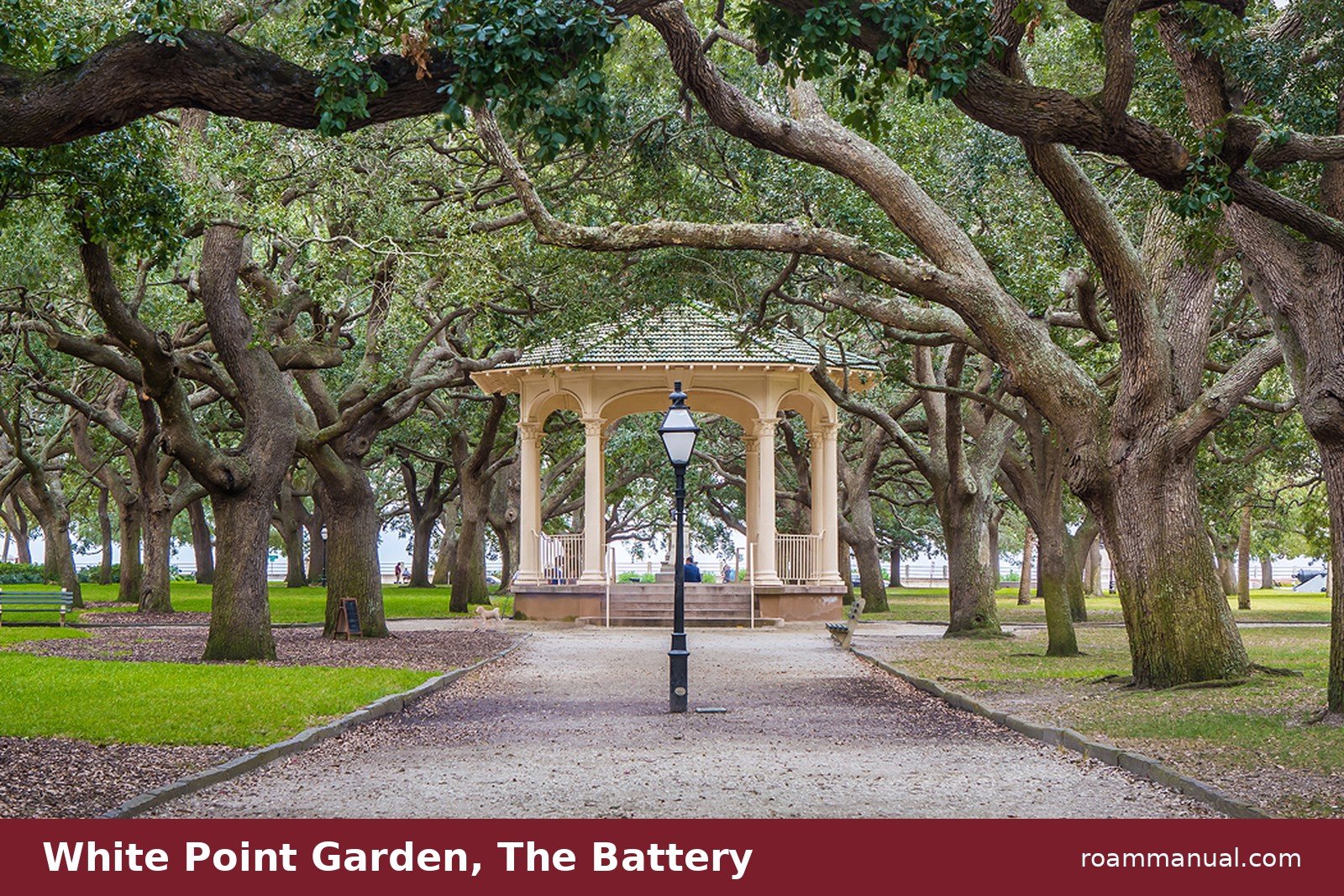
At the tip of the peninsula sits White Point Garden, a shady park under huge live oaks. Old cannons and monuments dot the lawns, and markers recall the pirates hanged near this shore in the early 1700s.
The walk from the garden along the seawall gives you the city’s best free view:
- East Battery mansions: Some of the grandest homes in the South face the water here
- Harbor views: You can spot Fort Sumter sitting low in the harbor entrance
- Edmondston-Alston House: A house museum right on the promenade, at 21 East Battery Street
The Battery pairs naturally with Rainbow Row, just a few blocks north.
Photograph Rainbow Row
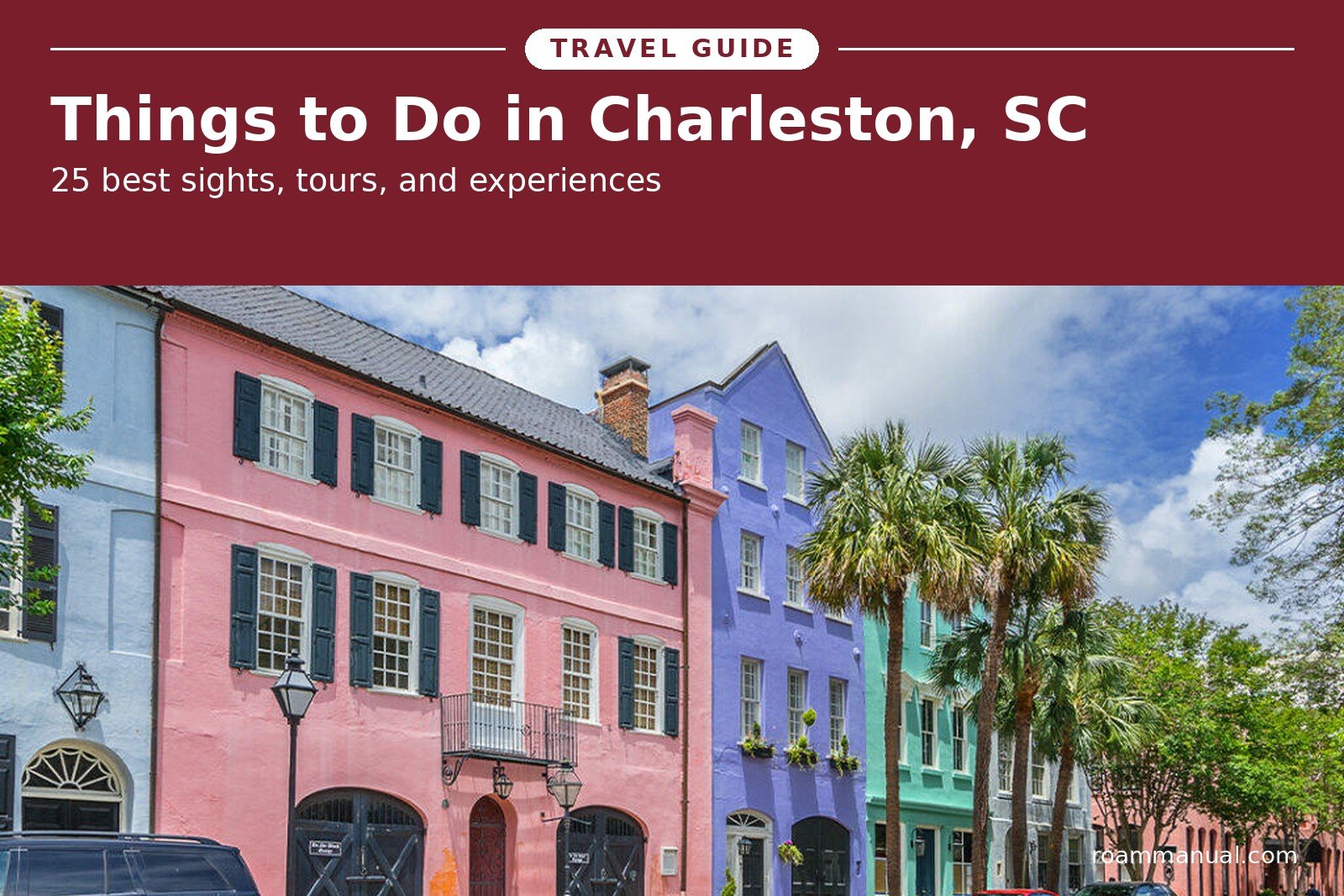
Rainbow Row is a stretch of 13 Georgian row houses on East Bay Street, painted in soft pastel shades. It is the most photographed block in Charleston, and it takes about ten minutes to enjoy.
The houses went up in the 1700s as homes and ground floor shops for merchants. They fell into disrepair by the early 1900s, then preservationists bought and restored them in the 1930s and 1940s.
A few things to know before you go:
- They are private homes: Admire and photograph from the sidewalk only
- Best light: Morning sun hits the pastel facades directly
- Start point: The row begins just south of Broad Street, near The Battery
- Cost: Free, since it is a normal city street
From Rainbow Row, keep walking north on East Bay Street. You will pass the Old Exchange and Provost Dungeon, then reach Waterfront Park in about five minutes.
Relax at Waterfront Park and the Pineapple Fountain
Waterfront Park covers eight acres along the Cooper River. Before 1990 this was a fire damaged shipping area. The city rebuilt it as a public park, and it opened in 1990.
The Pineapple Fountain anchors the park. The pineapple has symbolized hospitality since colonial days, and kids splash in the fountain’s shallow basin all summer.
Ways to enjoy the park:
- The pier: A wooden pier juts into the harbor, with swinging benches under a covered section
- The lawns: Wide grassy areas under palmetto trees, made for a slow picnic
- The view: Watch cargo ships and sailboats move through the harbor
The park is free and open around the clock, a handy rest stop between the City Market and The Battery.
Browse the Charleston City Market
The Charleston City Market runs four city blocks, from Meeting Street to East Bay Street, with its main entrance at 188 Meeting Street. Vendors fill open air sheds that date to the early 1800s.
Some 300 vendors sell art, jewelry, clothing, food, and souvenirs here. The market opens daily, 9:30 a.m. to 5:30 p.m., with a Night Market on Friday and Saturday evenings in season.
Look for these Charleston specialties:
- Sweetgrass baskets: Gullah artisans weave them on site, a craft passed down for more than 300 years
- Benne wafers: Thin sesame cookies that have been a local staple since the colonial era
- Local art and prints: Many stalls sell work by Lowcountry artists
- Spices and grits: Stone ground grits and Lowcountry seasoning blends travel well
One myth to drop: enslaved people were never sold at this market. It began as a public market for meat, fish, and produce.
Shop and Stroll King Street
King Street is Charleston’s main commercial street, and locals divide it into three stretches. Each has its own flavor, so you can shop by mood.
- Lower King: The Antique District, full of furniture, silver, and estate jewelry shops
- Middle King: The Fashion District, with national brands and local boutiques
- Upper King: The Design and Dining District, packed with restaurants, bars, and home stores
On the second Sunday of each month, part of King Street closes to cars for Second Sunday on King. Restaurants set out tables, musicians play, and shoppers take over the road.
Upper King stays lively late, too, with cocktail bars and restaurants within a few walkable blocks.
Ride the Ferry to Fort Sumter
Fort Sumter sits on an island in the harbor, where Confederate guns fired the first shots of the Civil War on April 12, 1861. The National Park Service runs the fort, and a ferry is the only way to reach it.
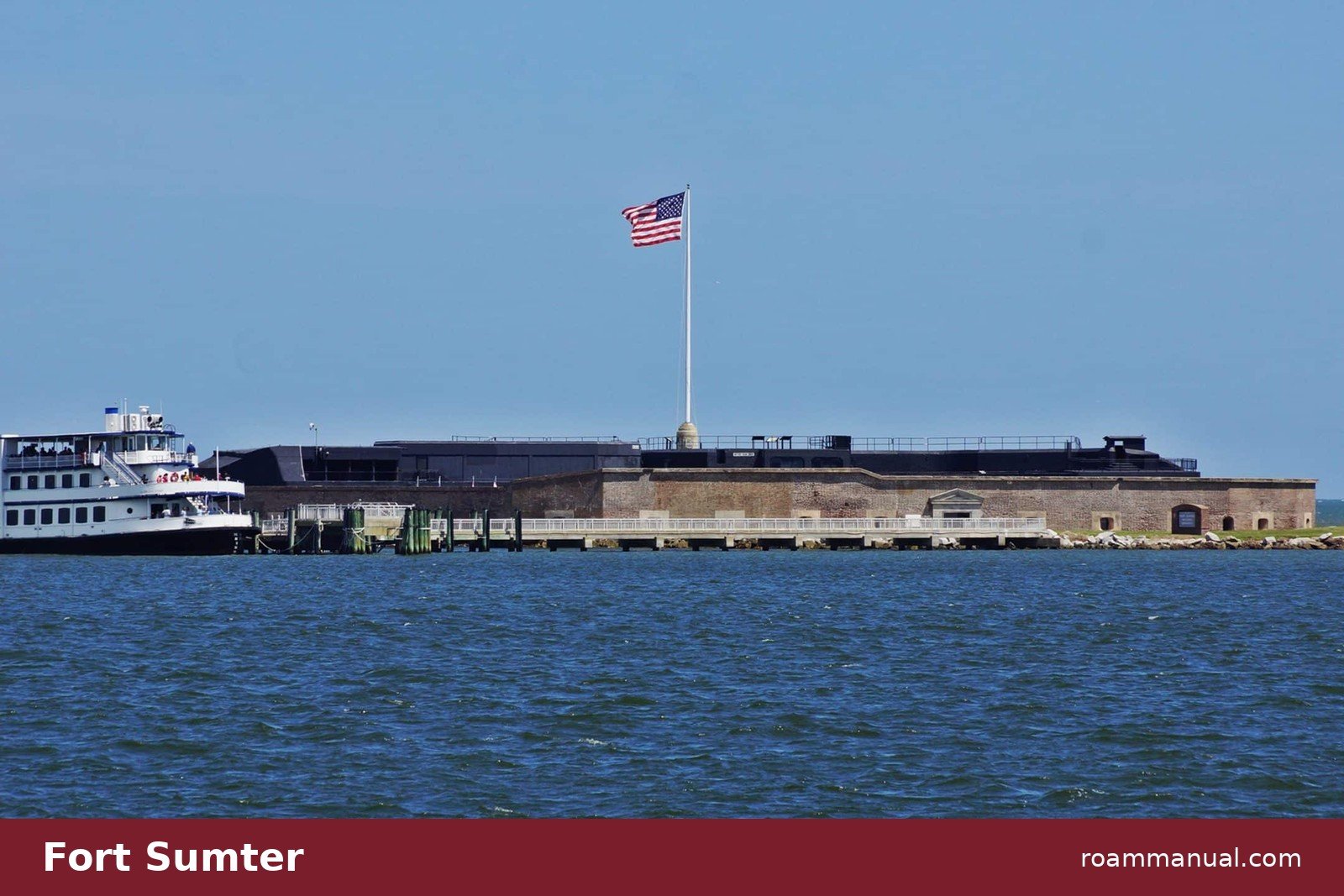
Fort Sumter Tours runs the boats from two points. Most visitors leave from Liberty Square at 340 Concord Street, next to the South Carolina Aquarium.
What the trip looks like:
- Ticket prices: $43 for adults, $39 for seniors and military, $26 for children ages 4 to 11, free under age 4
- Departure times: Boats leave Liberty Square at 9:30 a.m., 12:00 p.m., and 2:45 p.m. through most of the year
- The ride: About 30 minutes each way, with harbor views and often dolphins
- Time at the fort: Roughly one hour, with ranger talks and a small museum
- Total time: Plan on about two and a quarter hours, door to door
The ferry ticket is the only cost. It covers the boat ride and fort admission together. Book online ahead in spring and summer, because the midday boats sell out.
Boats also leave from Patriots Point in Mount Pleasant. That departure pairs well with a visit to the USS Yorktown, covered below.
Tour a Historic House Museum
Charleston’s house museums show how the city’s wealthy families lived, and how enslaved people made that life possible. Two stand out, and a combo ticket covers both.
Nathaniel Russell House, 51 Meeting Street. Built in 1808 for a rich merchant, this house is famous for its free flying staircase, which spirals up three stories with no visible supports. Restored rooms show fine early American furniture and decorative arts.
Aiken-Rhett House, 48 Elizabeth Street. Built around 1820 and held by one family for 142 years, this house was preserved rather than restored. Original wallpaper, paint, and furnishings survive, and the outbuildings include the original slave quarters and kitchen.
Good to know before you go:
- Admission: $16 per house for adults, or $24 for the two house combo ticket
- Hours: Tuesday to Sunday, 10 a.m. to 5 p.m., with last admission at 4 p.m.; Mondays from 1 p.m.
- Tour style: Self paced audio tours through a free app, plus guided tours at set times
- Time needed: About 45 minutes to an hour per house
The Charleston Museum runs two more houses, the Heyward-Washington House and the Joseph Manigault House, and its combo tickets can bundle them with the museum itself.
Learn the Hard History at the Old Slave Mart Museum
The Old Slave Mart Museum at 6 Chalmers Street occupies a building where enslaved people were once auctioned. It may be the most important stop in Charleston.
Exhibits trace the city’s central role in the domestic slave trade. An estimated 35 to 40 percent of enslaved Africans who arrived in North America came through Charleston’s port.
The museum is small and reading heavy, with personal accounts, artifacts, and a recorded interview with a formerly enslaved man. Most visitors spend about an hour inside.
- Hours: Monday to Saturday, 9 a.m. to 5 p.m.
- Admission: $8 for adults
- Note: Photography is not allowed inside, and young children may find the subject matter heavy
Pair this visit with the Aiken-Rhett House the same day. Together they tell the full story of the city’s grand homes, from both sides of the walls.
Spend Time in Charleston’s Museums
Two museums anchor Museum Mile on Meeting Street. Either one fills a rainy afternoon, and both sit a short walk apart.
The Charleston Museum, 360 Meeting Street. Founded in 1773, it is often called America’s first museum. Galleries cover Lowcountry natural history, Revolutionary and Civil War arms, historic silver, and textiles, plus a hands on KidStory area for children.
- Hours: Monday to Saturday, 9 a.m. to 5 p.m.; Sunday, noon to 5 p.m.
- Admission: $15 for adults; $22 covers two of its sites, and $30 covers all three
- The three sites: The museum plus the Heyward-Washington House and Joseph Manigault House
- Time needed: About two hours for the main building
Gibbes Museum of Art, 135 Meeting Street. The Gibbes, Charleston’s only art museum, fills a 1905 Beaux-Arts building with a Tiffany style dome. Its 10,000 plus works focus on American art with a Southern connection.
- Hours: Monday to Saturday, 10 a.m. to 5 p.m., with Wednesday hours until 8 p.m.; Sunday, 1 to 5 p.m.
- Admission: $12 for adults, and the first floor is always free
- Do not miss: The portrait miniature collection, one of the finest in the country
Take a Carriage Tour
Horse drawn carriages have clip clopped through the Historic District for decades. A one hour ride covers about 30 blocks, with a licensed guide narrating the houses, churches, and gardens you pass.
Charleston runs its carriage system unlike anywhere else. When your carriage reaches the City Market gate, the city assigns your route by lottery. Neither you nor your guide chooses it.
The main operators board near the City Market:
- Palmetto Carriage Works: Boards at the Big Red Barn on Guignard Street
- Old South Carriage Company: Boards on Anson Street, a block from the market
- Price: Expect about $45 to $50 per adult for a public one hour tour
- Private carriages: Smaller carriages for four cost more, and suit couples well
Ride early in your trip. The tour gives you a mental map of the peninsula, and you will know which streets to revisit on foot.
Join a Ghost Tour After Dark
Charleston claims some of the oldest ghost stories in the South. Plague, war, pirates, and duels gave tour guides plenty of material, and evening tours lean into all of it.
You have two main formats:
- Walking ghost tours: Guides lead groups past graveyards, alleys, and the Old Exchange and Provost Dungeon, which held pirates and patriots
- Haunted carriage rides: About 40 to 45 minutes through the old walled city, at roughly $45 to $55 per adult
Bulldog Tours is the best known local operator. It also runs the only nighttime ghost tour aboard the USS Yorktown, with exclusive after hours access to parts of the ship.
Ghost tours stay history forward rather than gory, so school age kids usually handle them fine.
Visit a Plantation
The great plantations sit about 20 to 30 minutes from downtown, along the Ashley River and in Mount Pleasant. Each tells a different story, so pick by interest, and allow half a day.
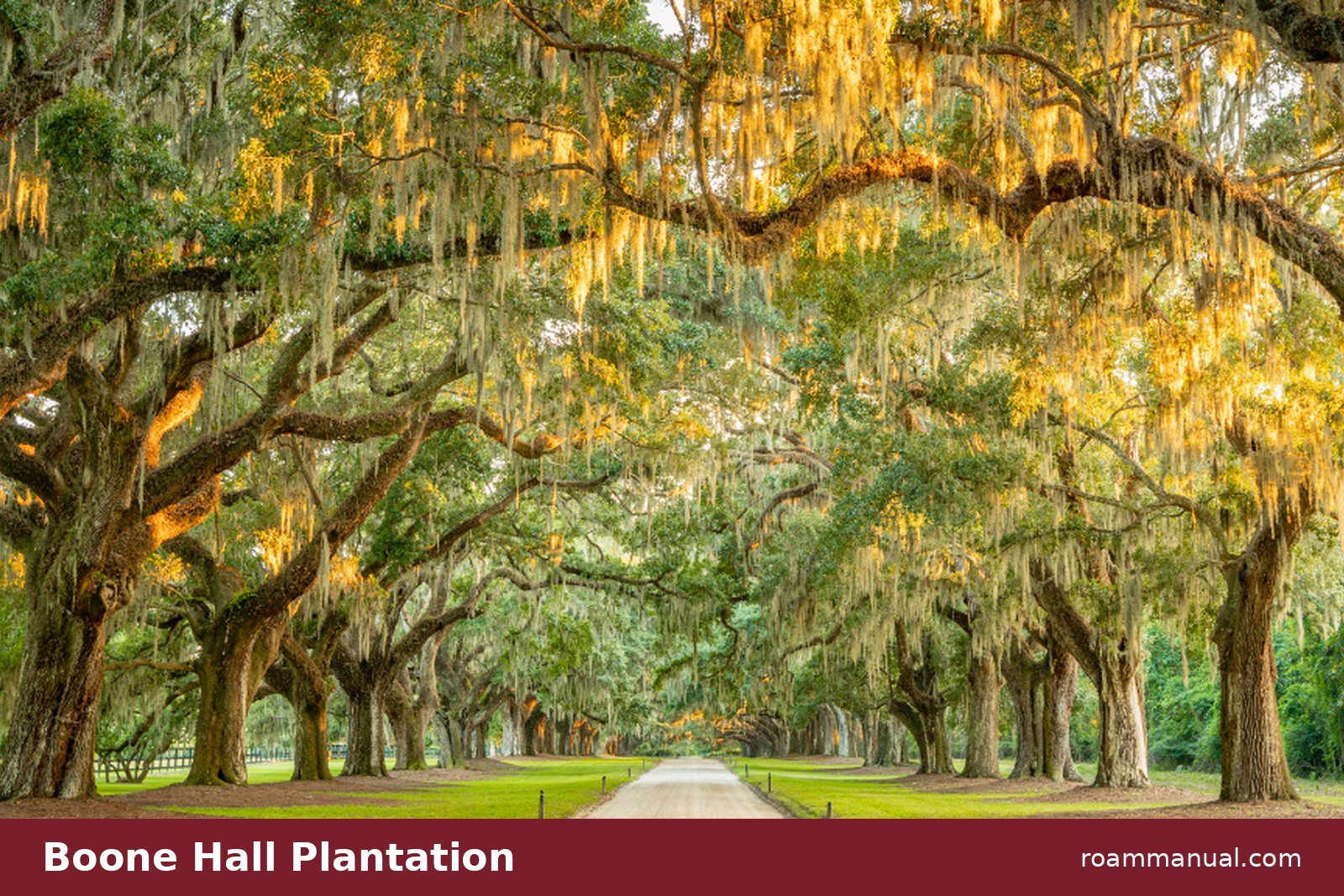
Boone Hall Plantation, Mount Pleasant. One of America’s oldest working farms, founded in 1681. Visitors enter down the Avenue of Oaks, nearly a mile of moss draped live oaks that may be the most photographed drive in the South.
- Admission: $30 for adults, one price covers every tour on site
- Hours: Monday to Saturday, 9 a.m. to 5 p.m.; Sunday, noon to 5 p.m.
- Highlights: Nine original slave cabins with the Black History in America exhibit, a live Gullah culture presentation, a house tour, and a tractor tour of the grounds
Magnolia Plantation and Gardens, Ashley River Road. Founded in 1676, Magnolia is famous for its romantic style gardens, the oldest public gardens in America. Camellias and azaleas put on a huge show in late winter and spring.
- Admission: $35 for adults in person, or $32 when you book online
- Highlights: Garden trails, the Audubon Swamp Garden boardwalk, and the Slavery to Freedom tour of the restored slave cabins
- Good to know: Gardens and grounds are the star here, and most of the visit is outdoors
Middleton Place, Ashley River Road. A National Historic Landmark built around America’s oldest landscaped gardens, first laid out in 1741. Terraced lawns step down to the Ashley River, and artisans demonstrate colonial era crafts in the stableyards.
- Admission: $35 for adults; the grounds are open daily, 9 a.m. to 5 p.m.
- Highlights: 65 acres of formal gardens, the House Museum with Middleton family pieces, and Eliza’s House, a freedman’s dwelling with exhibits on enslaved life
Plantations sit outside the downtown core. Our guide to the best day trips from Charleston shows which nearby stops pair well with them in a single day.
Cross the Harbor to the USS Yorktown
At Patriots Point in Mount Pleasant, the aircraft carrier USS Yorktown dominates the shoreline. The ship earned the nickname The Fighting Lady in World War II and later recovered the Apollo 8 astronauts.
One ticket covers the whole complex:
- USS Yorktown: Flight deck, hangar bays, crew quarters, and the Medal of Honor Museum inside
- USS Laffey: A destroyer that survived intense kamikaze attacks off Okinawa
- The Vietnam Experience: A three acre exhibit that recreates a support base
- Admission: $30 for adults; children under six are free
Budget at least three hours, and half a day if military history hooks you. The Patriots Point ferry to Fort Sumter also leaves from here, so the two sights stack neatly.
Spend a Day at the Beach
Charleston’s barrier island beaches sit 20 to 30 minutes from downtown. Each island has a distinct personality, and locals argue about them the way other cities argue about pizza.
- Folly Beach: The laid back surf town, about 12 miles southeast. A long fishing pier, surf shops, and casual seafood spots line Center Street
- Sullivan’s Island: The quiet one, about 10 miles east. Wide beaches, historic Fort Moultrie, and a small main street of restaurants
- Isle of Palms: The resort island, about 12 miles northeast. A broad beach, vacation rentals, and a county park with restrooms, a playground, and beach chair rentals
Fort Moultrie deserves a mention on its own. Edgar Allan Poe served at this fort in 1827 and 1828, and he set his story The Gold Bug on Sullivan’s Island.
Beach parking fills fast on summer weekends. Arrive before 10 a.m., or go late in the afternoon.
Eat Your Way Through the Food Scene
Charleston is one of the best eating cities in America, full stop. Lowcountry cooking blends African, Caribbean, and European traditions, and the seafood comes straight off local boats.
Dishes to hunt down:
- Shrimp and grits: The signature Lowcountry plate, served everywhere from diners to fine dining rooms
- She crab soup: A rich, creamy bisque finished with sherry
- Lowcountry boil: Shrimp, corn, sausage, and potatoes, best eaten outdoors with your hands
- Oyster roasts: A cold weather tradition, when clusters steam under wet burlap
- Whole hog barbecue: Rodney Scott’s namesake restaurant put Charleston style barbecue on the national map
For special occasions, Husk, FIG, and Slightly North of Broad lead most local lists. Poogan’s Porch serves Lowcountry classics in a Victorian house on Queen Street, named for a dog who once greeted guests on its porch.
Book dinner reservations well ahead, especially for weekends. Our full guide to the best restaurants in Charleston breaks down where to eat by neighborhood and budget.
The Best Things to Do by Interest
Different trips call for different Charlestons. Use this quick matcher to build your days.
- History buffs: Fort Sumter, the Old Slave Mart Museum, one house museum, and a plantation. That is the full arc of the city’s story
- Families: Waterfront Park, the Charleston Museum’s KidStory area, the USS Yorktown, and an Isle of Palms beach day. Our guide to Charleston with kids has the full family plan
- Couples: A sunrise walk at The Battery, a private carriage ride, dinner on Upper King, and a ghost tour to finish the night
- Budget travelers: The Battery, Rainbow Row, the windows of King Street, and Waterfront Park all cost nothing. Our list of free things to do in Charleston stretches a tight budget further
- Repeat visitors: Skip the headline sights and dig into the hidden gems around Charleston, from quiet gardens to neighborhood bakeries
How to Structure Your Days
Charleston rewards a loose plan. Group sights by area, keep afternoons flexible, and let the heat set your pace in summer.
A Simple Charleston Game Plan
- Day 1: The Battery and Rainbow Row in the morning, the City Market and King Street midday, then a carriage tour and a ghost tour after dinner
- Day 2: The Fort Sumter ferry, lunch on the waterfront, one house museum, and the Old Slave Mart Museum
- Day 3: One plantation in the morning, then a beach afternoon at Folly Beach or Sullivan’s Island
- Extra days: The USS Yorktown, the Gibbes Museum, and a day trip to Beaufort
Our hour by hour 3 day Charleston itinerary turns this outline into a timed plan with restaurant stops built in.
Practical Tips for Visiting Charleston
- Walk first: The Historic District is compact and flat. Most sights on this list sit within a 20 minute walk of each other
- Ride the free shuttle: CARTA’s DASH buses loop downtown for free and link the visitor center, the market, and the aquarium area
- Park smart: Downtown garages charge by the hour, and street parking is scarce. Staying downtown pays off; our guide to where to stay in Charleston compares the main areas
- Respect the heat: Summer highs run near 90 with heavy humidity. Sightsee early, museum at midday, and carry water
- Book ahead: Fort Sumter ferries, carriage rides, plantation tours, and top restaurants all sell out in spring
- Time your trip: Spring and fall bring the best weather. Our guide to the best time to visit Charleston compares every season
- Mind the calendar: Big events like the Southeastern Wildlife Exposition in February and Spoleto Festival in late May fill hotels fast
Frequently Asked Questions
What is the number one thing to do in Charleston?
Walk the Historic District. The Battery, Rainbow Row, and the streets South of Broad deliver the Charleston of postcards, and they cost nothing. If you book one ticket, make it the Fort Sumter ferry.
How many days do you need in Charleston?
Two days cover the downtown highlights. Three to four days let you add a plantation and a beach without rushing. Five days opens up day trips to Beaufort, Edisto Island, or Savannah.
Is Charleston walkable?
Yes. The downtown peninsula is flat and compact, and most major sights sit within about a mile of the City Market. Free DASH shuttles cover the longer hops.
How much does it cost to visit Fort Sumter?
The ferry ticket is $43 for adults, $39 for seniors and military, and $26 for children ages 4 to 11. It includes the round trip boat ride and admission to the fort.
Which plantation should you visit?
Choose Boone Hall for the Avenue of Oaks and its focus on Gullah culture, Magnolia for the gardens, and Middleton Place for formal landscaped gardens and history. Each takes about half a day.
Can you do Charleston without a car?
Downtown, yes, easily. You only need wheels for plantations, beaches, and the USS Yorktown, and tours with hotel pickup cover all three if you would rather not drive.
Is Charleston worth visiting?
Yes. Few American cities pack this much history, food, and coastal scenery into such a small area. Give it a long weekend.
Charleston is not a city you check off. It is a city you settle into, one shaded street and long lunch at a time.
Use this list to plan the big pieces, then leave room for the small ones. The steeples, the gardens, and the harbor light have a way of filling the gaps for you.