



Last updated: October 1, 2026
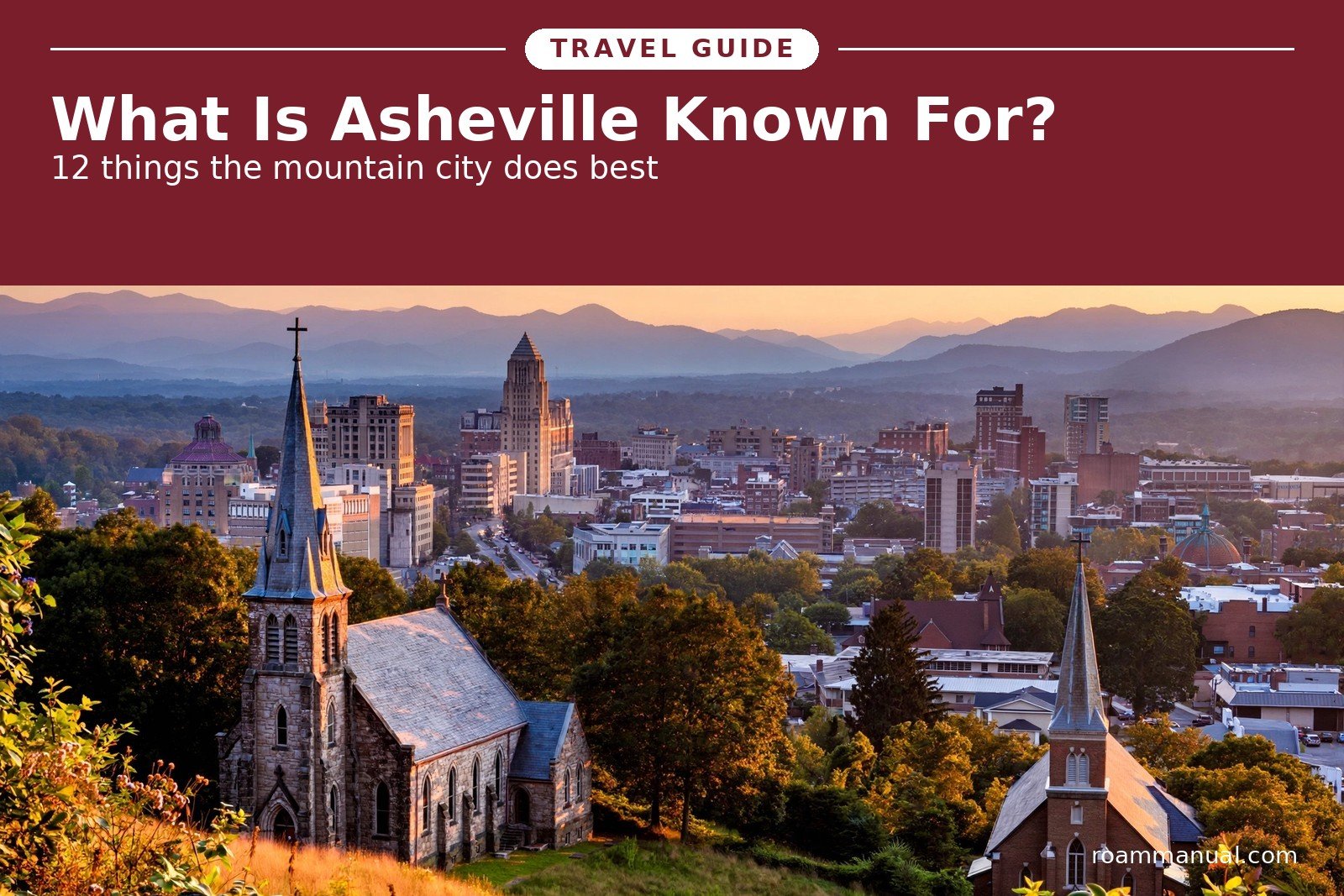
Asheville is a mountain city in western North Carolina, set in the Blue Ridge Mountains with a population of just under 95,000.
It is best known for Biltmore Estate, the Blue Ridge Parkway, a legendary craft beer scene, and a creative culture that locals proudly call weird.
Visitors come for the mountains and stay for the mix of outdoor adventure, arts, food, and music. Here are the 12 things that make Asheville famous, plus what to know before you go in 2026.
1. Biltmore Estate
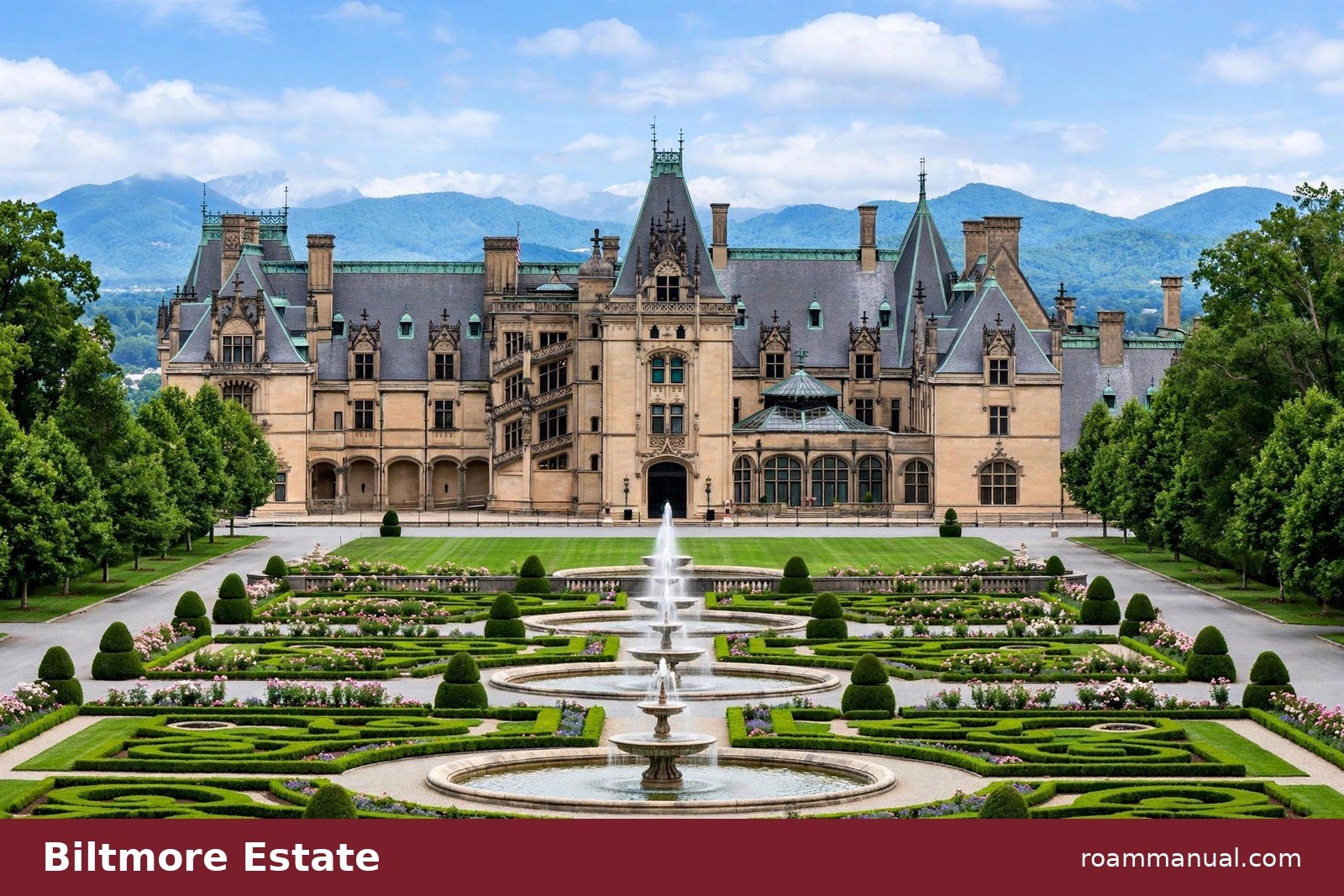
Biltmore Estate is the single most famous attraction in Asheville. It is the largest privately owned home in America, with 250 rooms spread across 8,000 acres of gardens and grounds.
George Washington Vanderbilt II built the French Renaissance chateau between 1889 and 1895. The house holds 35 bedrooms, 43 bathrooms, and 65 fireplaces, plus a bowling alley, an indoor pool, and a huge library.
The estate also has a winery, restaurants, and Antler Hill Village with shops and a farm.
Biltmore is fully open in 2026. It closed briefly after Hurricane Helene struck in September 2024 but reopened on November 2, 2024 with minimal damage.
In 2026 the estate added Luminere, an evening experience with light projections and music on the house and gardens, running select nights from March 26 through October 18.
Advance tickets start at $90 for fall dates, and popular days sell out. Plan a full day and buy tickets online before you arrive. See our Biltmore Estate guide.
2. The Blue Ridge Parkway
The Blue Ridge Parkway runs right past Asheville, and the city is one of the best places to access it. The Asheville access area sits near Milepost 382 to 384, at the Folk Art Center entrance on U.S. 70.
The parkway is a 469-mile scenic road through the Appalachian Highlands. It is the most visited unit in the entire National Park System.
From Asheville, drivers can head south toward the Great Smoky Mountains or north toward Mount Mitchell and Craggy Gardens.
As of 2026, the road is not fully back to normal. Hurricane Helene caused about $1.7 billion in damage to the parkway.
About 30 miles are still closed in two segments north of Asheville: Milepost 317 to 327 near Linville Falls, and Milepost 334 to 355 near Mount Mitchell.
The National Park Service targets full reopening by the end of 2026. The good news for visitors is that a long continuous stretch from Asheville to Cherokee is open, which covers the sections most tourists actually drive.
Check the NPS closure map before any trip. See our Blue Ridge Parkway road trip guide for mile-by-mile planning.
3. A World-Class Craft Beer Scene
Asheville is one of the great beer cities in America. The metro area has more than 50 breweries, with over 30 inside the city limits. That gives Asheville one of the highest brewery counts per capita in the country.
The city first won the title of Beer City USA in 2009 and held or shared it for four straight years. The mountain water and a creative local culture helped the scene grow.
Highland Brewing, which opened in the mid-1990s, is the city’s original craft brewery. Wicked Weed, Burial, and Green Man are other big names that draw beer fans from across the country.
The South Slope district downtown packs many taprooms into a few walkable blocks, which makes it easy to do a self-guided brewery crawl. Breweries across the city are open and pouring in 2026 after Helene recovery. See our guide to Asheville breweries.
4. The River Arts District
The River Arts District, or RAD, sits along the French Broad River just north of downtown.
Old warehouses and mills have been turned into working studios and galleries where visitors can watch artists at work and buy art directly from them.
Hurricane Helene flooded the district hard in September 2024, and recovery is still in progress in 2026. More than 600 artists have returned, and membership in the River Arts District Artists group is at its highest level ever.
In February 2026, USA Today readers voted it the best arts district in the country.
Be honest with your expectations. Many studios, restaurants, and bars have reopened, but some buildings are still being repaired.
The studio map has partly changed, so check which studios are open before you visit. RADfest, the district’s big two-day art and music festival, runs November 14 and 15 in 2026.
5. A Serious Food and Restaurant Scene
Asheville has one of the best food scenes in the South for a city its size. The city even brands itself as Foodtopia, a nod to its farm-to-table roots.
Chefs here cook with ingredients from nearby farms, and the restaurant mix blends Appalachian cooking with global flavors.
Chai Pani, an Indian street food restaurant downtown, won the James Beard Foundation’s Outstanding Restaurant award, which put Asheville on the national food map.
Farmers markets run year-round, and food tours and foraging trips are popular ways to taste the city. Expect creative menus, local sourcing, and a casual mountain-town atmosphere.
6. Live Music and Nightlife
Asheville has a deep music culture, from bluegrass and Americana to indie rock and electronic music.
The Orange Peel is the city’s most famous venue. It sits at 101 Biltmore Avenue downtown and has hosted nationally touring artists for over two decades.
In July 2026, the Orange Peel opened Hellbender, a new outdoor venue on the Swannanoa River. It is hosting a limited concert series through the fall, with a permanent stage and full season planned for spring 2027.
Live music also spills into breweries, bars, and outdoor spaces across town, especially in summer and fall. Check the venue calendars before your trip, because popular shows sell out fast.
7. Historic Downtown and Art Deco Architecture
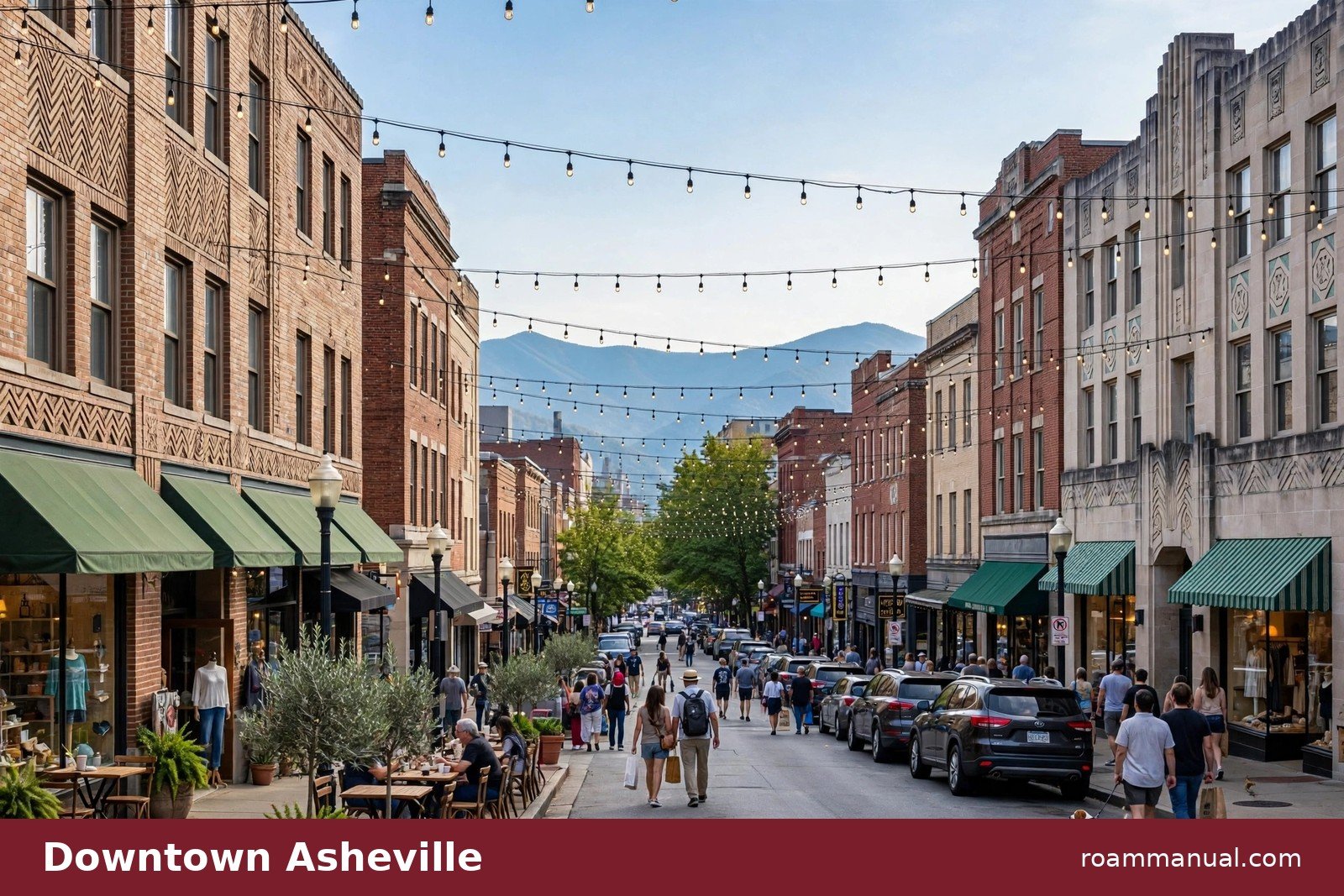
Downtown Asheville holds one of the most impressive collections of Art Deco architecture in the Southeast.
The city’s building boom in the 1920s left behind landmarks like the Asheville City Hall and the S&W Cafeteria building, and the 1920s boom went bust in the Depression, which accidentally preserved the old buildings instead of replacing them.
The Grove Arcade is the downtown showpiece. E.W. Grove built the shopping arcade in the 1920s, and it opened in 1929 with shops and offices under one ornate roof.
After decades of other uses, it was restored and reopened in 2002 with stores, restaurants, and apartments.
A short walk away stands the Basilica of St. Lawrence, designed by Spanish architect Rafael Guastavino. It has the largest freestanding elliptical dome in North America.
The Jackson Building, Asheville’s first skyscraper, and the triangular Flatiron Building are other downtown favorites. Book lovers can visit the Thomas Wolfe Memorial, the boyhood home of the author of Look Homeward, Angel.
8. Spectacular Fall Colors
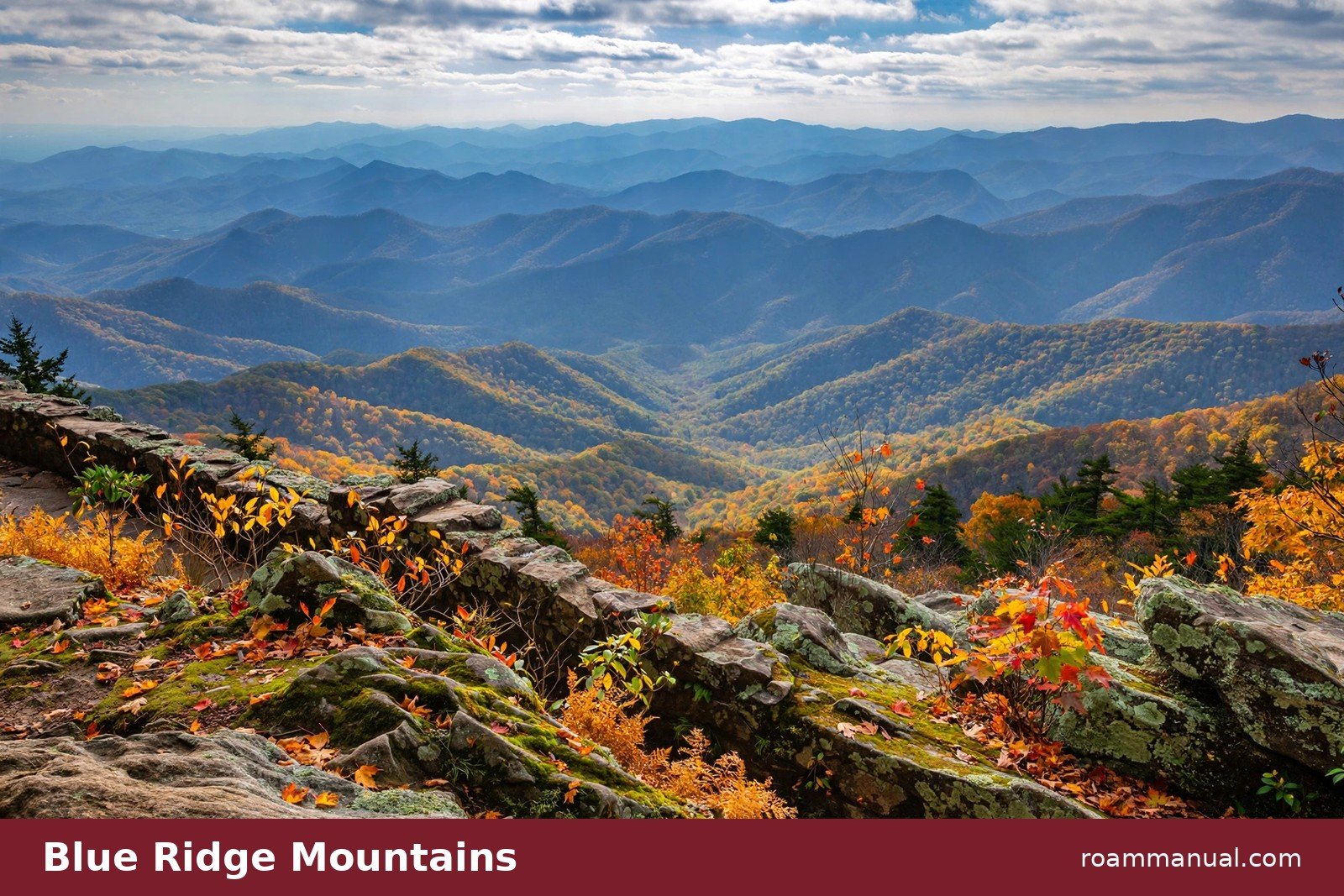
Asheville is one of the best places in the East to see fall color. The surrounding Blue Ridge Mountains turn red, orange, and gold as the leaves change, and the color usually peaks around mid-October.
The Blue Ridge Parkway near Asheville offers some of the most famous leaf-viewing overlooks in the country, including Craggy Gardens. The high elevations color up first, then the color moves down into the valleys.
Fall is also the busiest season, so hotels and Biltmore tickets sell out early. Book months ahead if you visit in October.
Check parkway closure updates before driving the high-elevation sections, since repair work continues into late 2026. Our Blue Ridge Parkway fall colors guide covers the best overlooks and timing.
9. Outdoor Adventures in Every Direction
Asheville sits between two national forests and two mountain ranges, which makes it a base camp for outdoor fun. Pisgah National Forest starts minutes from downtown with hundreds of miles of hiking and mountain biking trails.
Hikers can pick from waterfall hikes, ridge walks, and easy nature trails, while tubing and paddling on the French Broad River are summer favorites. Mountain bikers head to the Bent Creek area for well-kept trail networks.
Waterfalls are a special draw. Dozens of falls sit within an hour of the city, and many are short hikes from the road.
See our Blue Ridge Parkway waterfalls guide for the best falls with mileposts. The Appalachian Trail also passes through the region, and Max Patch, a famous grassy bald with 360-degree views, is a popular sunrise hike.
10. Spas and Wellness
Asheville has a strong wellness culture, from downtown spas to natural hot springs nearby. Massage studios, yoga centers, salt caves, and saunas are easy to find in and around the city.
The standout experience is Hot Springs, North Carolina, about 45 minutes north of Asheville. It is home to the only natural hot spring in the state.
At Hot Springs Resort and Spa, the mineral water is piped into private outdoor tubs along the French Broad River, and visitors can rent a tub by the hour.
After a long day of hiking, a hot soak in mineral water is one of the classic Asheville-area rituals. Book tub reservations in advance, especially on weekends.
11. Quirky Culture and Street Life
Asheville is famously offbeat, and the street life shows it. Buskers play on downtown corners, street art covers walls and alleys, and independent shops sell everything from crystals to handmade crafts.
The most beloved tradition is the Friday night drum circle in Pritchard Park. Every Friday evening, drummers, dancers, and onlookers gather in the downtown park for an open, free, all-ages jam.
The tradition started in 2001 and survived Hurricane Helene. It usually runs from around 6 p.m. to 10 p.m. in the warmer months, weather permitting.
The city’s unofficial motto could be “keep Asheville weird,” and locals mean it. Expect the unexpected, and go with it.
12. Easy Day Trips
Asheville works well as a home base because so much sits within an hour’s drive. Biltmore Village, right outside the estate gates, has historic cottages turned into shops and restaurants and makes an easy half-day trip.
Black Mountain, about 20 minutes east, is a small artsy town with a walkable main street, breweries, and lake views. It pairs well with a morning on the parkway.
Chimney Rock is another classic day trip, though it was badly damaged by Hurricane Helene. Check current access and openings before driving up.
The Great Smoky Mountains National Park is about 50 miles west via the parkway to Cherokee. It is the most visited national park in America, and the drive there along the open parkway sections is half the experience.
Asheville in a Nutshell: Plan Smart
- Give Biltmore a full day and buy tickets online in advance, since popular dates sell out.
- The Blue Ridge Parkway is open from Asheville to Cherokee, but check the NPS closure map before you go, because repairs run through the end of 2026.
- Time a Friday night downtown for the free drum circle in Pritchard Park.
- Book hotels and Biltmore tickets months ahead if you visit during fall color season.
- Helene recovery is ongoing across the region, and spending at local businesses directly helps the comeback.
FAQs
What is Asheville, North Carolina best known for?
Asheville is best known for Biltmore Estate, the largest privately owned home in America, and the Blue Ridge Parkway, the most visited unit in the National Park System.
It is also famous for its craft beer scene, the River Arts District, farm-to-table food, live music, Art Deco downtown, and Blue Ridge Mountain fall colors.
Is Biltmore Estate open in 2026?
Yes. Biltmore closed briefly after Hurricane Helene in September 2024 and reopened on November 2, 2024 with minimal damage.
It is fully open in 2026, including the new Luminere evening experience on select nights from March 26 through October 18. Advance tickets start at $90 for fall dates.
When is the best time to visit Asheville?
Mid-October is the most popular time because fall colors usually peak then, but spring and summer are also great for hiking, tubing, and festivals.
Winter is quieter and cheaper, and Biltmore’s holiday decorations draw visitors from November through early January. Book early for any October trip.
Is Asheville recovered from Hurricane Helene?
Asheville is open and welcoming visitors in 2026, but recovery from the September 2024 flood is still ongoing.
Downtown, Biltmore, breweries, and most attractions are open. The River Arts District is largely back with some buildings still being repaired.
About 30 miles of the Blue Ridge Parkway north of Asheville remain closed, in two segments between Linville Falls and Mount Mitchell, with full reopening targeted for the end of 2026. Check the NPS before driving the parkway.
How many days do you need in Asheville?
Three full days is a good minimum:
- One day at Biltmore Estate
- One day driving the Blue Ridge Parkway and exploring overlooks
- One day downtown for the River Arts District, breweries, and the Friday drum circle
Add extra days for hiking, day trips to the Smokies, or a soak in Hot Springs.
What food is Asheville known for?
Asheville is known for farm-to-table cooking that mixes Appalachian traditions with global flavors. The city calls itself Foodtopia.
Chai Pani, an Indian street food spot downtown, won the James Beard Foundation’s Outstanding Restaurant award. Farmers markets, craft breweries with kitchens, and food tours round out the scene.
Is Asheville worth visiting in 2026?
Yes. The main attractions are open, the beer and food scenes are thriving, and the mountains are as beautiful as ever.
Visiting in 2026 also directly supports a region still rebuilding after Helene. Just check parkway closures and book fall trips early.
