



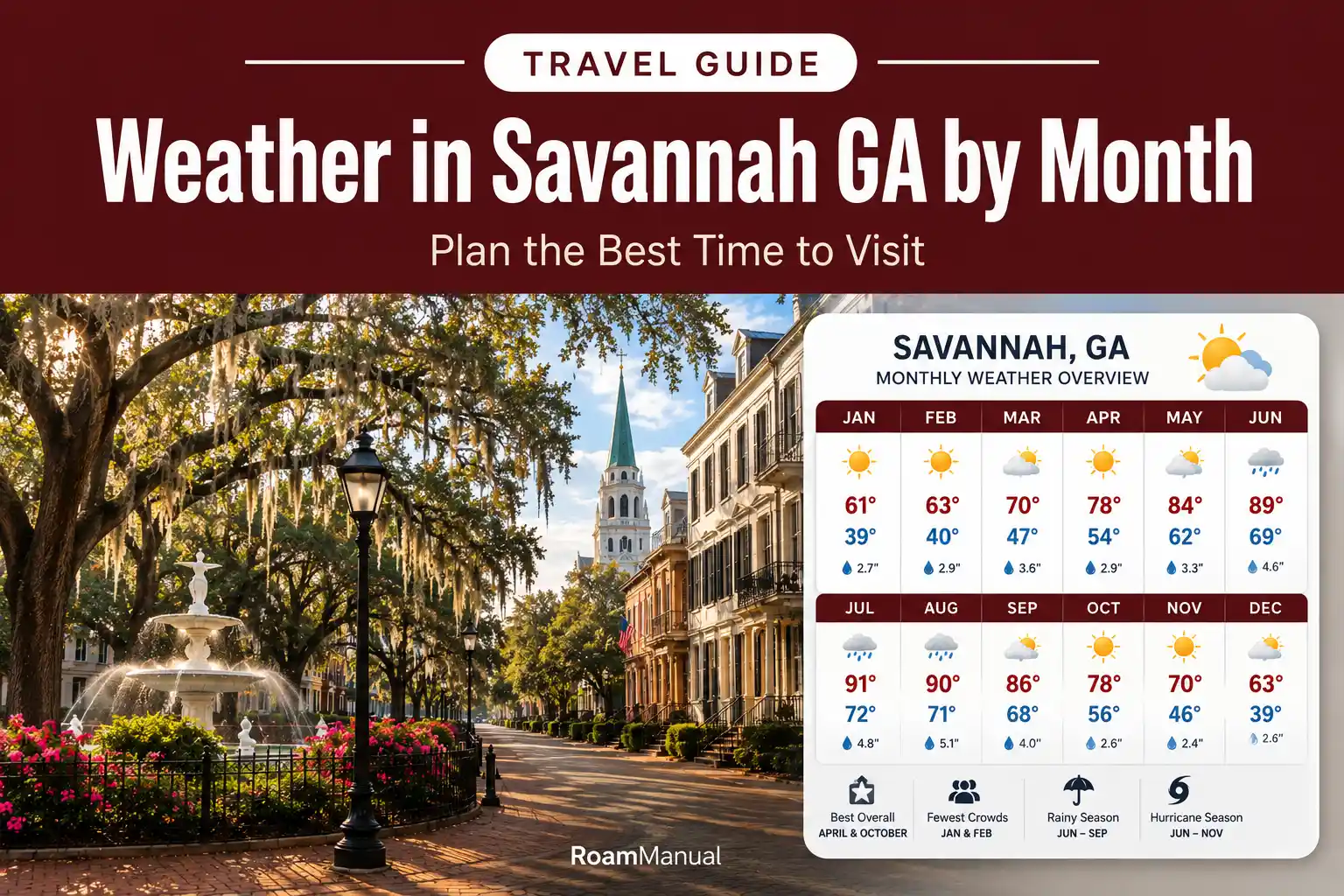
Planning a trip to Savannah starts with understanding what the weather in Savannah by Month throughout the year. While the city enjoys a mild climate compared with many parts of the United States, each month offers a different experience in terms of temperature, humidity, rainfall, crowds, and seasonal activities.
April is usually the best month to visit Savannah for comfortable temperatures, blooming scenery, and pleasant walking conditions. October is another excellent choice, especially for travelers who prefer lower humidity and fewer spring crowds.
If you are wondering when to visit, the answer depends on what you want from your trip. Spring brings comfortable temperatures and blooming gardens. Summer offers long days but intense heat and humidity. Fall combines pleasant weather with fewer crowds, while winter provides a quieter atmosphere with mild conditions for sightseeing.
For realistic spending estimates, use our guide to how much a Savannah trip costs.
This guide explains the weather in Savannah GA by month so you can choose the best time to visit based on your travel style, budget, and planned activities.
Which Month Should You Visit Savannah?
| Travel Goal | Recommended Month |
|---|---|
| Best overall weather | April |
| Comfortable sightseeing | March, April, October |
| Lowest crowds | January, February |
| Better hotel value | January, February, August |
| Outdoor dining | April, October |
| Photography | March, April, November |
| Tybee Island day trips | May, June |
| Festival atmosphere | March, April |
Savannah Weather at a Glance
Savannah has a humid subtropical climate, with hot summers, mild winters, and rainfall throughout the year. Because the city sits near the Georgia coast, humidity can affect comfort as much as the temperature, especially from late spring through early fall.
Spring and fall usually provide the most comfortable conditions for walking through the Savannah Historic District, visiting Forsyth Park, exploring River Street, and dining outdoors. Summer can still be enjoyable, but travelers should plan around the heat and afternoon thunderstorms.
| Weather Factor | Typical Pattern |
|---|---|
| Climate | Humid subtropical |
| Warmest period | July and August |
| Coolest period | January |
| Wettest period | Summer |
| Hurricane season | June through November |
| Best overall weather | March through May and October through November |
Monthly Savannah Weather Comparison
| Month | General Weather | Crowds | Best For |
|---|---|---|---|
| January | Cool and mild | Low | Budget trips and sightseeing |
| February | Mild with cool mornings | Low to moderate | Couples and weekend trips |
| March | Pleasant and warmer | High | Spring scenery and festivals |
| April | Warm and comfortable | High | First-time visitors |
| May | Warm with increasing humidity | Moderate | Beach trips and families |
| June | Hot and humid | High | Summer vacations |
| July | Very hot and humid | High | Beach-focused trips |
| August | Very hot with storms | Moderate | Value-focused travelers |
| September | Hot early, milder later | Moderate | Flexible travelers |
| October | Warm with lower humidity | Moderate | Walking tours and couples |
| November | Mild and comfortable | Moderate to low | Photography and history |
| December | Cool with mild afternoons | Moderate | Holiday trips |
Weather in Savannah GA by Month
January
January is Savannah’s coolest month, but conditions are still mild compared with many northern destinations. Daytime weather is often comfortable enough for exploring the Historic District, visiting museums, or walking along River Street without the intense humidity of summer.
Cool mornings and evenings make layers important. A light or medium-weight jacket will usually be more useful than heavy winter clothing.
- Typical conditions: Cool mornings, mild afternoons, low humidity, and occasional rain
- Crowd level: Low
- Hotel prices: Often among the lowest of the year
- Best activities: Walking tours, museums, historic homes, River Street, and Forsyth Park
- Best for: Budget travelers, couples, history lovers, and visitors seeking a quieter trip
- Skip if: You want beach weather or consistently warm evenings
- What to pack: Layers, a light jacket, comfortable shoes, and a compact umbrella
RoamManual Verdict
January is a strong choice for travelers who value lower prices, fewer crowds, and relaxed sightseeing more than warm beach conditions.
February
February brings slightly warmer conditions while keeping many of January’s advantages. Outdoor walking becomes more pleasant, and signs of spring may begin appearing toward the end of the month.
The weather can vary from day to day, so flexible clothing is useful. Some afternoons may feel mild and comfortable, while mornings and evenings can still be cool.
- Typical conditions: Mild afternoons, cool mornings, moderate rain, and comfortable humidity
- Crowd level: Low to moderate
- Hotel prices: Usually more affordable than spring
- Best activities: Historic District walks, museums, garden visits, and riverfront dining
- Best for: Couples, weekend travelers, and budget-conscious visitors
- Skip if: You want consistently warm weather or swimming conditions
- What to pack: Layers, a sweater, walking shoes, and a light rain jacket
RoamManual Verdict
February offers a good balance between affordability and increasingly pleasant sightseeing weather before the spring crowds arrive.
March
March begins one of Savannah’s most popular travel periods. Temperatures become more comfortable, gardens and squares grow more colorful, and outdoor dining becomes more appealing.
This is also when visitor numbers increase, especially around major spring events. Travelers should book accommodations and popular tours early.
- Typical conditions: Warm afternoons, mild mornings, blooming scenery, and manageable humidity
- Crowd level: High
- Hotel prices: Higher than winter
- Best activities: Walking tours, Forsyth Park, outdoor cafés, historic squares, and photography
- Best for: First-time visitors, couples, photographers, and outdoor travelers
- Skip if: You want the quietest or least expensive time to visit
- What to pack: Lightweight clothing, sunglasses, comfortable shoes, and a light sweater
RoamManual Verdict
March combines comfortable weather with colorful spring scenery, but travelers should expect stronger demand and larger crowds.
April
April is widely considered one of the best months to visit Savannah. The weather is warm without usually feeling as oppressive as summer, gardens remain colorful, and humidity is more manageable.
These conditions are ideal for exploring the city’s squares, taking walking tours, visiting historic homes, and dining outdoors. The main trade-off is higher demand.
- Typical conditions: Warm afternoons, pleasant evenings, moderate humidity, and comfortable walking weather
- Crowd level: High
- Hotel prices: Often among the highest of the year
- Best activities: Walking tours, Forsyth Park, outdoor dining, River Street, and Tybee Island day trips
- Best for: First-time visitors, couples, families, and photographers
- Skip if: You are traveling on a tight budget or dislike busy attractions
- What to pack: Lightweight clothing, sunscreen, sunglasses, walking shoes, and a light evening layer
RoamManual Verdict
April offers one of the best overall combinations of warmth, scenery, and outdoor comfort, although travelers should prepare for higher prices and larger crowds.
May
May continues Savannah’s warm spring pattern, although afternoons become noticeably hotter and humidity starts increasing. Beach trips become more appealing, and evenings are usually comfortable for outdoor dining.
The month can provide a useful compromise between peak spring conditions and full summer heat, especially outside holiday weekends.
For help shaping your schedule, use our guide to weekend in Savannah.
- Typical conditions: Warm days, mild evenings, increasing humidity, and occasional showers
- Crowd level: Moderate
- Hotel prices: Moderate to high
- Best activities: Tybee Island, river cruises, outdoor dining, historic walks, and garden visits
- Best for: Families, beach visitors, and outdoor travelers
- Skip if: You strongly dislike humidity
- What to pack: Lightweight clothes, sunscreen, comfortable footwear, and a reusable water bottle
RoamManual Verdict
May is a strong alternative to April, offering warm weather and good beach conditions with somewhat lower demand outside busy weekends.
June
June marks the beginning of Savannah’s hot and humid summer. Afternoon temperatures become more tiring for extended walking, and thunderstorms may develop later in the day.
The best strategy is to plan outdoor sightseeing in the morning, reserve museums and indoor attractions for the afternoon, and return outside in the evening.
For more ideas that fit this part of your trip, see our guide to Savannah attractions and activities.
- Typical conditions: Hot afternoons, warm nights, high humidity, and afternoon thunderstorms
- Crowd level: High
- Hotel prices: Moderate
- Best activities: Early walking tours, museums, river cruises, indoor attractions, and evening dining
- Best for: Families on school holidays, summer travelers, and beach visitors
- Skip if: You prefer cool all-day walking conditions
- What to pack: Breathable clothing, sunscreen, a hat, walking shoes, rain protection, and water
RoamManual Verdict
June can work well for summer travelers who organize outdoor activities around the coolest parts of the day.
July
July is usually one of Savannah’s hottest and most humid months. The heat can make long walking tours tiring, while afternoon thunderstorms may interrupt outdoor plans.
Visitors can still enjoy the city by starting early, taking breaks, staying hydrated, and choosing indoor attractions during peak afternoon heat.
- Typical conditions: Very hot, very humid, stormy in the afternoon, and warm at night
- Crowd level: High
- Hotel prices: Moderate to high
- Best activities: Museums, restaurants, river cruises, evening ghost tours, and early Tybee Island visits
- Best for: Families, beach lovers, and travelers comfortable with hot weather
- Skip if: You want comfortable sightseeing throughout the entire day
- What to pack: Moisture-wicking clothing, sunscreen, sunglasses, water, and rain protection
RoamManual Verdict
July is best for travelers who tolerate intense heat and can build their itinerary around early mornings, indoor breaks, and evening activities.
August
August remains very hot and humid, but hotel value may improve because some travelers avoid the peak summer heat. Afternoon storms are still common, and hurricane-season activity becomes more relevant.
Flexible itineraries are useful. Visitors should monitor forecasts and avoid scheduling every outdoor activity back to back.
- Typical conditions: Hot days, warm nights, high humidity, and regular afternoon showers
- Crowd level: Moderate
- Hotel prices: Often lower than spring
- Best activities: Tybee Island, indoor museums, riverfront dining, and evening tours
- Best for: Budget-conscious visitors, beach travelers, and flexible planners
- Skip if: You dislike high humidity or want the most predictable weather
- What to pack: Breathable clothing, sunscreen, insect repellent, water, and a compact rain jacket
RoamManual Verdict
August can offer better value, but travelers must be comfortable trading ideal weather for lower demand and potentially lower prices.
September
September often begins with summer-like heat and gradually becomes more comfortable later in the month. Humidity may remain noticeable, but conditions generally improve as fall approaches.
The month is still within the more active part of hurricane season, so flexible bookings and regular forecast checks are sensible.
- Typical conditions: Hot early in the month, warmer and more comfortable later, with lingering humidity
- Crowd level: Moderate
- Hotel prices: Moderate
- Best activities: River Street, the Historic District, Tybee Island, cruises, and evening walks
- Best for: Flexible travelers, couples, and repeat visitors
- Skip if: You want the most stable and predictable weather
- What to pack: Lightweight clothing, sunscreen, walking shoes, and rain protection
RoamManual Verdict
Late September can offer improving weather and fewer crowds, but travelers should remain aware of hurricane-season uncertainty.
October
October is one of Savannah’s most comfortable months. Warm afternoons, lower humidity, and pleasant evenings create excellent conditions for walking, outdoor dining, and evening tours.
Popular events can increase demand on certain weekends, but the overall experience is often more relaxed than peak spring.
- Typical conditions: Warm days, comfortable evenings, and lower humidity
- Crowd level: Moderate
- Hotel prices: Moderate to high
- Best activities: Walking tours, ghost tours, Forsyth Park, River Street, and outdoor dining
- Best for: Couples, first-time visitors, food lovers, and outdoor travelers
- Skip if: You want the lowest possible accommodation prices
- What to pack: Light daytime clothing, comfortable shoes, and a light evening jacket
RoamManual Verdict
October rivals April as one of the best months to visit Savannah, especially for travelers who value comfortable humidity and pleasant evenings.
November
November brings cooler temperatures and lower humidity while remaining comfortable for sightseeing. Visitor numbers often begin to ease, creating a calmer atmosphere around the Historic District.
Shorter daylight hours are the main trade-off, but the weather is usually well suited to walking, photography, and historic attractions.
- Typical conditions: Mild afternoons, cool mornings, lower humidity, and comfortable walking weather
- Crowd level: Moderate to low
- Hotel prices: Moderate
- Best activities: Historic tours, museums, riverfront walks, photography, and outdoor cafés
- Best for: Couples, photographers, and history enthusiasts
- Skip if: You want warm beach conditions
- What to pack: Layers, walking shoes, and a light jacket
RoamManual Verdict
November is one of Savannah’s most underrated months for comfortable walking, lower humidity, and fewer visitors.
December
December is cool but rarely severe, making it suitable for sightseeing and short city breaks. Holiday decorations and seasonal events add extra atmosphere to the squares, waterfront, and historic homes.
Evenings can feel chilly, but afternoons are often mild enough for walking tours and outdoor exploration.
- Typical conditions: Cool mornings, mild afternoons, lower humidity, and occasional rain
- Crowd level: Moderate
- Hotel prices: Variable around holiday periods
- Best activities: Holiday lights, historic homes, museums, River Street, and walking tours
- Best for: Couples, families, and holiday travelers
- Skip if: You are planning a beach-focused vacation
- What to pack: Layers, a medium-weight jacket, walking shoes, and an umbrella
RoamManual Verdict
December combines mild winter sightseeing conditions with a festive atmosphere, making it a good choice for a relaxed seasonal getaway.
Savannah Weather by Season
Spring: March Through May
Spring usually provides Savannah’s most attractive combination of warm weather, blooming scenery, and comfortable outdoor conditions. It is especially well suited to first-time visitors who want to spend long periods walking through the Historic District.
The main disadvantages are higher hotel prices, greater demand, and busier attractions.
Summer: June Through August
Summer is hot, humid, and stormier. It can still work well for families and beach travelers, but itineraries should be built around early mornings, indoor afternoon activities, and evening tours.
Travelers should also stay hydrated and allow more time for breaks.
Fall: September Through November
Fall begins hot but gradually becomes more comfortable. October and November are especially appealing for walking, outdoor dining, photography, and couples’ trips.
Early fall remains part of hurricane season, so flexible plans are useful.
Winter: December Through February
Winter is mild, quieter, and often more affordable. It works well for sightseeing, museums, historic homes, and travelers who prefer smaller crowds.
Winter is less suitable for beach trips, swimming, or travelers who want consistently warm evenings.
Best Month to Visit Savannah for Different Travelers
| Traveler Type | Recommended Months | Why |
|---|---|---|
| First-time visitors | April, October | Comfortable sightseeing conditions |
| Couples | April, October, November | Pleasant evenings and outdoor dining |
| Families | April, May, June | Warm weather and school-holiday options |
| Budget travelers | January, February, August | Lower demand may improve hotel value |
| Photographers | March, April, November | Spring color or softer fall conditions |
| Outdoor enthusiasts | March, April, October | Better walking comfort and lower humidity |
| Beach visitors | May, June | Warm conditions before the most intense late-summer heat |
Hurricane Season in Savannah
The Atlantic hurricane season runs from June through November. The more active period is generally later in summer and early fall, although conditions vary from year to year.
A hurricane does not need to make a direct landfall in Savannah to affect travel. Tropical systems can bring heavy rain, strong winds, transportation delays, attraction closures, or changes to coastal plans.
Hurricane-Season Planning Tips
- Choose flexible hotel and transportation bookings.
- Review cancellation terms before paying.
- Consider travel insurance that covers relevant disruptions.
- Check forecasts before departure and during the trip.
- Follow local emergency guidance if severe weather develops.
Hurricane season should not automatically stop you from visiting Savannah, but it does make flexibility and forecast monitoring more important.
What to Pack for Savannah by Season
| Season | Packing Essentials |
|---|---|
| Spring | Light layers, comfortable walking shoes, sunscreen, sunglasses, and a compact rain jacket |
| Summer | Breathable clothing, sunscreen, a hat, rain protection, insect repellent, and a reusable water bottle |
| Fall | Lightweight clothes, comfortable shoes, a light sweater, and rain protection |
| Winter | Layers, a light or medium jacket, walking shoes, and an umbrella |
Frequently Asked Questions
What is the best month to visit Savannah?
April and October usually offer the best combination of pleasant temperatures, manageable humidity, and comfortable conditions for sightseeing. April provides spring scenery, while October often feels less humid.
What is the hottest month in Savannah?
July is typically one of Savannah’s hottest months. High humidity can make outdoor conditions feel warmer, especially during the afternoon.
What is the coldest month in Savannah?
January is generally Savannah’s coolest month. Even so, winter conditions are usually mild enough for sightseeing with layers and a suitable jacket.
Does Savannah get snow?
Snow is rare in Savannah. Winter weather is more likely to bring cool temperatures and rain than significant snowfall.
When is hurricane season in Savannah?
Hurricane season runs from June through November. Travelers visiting during this period should monitor forecasts and use flexible booking policies.
Is Savannah too hot in summer?
Summer afternoons can be very hot and humid, especially in July and August. Many travelers manage the conditions by sightseeing early, taking an indoor break during the afternoon, and returning outside in the evening.
Which months have the fewest crowds?
January and February are generally among the quietest months. They are useful choices for travelers who value lower demand, easier reservations, and a slower sightseeing pace.
Is winter a good time to visit Savannah?
Winter can be a good time for museums, historic homes, walking tours, and budget-focused trips. It is less suitable for beach activities or travelers seeking consistently warm evenings.
If price matters most, read our guide on cheapest months to visit Savannah before booking your dates.
Final Verdict
Savannah can be visited throughout the year, but the right month depends on your priorities.
- Choose April for the best overall balance of weather, scenery, and outdoor comfort.
- Choose October for warm days, pleasant evenings, and lower humidity.
- Choose January or February for smaller crowds and potentially better value.
- Choose May or June to combine city sightseeing with a Tybee Island day trip.
- Choose November for mild weather, photography, and a quieter atmosphere.
Travelers visiting in summer should organize outdoor activities around the cooler parts of the day. Those visiting during hurricane season should monitor forecasts and keep their plans flexible.
By understanding the weather in Savannah GA by month, you can choose a travel period that fits your budget, comfort level, and preferred activities.
