



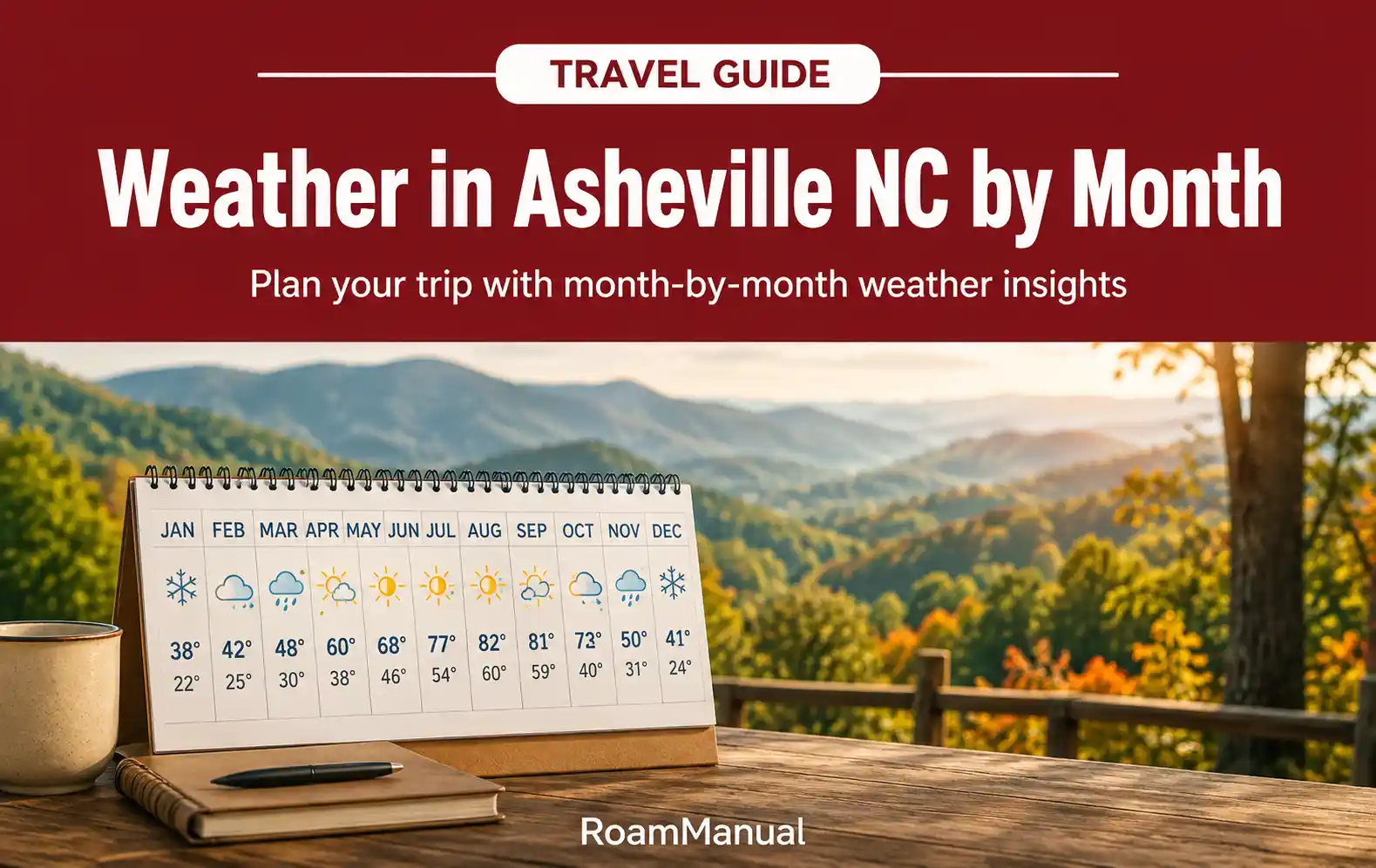
Planning a trip to Asheville means choosing more than just a destination.
The month you visit can change your experience, from cool mountain mornings and fall colors to summer heat, winter weather, and outdoor conditions.
For realistic spending estimates, use our guide to Asheville trip cost.
The best time to visit Asheville depends on what you want from your trip.
Spring and fall usually offer comfortable temperatures for exploring, while summer is better for travelers who enjoy warm weather and outdoor adventures.
Winter brings colder conditions, fewer crowds, and a different mountain atmosphere.
If this is your first visit, start with our first-time Asheville travel guide for the main planning decisions.
Quick Answer: Best Asheville Weather Months
The best months for Asheville weather depend on your travel goals. Spring and fall usually provide the most comfortable conditions for exploring, while summer offers warmer days and winter provides a quieter mountain experience.
- Best overall weather: April–May and September–October
- Best for fall colors: October–early November
- Best for hiking: April–May and September–October
- Best for fewer crowds: January–March and November
- Best for holiday atmosphere: December
How to Choose the Best Asheville Month for Your Trip
Weather is only one part of deciding when to visit Asheville. The right month depends on how you plan to spend your time.
Outdoor Activities
Travelers planning hiking, scenic drives, or outdoor exploration often prefer mild temperatures. Spring and fall are popular because the weather is generally more comfortable for spending long periods outside.
Summer can work well for outdoor adventures, but warmer temperatures and humidity may affect midday activities.
Scenic Views and Fall Colors
Autumn is one of Asheville’s most popular seasons because the surrounding mountains create colorful scenery. Travelers visiting for mountain views and photography often choose October.
For more ideas that fit this part of your trip, see our guide to things to do in Asheville.
The trade-off is that popular fall weekends can bring higher demand and more visitors.
Lower Crowds and Quieter Trips
Winter and late fall can appeal to travelers who prefer a slower experience.
- Fewer visitors at popular attractions
- Quieter accommodations
- A more relaxed travel pace
Budget Considerations
Shoulder seasons can offer a balance between comfortable weather and lower demand compared with peak travel periods.
- Accommodation prices
- Weekend demand
- Seasonal events
- Weather expectations
Asheville Weather Overview by Season
Spring in Asheville (March–May)
Spring brings changing weather as the mountains move from winter conditions into warmer temperatures.
Typical advantages include:
- Comfortable days for exploring
- Blooming landscapes
- Improving hiking conditions
Possible challenges include changing temperatures, occasional rain, and cooler mornings.
Spring works well for travelers who want outdoor activities without peak summer heat.
Summer in Asheville (June–August)
Summer is the warmest time of year in Asheville and offers longer daylight hours for exploring.
- Warm temperatures
- Longer outdoor days
- Good conditions for mountain activities
The main trade-offs are humidity, warmer afternoons, and occasional rain.
Fall in Asheville (September–November)
Fall is one of the most popular seasons to visit Asheville because of cooler weather and mountain scenery.
- Comfortable outdoor temperatures
- Fall foliage opportunities
- Strong conditions for scenic drives
The trade-off is increased demand during peak foliage periods.
Winter in Asheville (December–February)
Winter creates a quieter mountain atmosphere with colder temperatures and fewer visitors.
- Peaceful travel experience
- Seasonal scenery
- Lower visitor numbers
Travelers should prepare for colder weather and changing mountain conditions.
Asheville Weather by Month at a Glance
| Month | Weather Character | Best For | Considerations |
|---|---|---|---|
| January | Cold winter conditions | Quiet trips | Colder temperatures |
| February | Late winter weather | Lower crowds | Possible winter conditions |
| March | Early spring transition | Flexible travelers | Changing weather |
| April | Mild spring weather | Hiking and exploring | Variable temperatures |
| May | Comfortable and warmer | Outdoor activities | Increasing visitors |
| June | Beginning of summer | Long outdoor days | Warmer conditions |
| July | Peak summer warmth | Summer activities | Heat and humidity |
| August | Warm late summer | Outdoor trips | Possible rain |
| September | Summer-to-fall transition | Hiking and scenic drives | Changing conditions |
| October | Fall weather | Foliage and scenery | Higher demand |
| November | Late fall conditions | Quiet travel | Cooler temperatures |
| December | Early winter atmosphere | Holiday trips | Cold weather |
Asheville Weather by Month
January Weather in Asheville
January is typically one of the coldest months in Asheville. It is a quieter travel period that appeals to visitors who prefer fewer crowds and a slower pace.
If price matters most, read our guide on cheapest months to visit Asheville before booking your dates.
What to Expect
- Cold temperatures
- Shorter daylight hours
- Possible winter weather conditions
- Cooler mountain conditions
Best For
- Quiet getaways
- Budget-conscious travelers
- Indoor attractions and relaxed trips
Considerations
Travelers planning outdoor activities should check conditions before hiking or driving through higher elevations.
February Weather in Asheville
February continues the winter season but can begin showing early signs of seasonal change.
What to Expect
- Cool temperatures
- Quiet travel conditions
- Possible winter weather
- Changing mountain conditions
Best For
- Couples seeking a quieter trip
- Travelers who enjoy winter scenery
- Visitors avoiding peak seasons
March Weather in Asheville
March marks the beginning of spring, but weather can still change quickly.
- Cool mornings
- Milder afternoons
- Early spring scenery
- Variable conditions
Travelers should pack layers because temperatures may change throughout the day.
April Weather in Asheville
April is often a comfortable month for exploring Asheville, with mild temperatures and strong outdoor opportunities.
- Pleasant temperatures
- Spring landscapes
- Good hiking conditions
- Occasional rain
May Weather in Asheville
May brings warmer spring weather and is one of the strongest months for outdoor travel.
- Comfortable temperatures
- Longer days
- Green mountain scenery
- Outdoor dining opportunities
June Weather in Asheville
June begins the summer season with warmer temperatures and longer daylight hours.
- Warm afternoons
- Comfortable evenings
- Good outdoor conditions
- Increasing summer activity
July Weather in Asheville
July is one of the warmest months in Asheville and offers classic summer conditions.
- Warm temperatures
- Higher humidity
- Long daylight hours
- Possible rain showers
August Weather in Asheville
August continues the summer pattern with warm weather and opportunities for outdoor activities.
- Warm afternoons
- Summer conditions
- Outdoor adventure opportunities
- Possible rain
September Weather in Asheville
September begins the transition from summer into fall with more comfortable outdoor conditions.
- Cooler evenings
- Outdoor-friendly temperatures
- Early autumn changes
October Weather in Asheville
October is one of Asheville’s most popular months because of fall colors and comfortable mountain weather.
- Cooler temperatures
- Fall foliage scenery
- Excellent conditions for scenic drives
- Higher visitor demand
November Weather in Asheville
November offers late fall scenery and a quieter travel experience.
- Cooler days
- Fewer visitors
- Relaxed sightseeing
December Weather in Asheville
December brings winter conditions and a seasonal atmosphere.
- Cold temperatures
- Holiday experiences
- Possible winter weather
How Asheville Mountain Weather Can Affect Your Trip
Asheville’s location near the Blue Ridge Mountains means weather conditions can change depending on elevation and location.
Travelers planning outdoor activities should consider that mountain areas may feel cooler than downtown Asheville, and conditions can change quickly.
- Higher elevations may have cooler temperatures
- Mountain roads may experience different conditions than city areas
- Outdoor activities may require flexible planning
This is especially important for travelers planning:
- Blue Ridge Parkway drives
- Hiking trips
- Scenic overlooks
- Outdoor photography
Best Asheville Weather Months by Traveler Type
Best Months for Hikers
Travelers focused on hiking often prefer spring and fall because temperatures are generally more comfortable for longer periods outdoors.
- April
- May
- September
- October
The trade-off is that fall hiking can be busier during peak foliage periods.
Best Months for Couples
Couples often enjoy months with comfortable weather, scenic conditions, and opportunities for relaxed outdoor experiences.
- September
- October
- May
The trade-off is that popular fall weekends may require earlier planning.
Best Months for Families
Families often benefit from months with comfortable temperatures and flexible outdoor options.
- May
- June
- September
Summer travel can be convenient for school schedules, but warmer weather may affect outdoor activities.
What to Pack for Asheville Weather
Packing for Asheville depends on the season and planned activities. Layers are useful throughout much of the year because mountain conditions can change quickly.
Spring Packing
- Light layers
- Comfortable walking shoes
- Rain jacket
- Flexible clothing options
Summer Packing
- Lightweight clothing
- Sun protection
- Comfortable hiking gear
- Rain protection
Fall Packing
- Layered clothing
- Outdoor shoes
- Light jacket
- Weather-flexible clothing
Winter Packing
- Warm layers
- Winter jacket
- Cold-weather accessories
- Comfortable shoes
Frequently Asked Questions About Asheville Weather
What is the best month to visit Asheville for weather?
The best month depends on your travel goals. Spring and fall are popular choices for comfortable temperatures and outdoor activities, while summer offers warmer weather and winter provides a quieter experience.
What is the coldest month in Asheville?
January is typically one of the coldest months in Asheville, with winter conditions and cooler mountain weather.
Does Asheville get snow?
Asheville can experience winter weather, including occasional snow. Conditions can vary by year and elevation, so travelers should check conditions before winter outdoor activities.
Is October a good time to visit Asheville?
October is a popular month because of fall scenery and comfortable temperatures. The trade-off is increased visitor demand during peak foliage periods.
What months are best for hiking in Asheville?
Spring and fall are often preferred for hiking because temperatures are generally more comfortable for spending extended time outdoors.
Is Asheville rainy?
Asheville receives rainfall throughout the year. Travelers planning outdoor activities should prepare for changing conditions.
Final Planning Advice
There is no single perfect month to visit Asheville. The best choice depends on your activities, weather preferences, and travel style.
- Choose spring for comfortable weather and outdoor activities.
- Choose summer for warm temperatures and longer days.
- Choose fall for mountain scenery and cooler conditions.
- Choose winter for fewer crowds and a quieter experience.
Understanding Asheville weather by month helps you plan a trip that matches your interests, comfort level, and expectations.
