



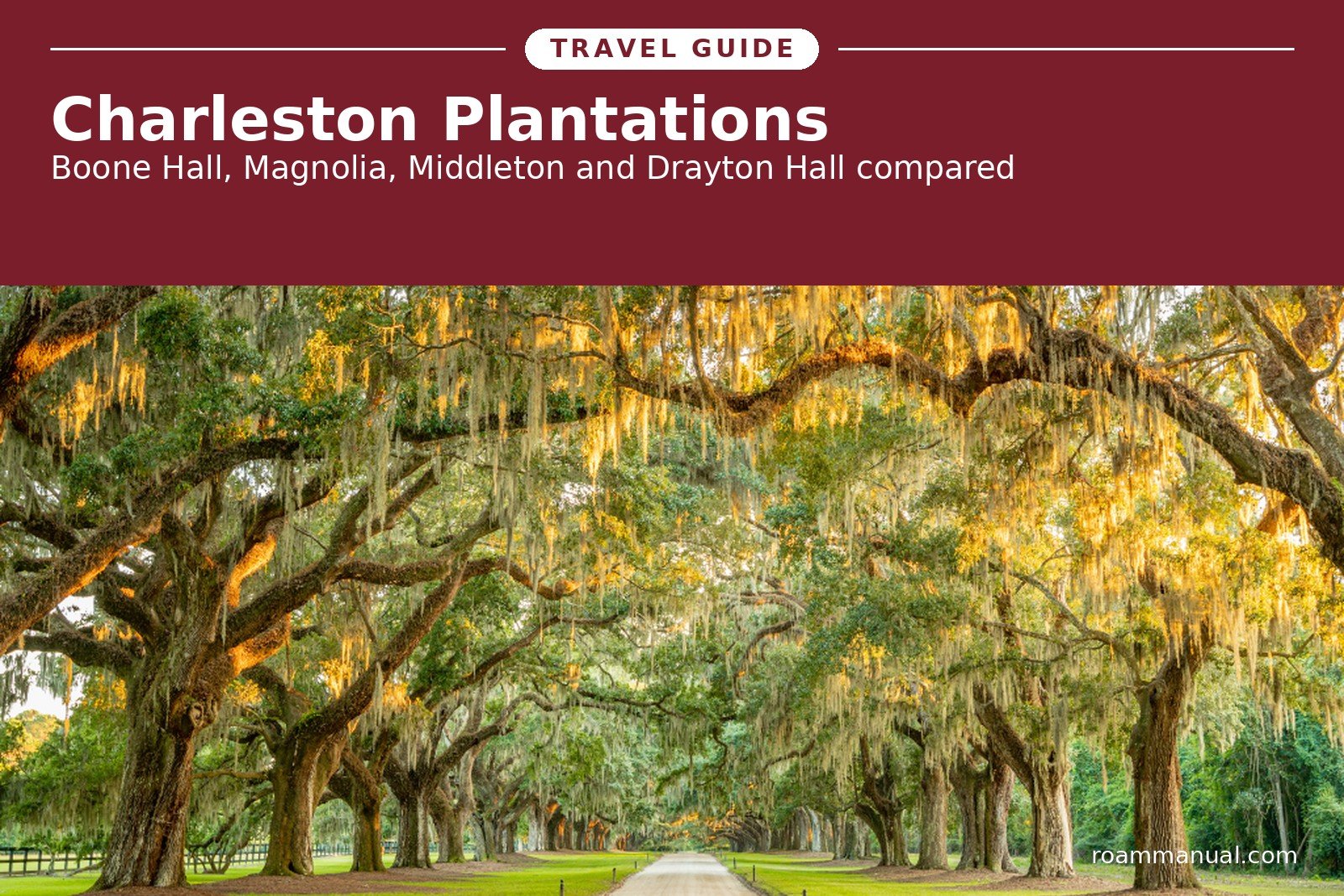
Charleston has more historic plantations than you can fit into one trip. Six strong options sit within an hour of downtown, and each one tells a different story.
Some focus on gardens. Some focus on architecture. One puts the enslaved community at the center of the whole visit. This guide compares them honestly, so you can pick the right one and skip the rest with no regrets.
Plantations rank high on most lists of things to do in Charleston, SC, and they deserve the spot. Just know that no two visits feel alike.
Charleston plantations at a glance
- Boone Hall: about 20 minutes away, $30 for adults, best first plantation visit
- Magnolia Plantation: about 25 minutes, $35 for adults, best for gardens and wildlife
- Middleton Place: about 25 minutes, $35 for adults, best for formal gardens and deep history
- Drayton Hall: about 20 minutes, $32 for adults, best for architecture lovers
- McLeod Plantation: about 10 minutes, $20 for adults, best for the story of the enslaved community
- Hampton Plantation: about 1 hour, grounds are free, best quiet and low-cost day trip
Boone Hall Plantation and Gardens
Boone Hall sits in Mount Pleasant, about eight miles from downtown Charleston. John Boone founded it in 1681, and the family planted the famous oak rows in 1743.
Your drive in sets the tone. Two rows of moss-draped live oaks form the Avenue of Oaks, one of the most photographed entrances in the South.
One ticket covers everything here, which makes planning simple:
- Adult admission: $30, with seniors, military, and AAA members at $27
- Kids: $12 for ages 6 to 12, and free for ages 5 and under
- Hours: Monday to Saturday, 9 am to 5 pm, and Sunday, noon to 5 pm
- House tour: guided tours of the first floor, included in admission
- Also included: a tractor tour of the grounds, garden entry, and stable tours
The house itself dates to 1936, not the colonial era. Guides explain that openly, and the tour still works well because the rooms show how a grand Lowcountry home ran in the last century.
Slavery gets serious treatment here. The Black History in America exhibit fills nine original brick cabins where enslaved people once lived, and each cabin covers a different era, from capture to civil rights.
Boone Hall also runs the only live Gullah culture presentation at a Lowcountry plantation. A presenter explains the language, food, and traditions that enslaved Africans created and their descendants still keep alive.
Budget three to four hours. It is still a working farm, the grounds are big, and kids usually love the tractor tour most.
Magnolia Plantation and Gardens
Magnolia is the garden lover’s pick. The Drayton family founded it in 1676, and the gardens opened to the public in 1870, which makes them some of the oldest public gardens in America.
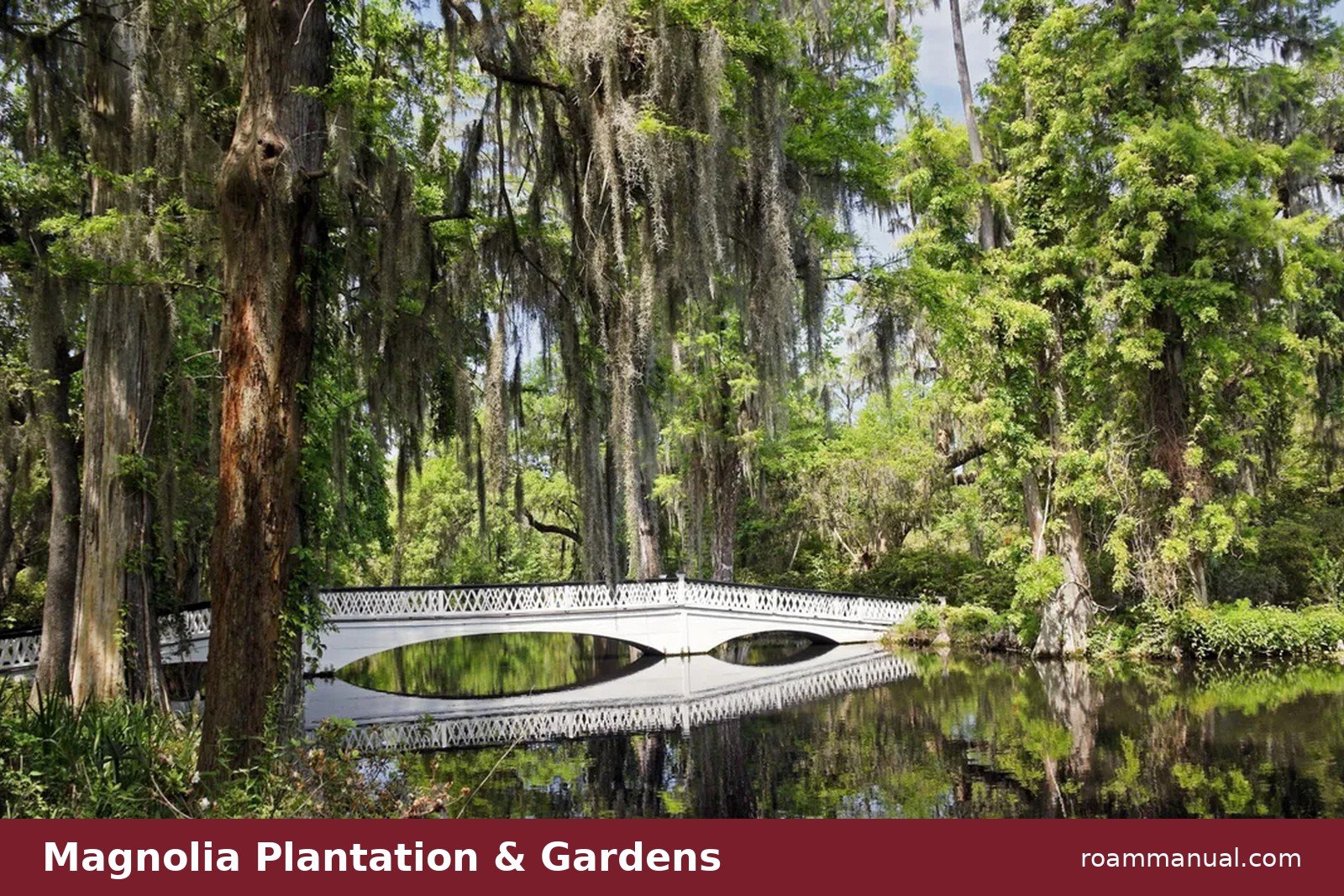
Forget neat rows and trimmed hedges. Magnolia uses a romantic style, so paths wander through camellias, azaleas, and old oaks that look half wild on purpose.
- Adult admission: $35, and it includes the house tour and the Slavery to Freedom tour
- Hours: open daily, 9 am to 5 pm, with tours running until 4 pm
- House tour: a 45-minute guided tour of the family home, included
- Paid extras: the Nature Train and the seasonal Wildlife Boat tour
- Drive time: about 25 minutes up Ashley River Road
The Audubon Swamp Garden is the part people talk about afterward. Boardwalks cross black water under bald cypress trees, and you can spot herons, turtles, and alligators from the path.
The From Slavery to Freedom tour runs 45 minutes and starts at the restored cabins on the grounds. Guides trace the lives of the enslaved families who lived there, then follow their descendants into freedom and beyond.
Families get extra value here. The Wildlife Center keeps rescued native animals, and kids who tire of history can watch otters and birds instead.
Spring brings the big show. Camellias bloom in late winter, and azaleas peak around late March and early April. The gardens stay green and shady in summer, which helps on hot days.
Middleton Place
Middleton Place holds a title nobody else can claim. Its gardens, first laid out in 1741, are the oldest landscaped gardens in America.
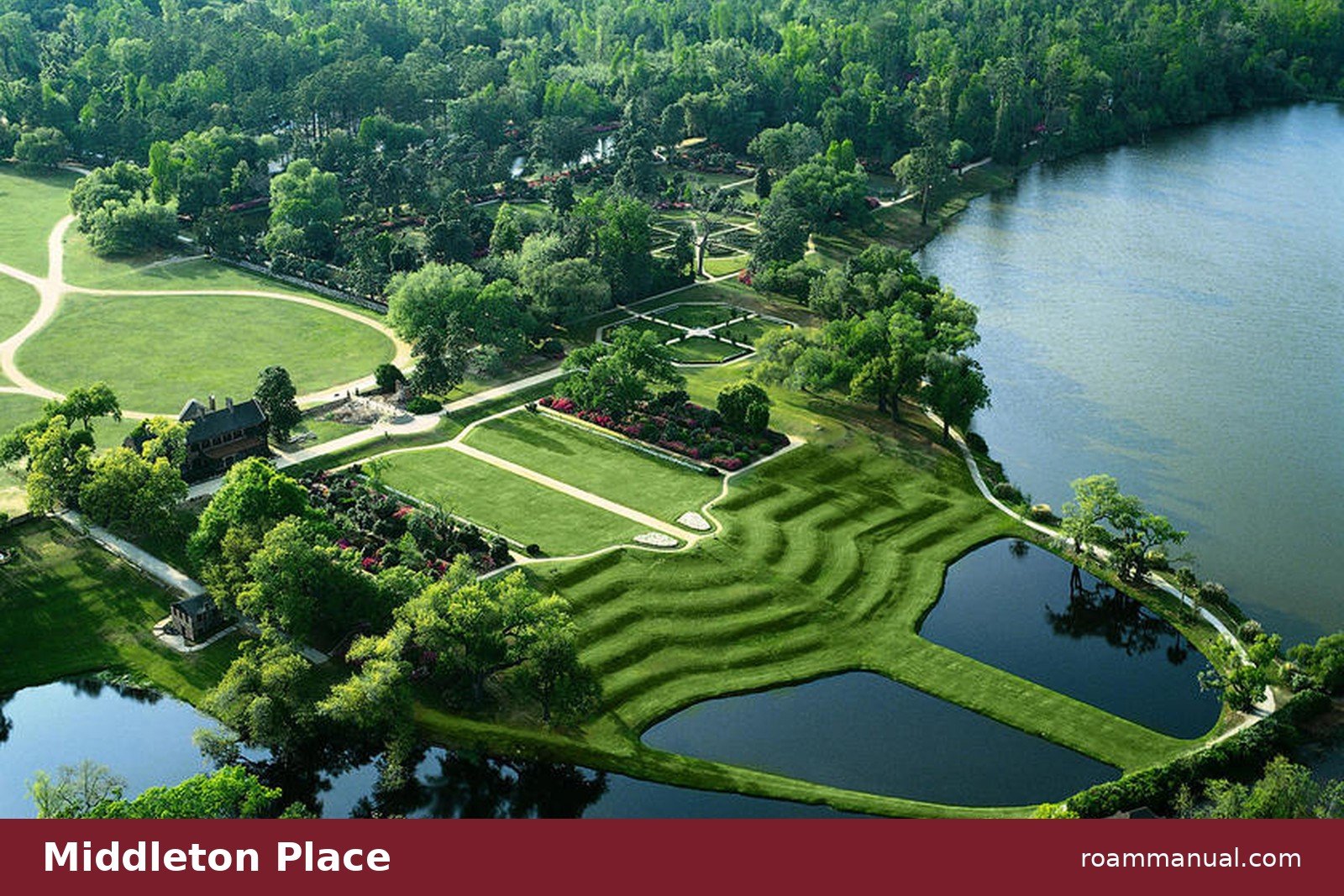
The design feels formal and calm. Terraces step down from the house toward the Ashley River, and two ponds, the Butterfly Lakes, sit side by side like wings.
- Adult admission: $35, with seniors and military at $32 and students at $20
- Kids: $15 for ages 6 to 13, and free for ages 5 and under
- Hours: open daily, 9 am to 5 pm
- Included: 65 acres of gardens, the House Museum, the stableyards, and daily guided tours
- Drive time: about 25 minutes, a few minutes past Magnolia
The original main house is gone. What survives is the South Flanker, a guest wing built in the 1700s that now holds the House Museum, full of family furniture, art, and documents.
Two signers connect to this land. Henry Middleton helped lead the colony, and his son Arthur Middleton signed the Declaration of Independence.
Eliza’s House tells the other half of the story. This small cottage was home to a freed family after the Civil War, and its exhibit covers the enslaved people who built and ran Middleton Place, plus the generations who stayed after emancipation.
The stableyards add life to the history. Heritage breed sheep, goats, and water buffalo graze there, and artisans show old trades like blacksmithing and weaving.
Plan on three hours or more. The on-site restaurant serves Lowcountry lunch, so you can eat without leaving the grounds.
Drayton Hall
Drayton Hall takes the opposite approach to every other site on this list. Nothing here gets restored or dressed up, and that choice is the whole point.
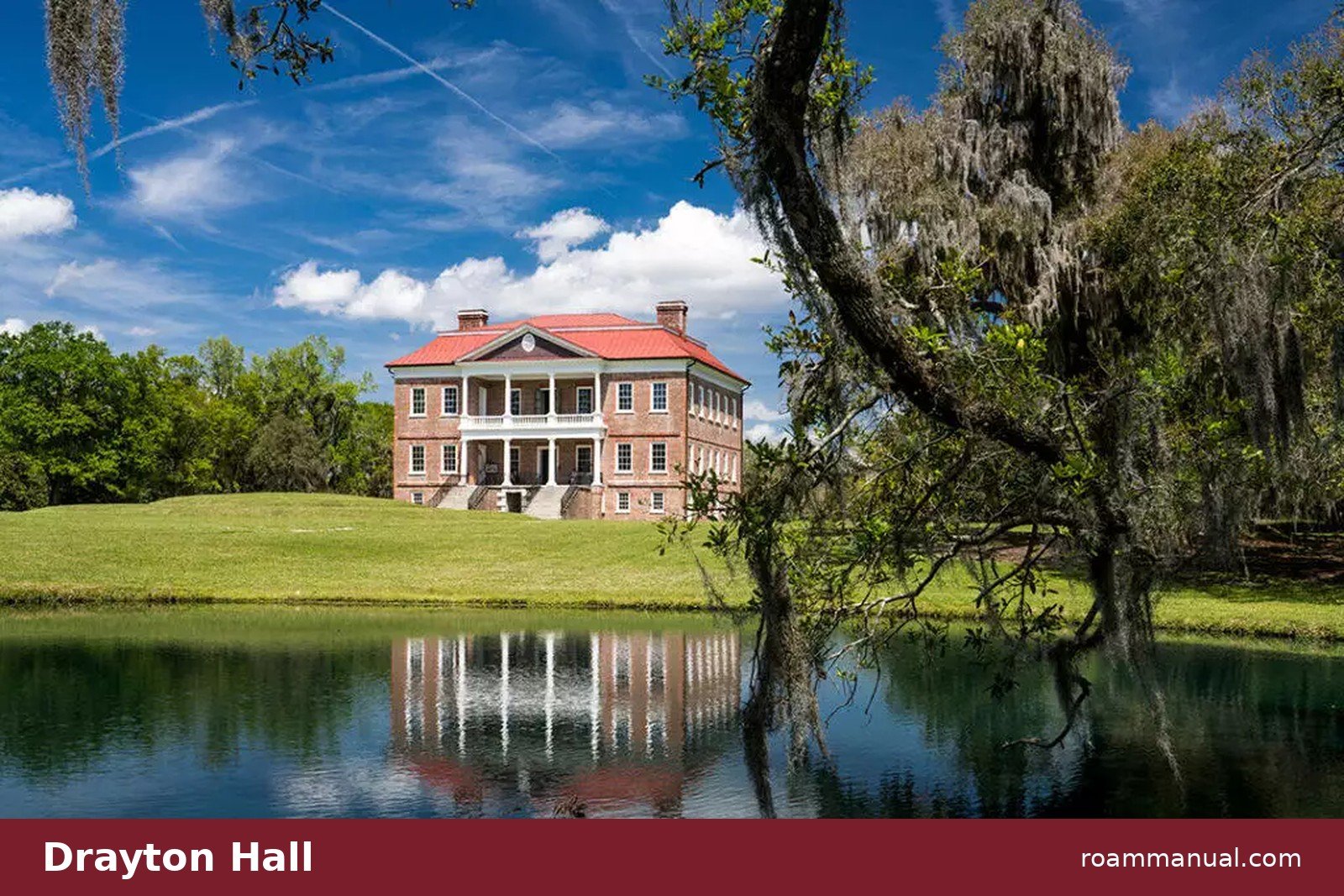
John Drayton founded the estate in 1738. The house is the oldest preserved plantation house in America that stays open to the public, and it is the country’s earliest fully executed Palladian design.
- Adult admission: $32, and it covers the house tour, galleries, and grounds
- Hours: Wednesday to Monday, 9 am to 4:30 pm, and the gate closes at 3 pm
- Closed: every Tuesday, so plan around it
- House tour: a one-hour interpreter-led tour of the cellar and both floors
- Drive time: about 20 minutes, just before Magnolia on Ashley River Road
The rooms stand empty on purpose. You see original plaster, carved woodwork, and the marks of almost three centuries instead of reproduction furniture.
That bare honesty extends to the grounds. The African American cemetery dates to about 1790, and it stays natural and unplanted at the request of Richmond Bowens, a descendant of the enslaved community here.
Two stops give the visit real depth:
- The conservation lab, where you can watch staff clean and repair artifacts from live digs
- The Caretaker’s House exhibit, which covers the Black community that formed around phosphate mining after the Civil War
An audio tour of the landscape comes with admission, so you can wander the riverfront oaks at your own pace afterward. Give Drayton Hall about two hours.
McLeod Plantation Historic Site
McLeod Plantation is smaller, cheaper, and closer than the Ashley River estates. It sits on James Island, about ten minutes from downtown, and it tells the hardest story best.
This was a sea island cotton plantation, founded in 1851. The county now runs it as a historic site dedicated to the enslaved people who worked here and the descendants who lived here into the 1990s.
- Adult admission: $20, with seniors at $15 and kids ages 3 to 12 at $6
- Hours: Tuesday to Sunday, 9 am to 4 pm, and closed on Mondays
- Guided tours: every hour on the half hour from 9:30 am, included with admission
- Main house: first floor entry included, with the grounds, cemetery, and riverfront
Guides tell the story from the view of the enslaved community, not the owners. Tours last about 45 minutes, and each interpreter adds research and family stories of their own.
Transition Row is the heart of the site. Six cabins survive here, homes first to enslaved families, then to soldiers, freed families, and Gullah descendants who stayed for generations.
Do not skip the McLeod Oak. The huge live oak near the house is roughly 600 years old, and it was already ancient when the plantation began.
Ninety minutes covers McLeod well. If you care most about honest history and least about grand gardens, this is your plantation.
Leave time for the outbuildings too. The cotton gin house, kitchen, and dairy show the work that filled each day here, long after the guided tour ends.
Hampton Plantation State Historic Site
Hampton Plantation is the day-trip option. It sits near McClellanville, about an hour north of Charleston on US-17, inside the state park system.
This was a colonial rice plantation, and the Georgian mansion still stands over old fields along Wambaw Creek.
George Washington visited in 1791. Local tradition says he asked the owners to spare the giant oak by the house, and the Washington Oak still stands today.
- Grounds: free to enter, open daily from 9 am, until 5 pm in winter and 6 pm in summer
- House tours: run by park rangers, $10 for adults and $5 for kids ages 6 to 15
- Tour times: usually Friday to Tuesday at noon and 2 pm, with a morning tour added in spring and summer
- Focus: rice culture, architecture, and the enslaved community that made the estate run
Expect quiet trails, old rice fields, and almost no crowds. Hampton pairs well with a slow coastal drive, and it fits naturally into a wider loop of day trips from Charleston.
Which Plantation Should You Choose?
Still torn? Match your trip style to the site:
- First plantation ever: Boone Hall, because one ticket covers the house, cabins, Gullah presentation, and grounds
- Garden lover: Magnolia for wild and romantic plantings, or Middleton Place for formal design
- History of slavery, told straight: McLeod first, with Drayton Hall a close second
- Architecture fan: Drayton Hall, and nothing else comes close
- Tight budget: McLeod at $20, or Hampton, where the grounds cost nothing
- Only half a day free: McLeod, the closest site to downtown
- Traveling with kids: Boone Hall for the tractor tour, or Magnolia for the Wildlife Center
Can You Combine Two Plantations in One Day?
Yes, if you pick neighbors. Magnolia, Middleton Place, and Drayton Hall all sit on Ashley River Road, a few minutes apart.
The classic pairing is Magnolia in the morning and Middleton Place after lunch. Start at opening time, give each site about three hours, and you will finish by late afternoon without rushing.
Drayton Hall swaps in easily for either one. Its visit runs shorter, around two hours, so it pairs well with a long Magnolia morning.
Boone Hall and McLeod sit on opposite sides of Charleston. Combining them is possible, but the cross-town drive turns it into a long day, and both deserve better than a rush.
Short on time or without a rental car? Guided day tours bundle transport and entry together, and our roundup of Charleston tours covers the best options.
Practical Tips for Visiting Charleston Plantations
- You need a car. None of these sites sit on a city bus route, though McLeod comes closest. Rideshares can drop you off, but return pickups in Mount Pleasant or on Ashley River Road can be slow.
- Arrive at opening time. Tour groups fill the middle of the day, and morning light makes the oak avenues and gardens look their best.
- Watch the closed days. Drayton Hall closes on Tuesdays and McLeod closes on Mondays. Boone Hall opens at noon on Sundays.
- Dress for the weather. Most of every visit happens outdoors. Summer brings heat, humidity, and mosquitoes, so carry water, sunscreen, and bug spray.
- Time your season. Spring offers the best blooms and mild days, and our guide to the best time to visit Charleston breaks down each month.
- Base yourself well. Staying downtown keeps every site within about 25 minutes, and our notes on where to stay in Charleston compare the areas.
- Buy tickets online where you can. Boone Hall and Magnolia both sell admission on their websites, which skips the gate line on busy spring weekends.
- Bring cash for small extras. Drayton Hall’s gate takes cards only, but farm stands and tips elsewhere still run on cash. More small details sit in our Charleston travel tips.
Charleston Plantations FAQs
Which Charleston plantation is the best one to visit?
Boone Hall is the best all-round choice for a first visit, because one $30 ticket covers the house tour, the slave cabin exhibit, a live Gullah presentation, and the grounds. Pick Magnolia or Middleton instead if gardens matter most.
How much does it cost to visit a Charleston plantation?
Adult tickets run from $20 at McLeod to $35 at Magnolia and Middleton Place. Boone Hall charges $30 and Drayton Hall charges $32. Hampton Plantation is the budget outlier, with free grounds and a $10 house tour.
How much time do you need at a Charleston plantation?
Plan two to four hours per site. Drayton Hall and McLeod fit into about two hours each, while Boone Hall, Magnolia, and Middleton Place each reward three hours or more.
Can you visit Charleston plantations without a car?
Yes, but it takes planning. Guided day tours include transport from downtown and admission, which removes the driving problem. Rideshares work for drop-off, yet pickup from rural Ashley River Road can involve a long wait.
Which Charleston plantation is best for kids?
Boone Hall and Magnolia suit families best. Boone Hall has a tractor tour and big open grounds, and Magnolia adds a Wildlife Center with rescued animals.
Both keep ticket prices lower for children. Kids ages 5 and under enter free at Boone Hall and Middleton Place.
Do Charleston plantations talk about slavery?
Yes, all six do, but the depth varies. McLeod builds its whole tour around the enslaved community and their descendants.
Boone Hall devotes nine original cabins to its Black History in America exhibit, and Magnolia runs a dedicated Slavery to Freedom tour. Drayton Hall preserves an African American cemetery from about 1790.
Whichever site you choose, give it real time instead of squeezing it between lunch and a harbor tour.
These places carry the full weight of Charleston’s story, the beautiful parts and the brutal ones, and they reward a slow visit. For the rest of your days in the city, start with our complete plan for a trip to Charleston.
