



Last updated: October 1, 2026
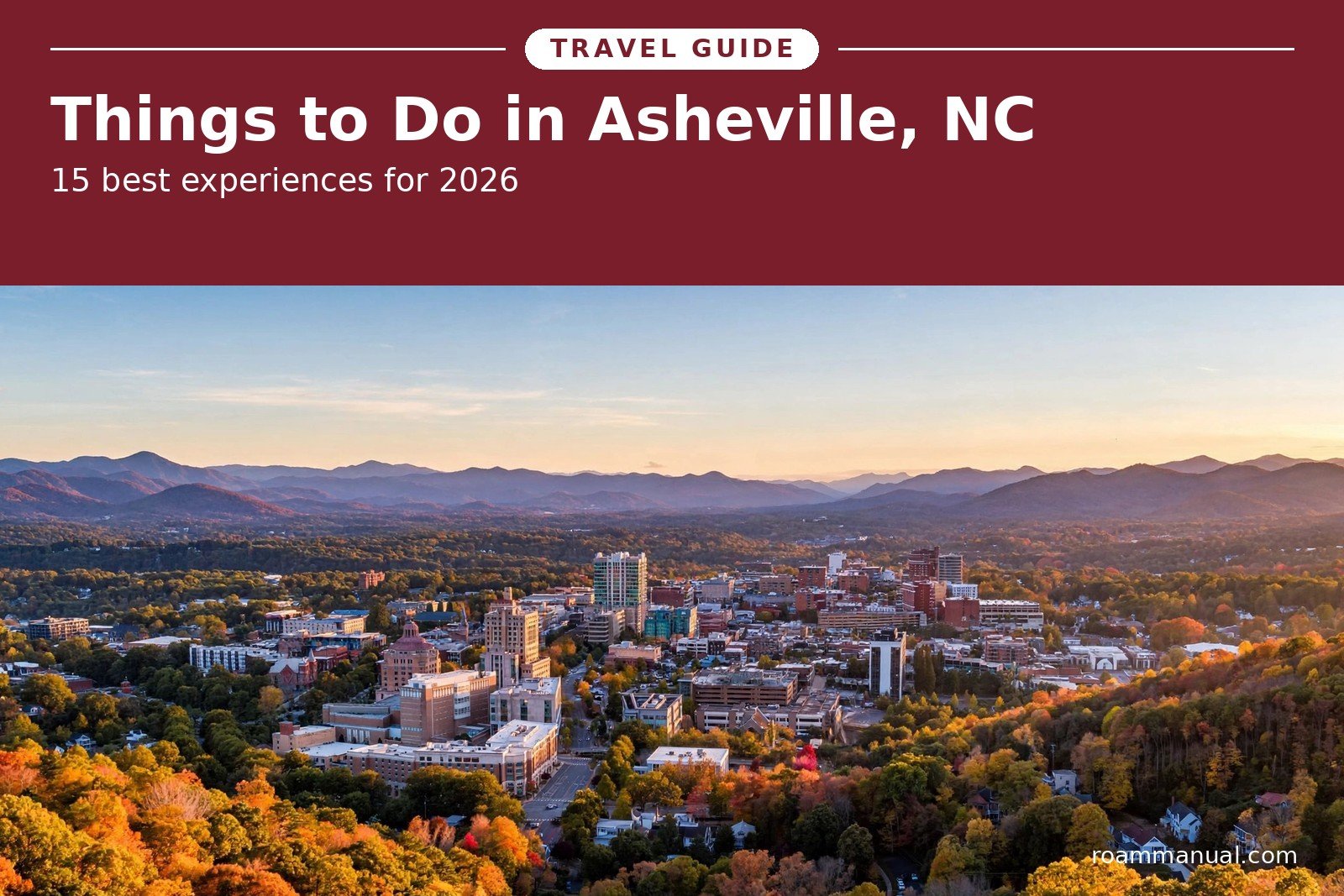
Asheville sits in the Blue Ridge Mountains of western North Carolina, a small city with big views, a famous historic estate, a walkable artsy downtown, and more craft beer than most cities twice its size.
Visitors come for the mountains, the food, and the unhurried mountain-town rhythm.
A note before the list. In late September 2024, Hurricane Helene brought catastrophic flooding to western North Carolina, and parts of the Asheville area were hit hard.
Two years later, the city is open and welcoming visitors, and tourism is a big part of the comeback. Most attractions, restaurants, and trails are running normally.
A few places, like the River Arts District and some stretches of the Blue Ridge Parkway, are still rebuilding. This guide flags those honestly so you can plan well and still have a great trip.
The Asheville Quick Plan: Do Not Miss These
- Biltmore Estate: tour America’s largest private home, its gardens, and the winery in Antler Hill Village.
- Blue Ridge Parkway: drive the open stretches near town, stop at the Folk Art Center, and catch the overlooks.
- Downtown Asheville: Grove Arcade, the Basilica of St. Lawrence, shops, and street performers.
- River Arts District: working studios and galleries, partly rebuilt after Helene, still worth visiting.
- Beer and food: brewery taprooms and farm-to-table restaurants, then live music at the Orange Peel.
- Day trip: Chimney Rock State Park or the Great Smoky Mountains for the full mountain experience.
1. Tour the Biltmore Estate
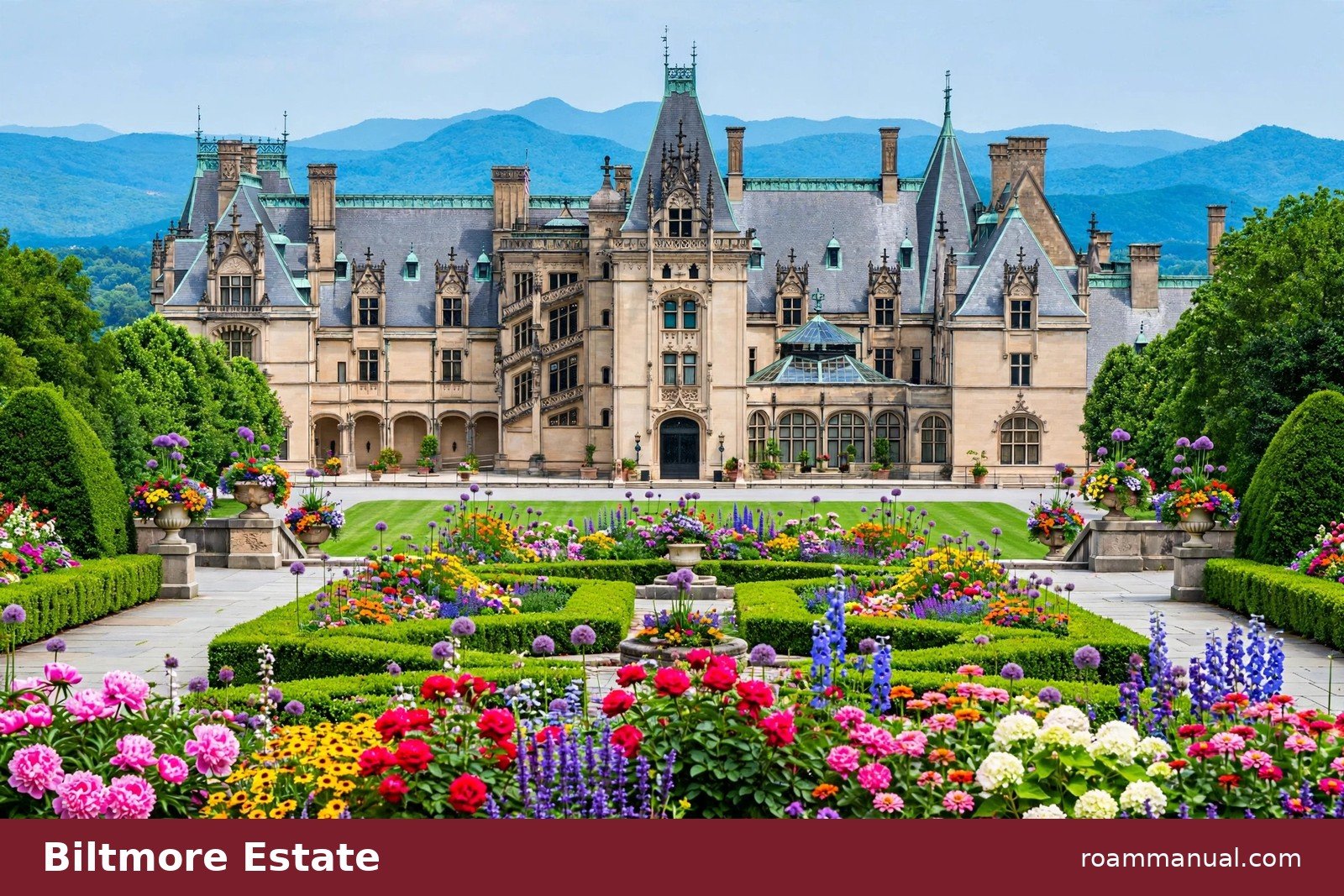
The Biltmore Estate is the reason many people visit Asheville, and it lives up to its billing.
Built by George Washington Vanderbilt II in the late 1800s, the 250-room French Renaissance mansion is the largest privately owned home in the United States. It sits on about 8,000 acres of gardens, woodland, and farmland.
The self-guided house tour walks through grand halls, the library, the banquet hall with its 70-foot ceiling, and the indoor winter garden. Plan at least two hours for the house alone, and more if you linger over the details.
Outside, the gardens designed with Frederick Law Olmsted’s influence change with the seasons: azaleas in spring, roses in summer, and bright fall color in October.
The winery offers free tastings for guests 21 and over, and Antler Hill Village adds shops, restaurants, and the farm area. Many visitors spend a full day on the estate without rushing.
The estate closed briefly after Hurricane Helene in September 2024 but reopened on November 2, 2024, with minimal damage to the house, gardens, and winery. It is fully open in 2026.
Note that the entrance road runs through Biltmore Village, which suffered heavy flooding and is still working through restoration, so give yourself a little extra time to get there.
Buy tickets online in advance, since prices rise closer to the date and holiday seasons sell out. See our Biltmore Estate guide.
2. Drive the Blue Ridge Parkway
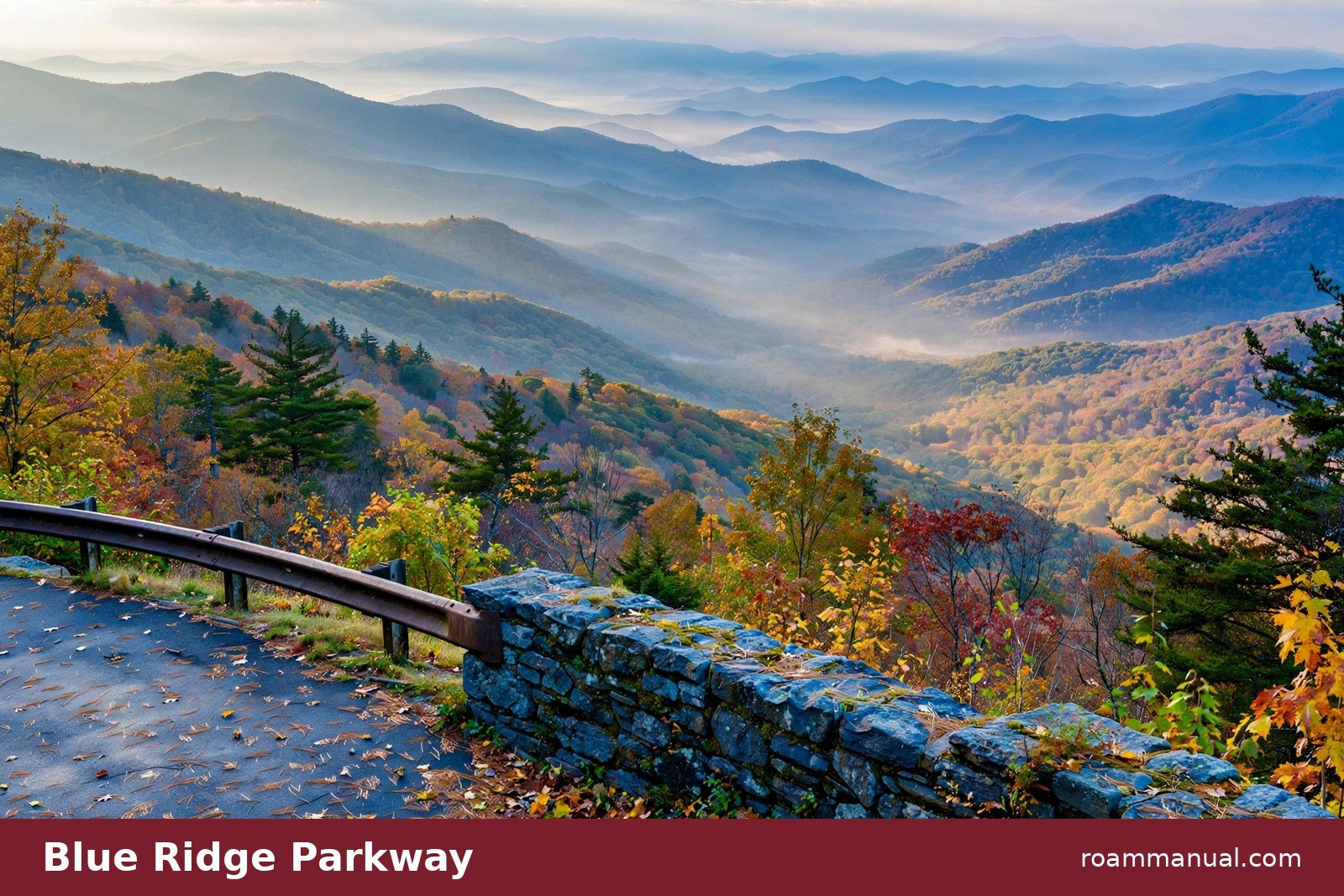
The Blue Ridge Parkway is one of America’s most beloved scenic drives, and it passes right through the Asheville area.
Access points near town include the Folk Art Center at Milepost 382 on the east side of Asheville, a good first stop with craft demonstrations, galleries, and exhibits on Appalachian arts.
From there, the parkway runs north toward Craggy Gardens and Mount Mitchell State Park, home to the highest peak east of the Mississippi, and south toward Mount Pisgah and the Graveyard Fields overlooks.
Overlooks pull off every few miles, so even a short drive delivers big mountain views.
Helene caused the worst damage in the parkway’s history, with dozens of landslides along the North Carolina stretch. As of late 2026, the sections most visitors use around Asheville are open, including the drive from Asheville to Cherokee.
Two segments remain closed: Milepost 317 to 327 and Milepost 334 to 355, with full reopening targeted for the end of 2026.
About 45 active work sites are still in progress, so expect construction traffic and reduced speed limits in places.
Always check the National Park Service’s current road status page before you drive, especially if you plan to reach Linville Falls or Mount Mitchell from the north.
If this drive inspires a longer trip, our Blue Ridge Parkway road trip guide lays out a full 3-day itinerary. Visiting in autumn? Our Blue Ridge Parkway fall colors guide covers peak timing by elevation.
Overnight stops are covered in our Blue Ridge Parkway camping guide.
3. Explore Downtown Asheville
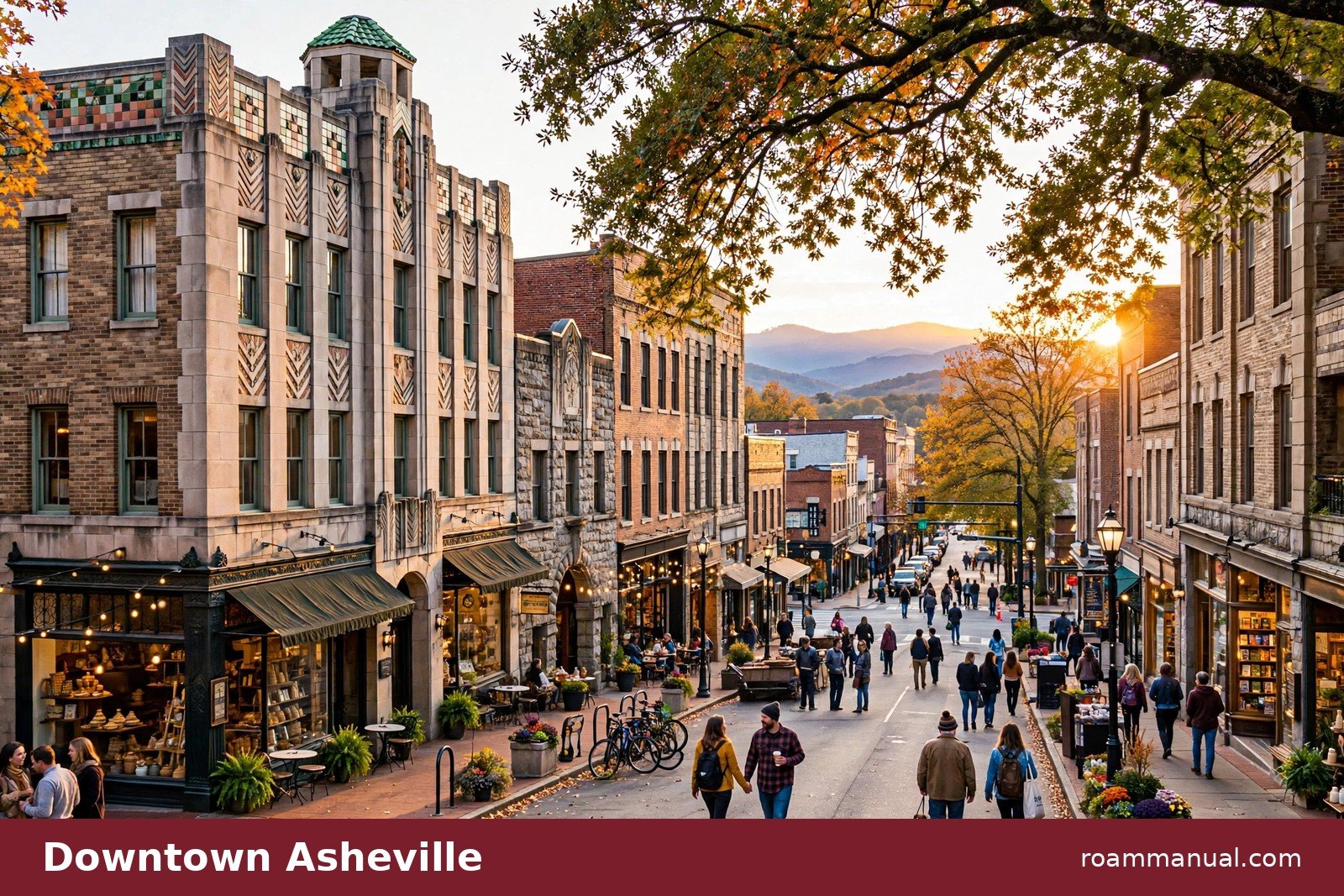
Downtown Asheville is compact, walkable, and full of character. The streets are lined with Art Deco and Beaux-Arts buildings from the early 1900s, a legacy of the city’s boom years.
Look for the flatiron-shaped Jackson Building and the grand Asheville City Hall with its pink marble.
The Grove Arcade is the centerpiece: a 1929 historic building with an arched glass roof that now houses local shops, galleries, and cafes. It is the best single place downtown for browsing mountain crafts and picking up souvenirs.
Pack Square Park at the heart of downtown hosts concerts, festivals, and food truck gatherings through the warmer months.
Buskers and street performers gather along Lexington Avenue and the surrounding blocks, giving the whole district a lively, creative feel. Give downtown at least half a day, and go back after dark for dinner and music. Plan your time with our guide to downtown Asheville.
4. Visit the River Arts District
Along the French Broad River, the River Arts District holds working studios and galleries in former warehouses and factory buildings.
Artists open their doors so visitors can watch pottery, painting, glasswork, and woodworking in progress, then buy directly from the makers.
In 2026, the district was voted the number one arts district in the country in USA Today’s reader poll.
Be honest about the current state: this neighborhood took some of the worst flooding from Helene, and the district is still rebuilding.
Many studios have reopened or relocated, some buildings remain closed, and the map looks different from a few years ago.
That said, the artists are back, studios are open, and the creative energy is real. Spending money here matters more than anywhere else in Asheville, because many of these businesses lost everything and rebuilt from scratch.
Check the district’s current studio map before you go, since some artists moved to new addresses in West Asheville and elsewhere while their original buildings are repaired.
Weekends are the liveliest time to visit, with more studios open and regular art walks.
5. Enjoy the Breweries, Food, and Drink Scene
Asheville has long been nicknamed Beer City USA, and its craft beer scene is one of the biggest draws in town.
Breweries cluster in the South Slope neighborhood near downtown, in West Asheville, and out toward the River Arts District. Many have large taprooms with outdoor seating and mountain views. For taproom-by-taproom picks, see our guide to Asheville breweries.
You do not need a plan to enjoy it. Pick a neighborhood, walk between two or three taprooms, and try a flight. Most breweries offer non-alcoholic options and full food menus too.
If beer is not your thing, the city’s cideries, cocktail bars, and coffee roasters are strong as well.
The food scene leans farm-to-table, which makes sense in a region surrounded by farmland.
Downtown and West Asheville hold the densest collection of restaurants, from Southern comfort food and barbecue to inventive small plates. Chocolate lovers should know that Asheville has several bean-to-bar chocolate makers worth a stop.
For an evening out, the Orange Peel at 101 Biltmore Avenue is the city’s landmark music venue, hosting nationally touring acts across rock, Americana, hip-hop, and electronic music, with a 2026 schedule running through the fall.
Its outdoor sister venue, Hellbender, adds summer and fall shows under the open sky. Check the calendar before your trip and book around a show you like.
6. Get Outside: Hiking, Waterfalls, and the River
Asheville is ringed by public land, so outdoor adventure is never far away. Pisgah National Forest wraps around the city to the east and south, with hundreds of miles of hiking trails through hardwood forest and along clear mountain streams.
Craggy Gardens, about 30 minutes up the parkway from town, is one of the easiest high-payoff outings: short trails through rhododendron tunnels open onto grassy balds with wide mountain views.
In June, the rhododendron blooms turn the balds pink. Mount Mitchell State Park, reached via the parkway when open, offers a short summit trail to the highest point east of the Mississippi at 6,684 feet.
Waterfall lovers have options in every direction. Looking Glass Falls near Brevard is visible right from the road, while the Graveyard Fields area off the parkway pairs waterfalls with early fall color.
For a deeper dive into the region’s falls, check the trails and mileposts in our companion content on the parkway’s waterfalls.
The French Broad River runs right through town, and outfitters offer guided rafting trips, tubing floats, and stand-up paddleboard rentals in the warmer months.
Calmer sections near Asheville suit beginners, while downstream stretches get wilder. Zipline canopy tours operate in the forests outside town for a different view of the treetops.
One practical note: some trails and forest roads are still being repaired after Helene. Check the National Forest Service alerts for the Pisgah Ranger District before heading out, especially for backcountry routes.
7. Take a Day Trip
Asheville makes a great base for day trips, and several are worth the drive.
Chimney Rock State Park sits about 25 miles southeast near Lake Lure. The park’s 315-foot granite tower rises above Hickory Nut Gorge, and an elevator inside the mountain carries visitors most of the way to the top.
Helene washed away the park’s entrance bridge and closed it for nine months, but it reopened in June 2025 and is running normally in 2026. Advance reservations are required, so book online before you go.
Black Mountain is a 20-minute drive east, a small town with a walkable main street, local shops, and easy lake access at Lake Tomahawk. It pairs well with a parkway drive or a Chimney Rock day.
Great Smoky Mountains National Park begins at Cherokee, about an hour west via US 19. The Oconaluftee entrance gives access to the park’s elk meadows, the Mountain Farm Museum, and the scenic Newfound Gap Road.
It is a full day, but the most-visited national park in the country is an easy add to an Asheville trip.
Hot Springs, about 45 minutes north, is a tiny town on the Appalachian Trail known for its natural hot mineral springs. Soaking tubs fed by the springs make a relaxing half-day stop, especially after a hike.
8. When to Visit: Seasonal Tips
Fall is Asheville’s star season. Color moves downhill through October:
- The highest ridges above 5,000 feet turn in late September and early October.
- Mid elevations peak around mid-October.
- Asheville itself at about 2,100 feet usually peaks from mid to late October.
- Lower valleys hold color into early November.
Expect crowds and higher prices on October weekends. Book lodging early and drive the parkway on weekday mornings to beat the traffic.
Spring brings wildflowers, blooming rhododendron, and mild temperatures. Trails are quieter, waterfalls run full from spring rain, and downtown patios fill up. Late April through May is a sweet spot.
Summer is warm but cooler than the lowland South, thanks to the elevation. It is the best season for tubing and rafting on the French Broad, outdoor concerts, and festivals. Afternoon thunderstorms are common, so start hikes early.
Winter is the quiet season. The Biltmore Estate’s Christmas decorations run from early November into January and draw big crowds, but otherwise winter means lower prices, empty trails, and occasional snow at higher elevations.
Ski resorts operate within an hour or two of town.
9. Suggested 3-Day Itinerary
Day 1: Biltmore and downtown. Spend the morning and early afternoon at the Biltmore Estate: the house tour, gardens, and a winery tasting.
Head downtown in the late afternoon for the Grove Arcade and the Basilica of St. Lawrence, then dinner and a show at the Orange Peel or a brewery crawl on the South Slope.
Day 2: Blue Ridge Parkway. Start at the Folk Art Center, then drive the parkway south toward Mount Pisgah and Graveyard Fields, stopping at overlooks along the way. Pack a picnic or eat at the Pisgah Inn area.
In the afternoon, drive back via the River Arts District for gallery browsing, then dinner in West Asheville.
Day 3: Choose your adventure.
- Option one: Chimney Rock State Park and Lake Lure for the tower views and small-town shops (book tickets ahead).
- Option two: the Great Smoky Mountains via Cherokee for elk, mountain views, and the park’s historic buildings.
- Option three: a slow day with a morning hike at Craggy Gardens, an afternoon on the French Broad River, and a farewell dinner downtown.
Have a fourth day? Add Black Mountain and a second parkway stretch, or spend it in the River Arts District and Biltmore Village shops.
10. Where to Stay
Location matters more than luxury in Asheville, since the town is spread out along the river and the interstate.
Downtown puts you within walking distance of restaurants, breweries, the Orange Peel, and Pack Square. It is the priciest area but the most convenient if you want evenings out without driving.
The Biltmore area suits visitors who plan to spend a full day at the estate. Lodging near the entrance, including the estate’s own inns, keeps the Biltmore day simple and the drive into downtown short.
West Asheville and the River Arts District offer a more local, artsy feel with good restaurant streets and generally lower prices than downtown. East Asheville near the Folk Art Center works well for parkway-focused trips.
Budget travelers find chain hotels and motels along the main highways, plus vacation rentals throughout the area. Whatever you choose, book early for October weekends and holiday weeks, when the whole region fills up.
FAQs
Is Asheville worth visiting in 2026 after Hurricane Helene?
Yes. Asheville is open and welcoming visitors in 2026, and most of the headline attractions are running normally, including the Biltmore Estate, downtown, the breweries, and most of the Blue Ridge Parkway near town.
Some areas are still rebuilding, especially the River Arts District and a few parkway segments. Check current conditions before you go, and know that your visit directly supports the local recovery.
How many days do you need in Asheville?
Three full days cover the essentials: one day for the Biltmore Estate and downtown, one day for the Blue Ridge Parkway, and one day for a day trip or outdoor adventure.
Add a fourth day if you want the Great Smoky Mountains or a slower pace with more brewery and gallery time.
What is Asheville best known for?
Asheville is best known for the Biltmore Estate, the Blue Ridge Parkway, its craft beer scene, a walkable artsy downtown, and its setting in the Blue Ridge Mountains.
The River Arts District, live music, and farm-to-table food round out the city’s reputation.
Is the Blue Ridge Parkway open near Asheville in 2026?
Yes, the stretches most visitors use are open, including the Folk Art Center at Milepost 382 and the drive south toward Mount Pisgah and Cherokee.
Two segments farther north, Milepost 317 to 327 and Milepost 334 to 355, remain closed with full reopening targeted for the end of 2026. Check the National Park Service road status before driving.
When is the best time to see fall colors in Asheville?
Asheville itself usually peaks from mid to late October, while higher elevations on the parkway turn earlier, from late September through mid-October.
Lower valleys can hold color into early November. Timing shifts with the weather each year, so check fresh foliage reports close to your travel date.
Can you visit Biltmore Estate in one day?
Yes, one full day covers the house tour, gardens, winery tasting, and Antler Hill Village without rushing. Buy tickets online in advance, arrive when the estate opens, and plan at least two hours for the house itself.
Is the River Arts District open after Helene?
Yes, the district is open and was voted the country’s top arts district in 2026, but it is still rebuilding.
Many studios have reopened or moved to new addresses, while some buildings remain closed. Check the current studio map before visiting, and go on a weekend when the most studios are open.
What is the best day trip from Asheville?
Chimney Rock State Park is the classic pick: about 25 miles away, with a famous granite tower, an elevator to the top, and the town of Lake Lure nearby.
It reopened in 2025 after Helene damage and requires advance reservations in 2026. For nature on a bigger scale, the Great Smoky Mountains National Park via Cherokee is about an hour west.
