



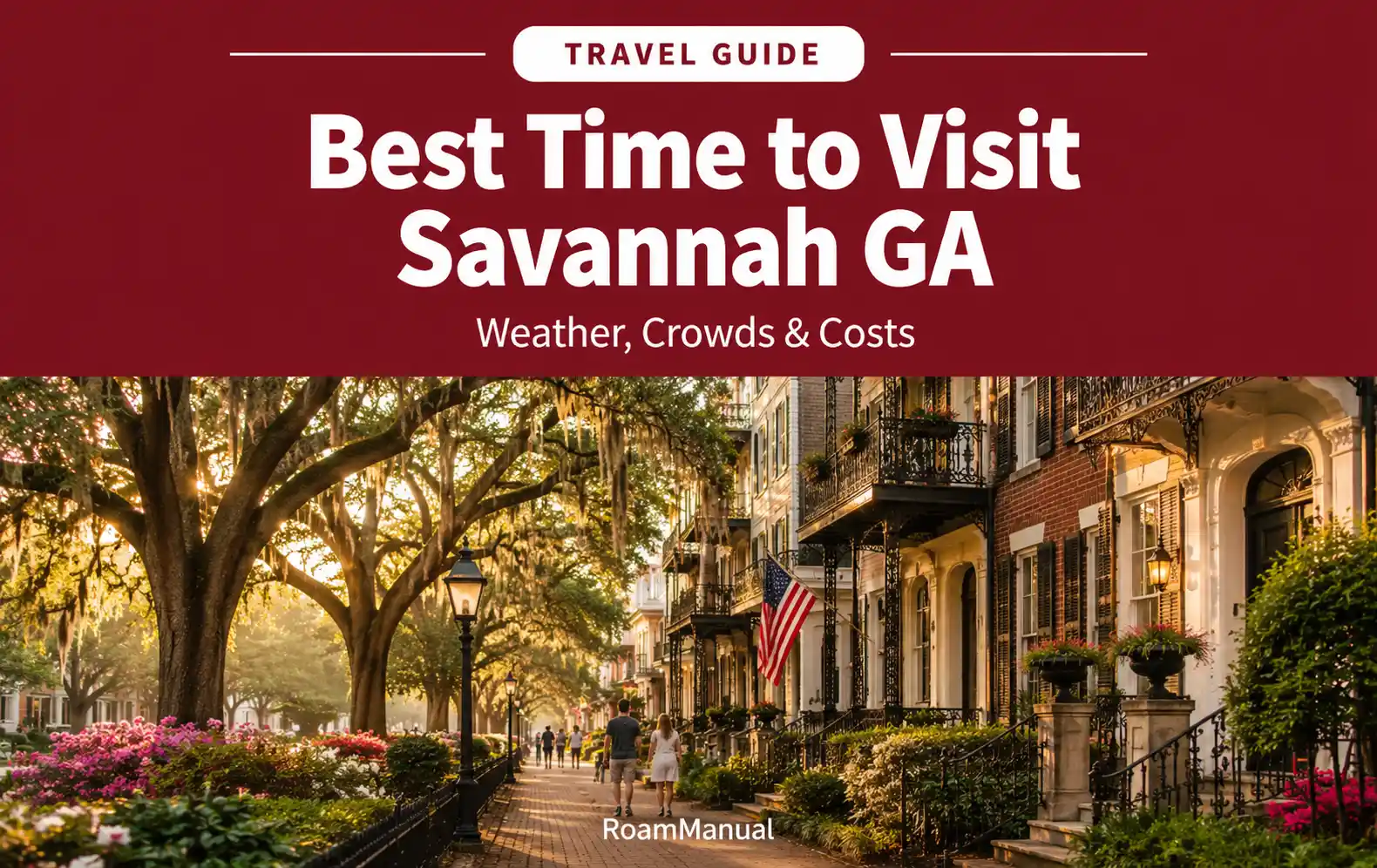
If you are wondering about the best time to visit Savannah, GA, spring from March to May and fall from October to November are the top choices for most travelers. These seasons offer comfortable temperatures, pleasant walking conditions, and ideal weather for exploring the city’s historic streets.
For seasonal conditions and monthly planning, use our guide to Savannah weather by month.
For most travelers, the best time to visit Savannah, GA is March through May and October through November. These months offer comfortable temperatures, lower humidity, and ideal conditions for exploring the Historic District on foot. Visit in winter for lower hotel prices or in summer for the warmest Tybee Island beach weather.
There is no single perfect time for everyone. Summer brings lower hotel rates but also intense heat and humidity, while winter offers quieter streets and better travel deals. The right season depends on whether you value pleasant weather, festivals, lower costs, beach time, or fewer crowds.
How to Choose the Best Time to Visit Savannah
Choose your travel dates based on what matters most to you. Weather, crowds, prices, festivals, and beach plans can all change which season is best.
| If your priority is… | Best time to visit |
|---|---|
| Comfortable sightseeing | March–May or October–November |
| Mild weather for walking | April, May, or October |
| Lower hotel prices | January–February or July–August |
| Festivals and events | March |
| Beach trips to Tybee Island | June–August |
| Fewer crowds | January, February, or early December |
| Outdoor dining | Spring and fall |
| Photography | Spring blooms or fall scenery |
For most first-time visitors, late March through early May and October offer the best balance of weather, attractions, and outdoor activities.
Best Time to Visit Savannah at a Glance
| If you want… | Best time to visit |
|---|---|
| Best overall weather | March–May and October–November |
| Comfortable walking | April, May, and October |
| Lowest hotel prices | January–February |
| Fewer crowds | January, February, and early December |
| Festivals and events | March |
| Beach weather | June–August |
| Outdoor dining | Spring and fall |
| Photography | Spring and fall |
Savannah Weather at a Glance
Savannah has a humid subtropical climate with hot summers, mild winters, and rain throughout the year. Weather rarely prevents sightseeing, but comfort levels change significantly between seasons.
| Season | Average High | Average Low | Crowds | Hotel Prices | Walking Comfort |
|---|---|---|---|---|---|
| Spring | 70–84°F | 49–64°F | High | High | Excellent |
| Summer | 89–92°F | 72–75°F | Moderate | Lower | Fair |
| Fall | 70–87°F | 56–71°F | Moderate to high | Moderate | Excellent |
| Winter | 61–65°F | 40–45°F | Low | Lowest | Good |
Because Savannah is best explored on foot, walking comfort often matters more than the temperature alone. Summer humidity can make sightseeing feel much hotter, while spring and fall are better suited to long walks through the Historic District, Forsyth Park, and River Street.
For practical transport details, use our guide to parking in Savannah.
Spring in Savannah: March to May
Best for: Comfortable weather, blooming parks, and first-time visitors.
Spring is the best overall season to visit Savannah because it combines pleasant temperatures, lower humidity, and ideal sightseeing conditions before the intense summer heat arrives.
Weather and Comfort
Spring days are pleasantly warm, with cool mornings and evenings that are comfortable for walking. Humidity remains lower than in summer, making this one of the easiest seasons for exploring the Historic District on foot.
Forsyth Park is especially attractive as flowers bloom, while Savannah’s oak-shaded streets are comfortable throughout much of the day.
Crowds
Spring is also Savannah’s busiest tourism season. Expect larger crowds in the Historic District, longer restaurant waits, higher hotel occupancy, and strong demand for walking and trolley tours.
The busiest period is around the St. Patrick’s Day celebrations. Travelers who are not visiting for the festivities may prefer later March, April, or early May.
Prices
Flights and hotels are often at their most expensive during spring. Booking accommodations several months in advance can provide more choice and may help you avoid the highest last-minute rates.
Best Spring Experiences
- Walking tours
- Historic home visits
- Outdoor dining
- Ghost tours
- River Street walks
- Exploring Savannah’s historic squares
- Visiting Bonaventure Cemetery
Spring Drawbacks
- Premium hotel rates
- Crowded attractions
- Limited accommodation during major events
- Higher airfare around festival dates
Who Should Visit in Spring?
Spring is an excellent choice for first-time visitors, couples, history lovers, photographers, and travelers planning long days of outdoor sightseeing.
Summer in Savannah: June to August
Best for: Budget travelers and beach trips.
Summer is best if you want lower hotel prices or plan to spend time at Tybee Island, but expect high heat and humidity throughout the day.
Weather and Comfort
From June through August, daytime temperatures often reach the low 90s°F. High humidity makes afternoons feel hotter, and brief thunderstorms are common.
Plan outdoor sightseeing for the morning or early evening. Use the hottest part of the day for museums, historic homes, restaurants, or other indoor attractions.
Crowds
Summer crowds are generally lighter than in spring, although weekends, school vacations, and holidays still attract visitors. Families often divide their time between Savannah and Tybee Island.
For help shaping your schedule, use our guide to Savannah weekend itinerary.
Prices
One of summer’s biggest advantages is value. Hotels may offer lower rates than during the spring peak, particularly outside holiday weekends.
Best Summer Experiences
- Day trips to Tybee Island
- Sunset river cruises
- Evening ghost tours
- Indoor museums
- Historic home tours
- Savannah’s food scene
- Rooftop bars after sunset
Summer Drawbacks
- High humidity can make walking tiring
- Afternoon heat limits outdoor sightseeing
- Frequent afternoon showers
- Possible tropical weather disruptions
Who Should Visit in Summer?
Summer works best for budget travelers, families combining Savannah with beach time, visitors with flexible schedules, and travelers who do not mind planning around the weather.
Fall in Savannah: September to November
Best for: Couples, photographers, and relaxed sightseeing.
Fall offers comfortable temperatures, lower humidity, and fewer crowds than spring, making it one of the most enjoyable seasons to explore Savannah.
Weather and Comfort
September can still feel like summer, but conditions usually improve by October. October and November often bring pleasant daytime temperatures, cooler evenings, and better walking conditions.
Crowds
Fall attracts many visitors, especially during October, but crowds are usually more manageable than during the spring festival season. Popular weekends can still fill hotels and tours.
Prices
Hotel prices remain moderate through much of fall. October can be busy, while November may provide a better balance between pleasant weather and value.
Best Fall Experiences
- Walking tours
- Outdoor cafés
- Historic squares
- River Street
- Bonaventure Cemetery
- Food events
- Photography
Fall Drawbacks
- September can remain hot and humid
- Early fall overlaps with hurricane season
- Popular weekends may have higher hotel rates
Who Should Visit in Fall?
Fall is ideal for couples, first-time visitors, photographers, history enthusiasts, and travelers planning active sightseeing.
Winter in Savannah: December to February
Best for: Budget-friendly trips and quieter vacations.
Winter provides the lowest accommodation prices, mild daytime temperatures, and fewer visitors, making it ideal for travelers who prefer a slower pace.
Weather and Comfort
Winter temperatures are mild compared with much of the United States. Some mornings and evenings feel chilly, but many afternoons are comfortable for walking with a light jacket.
Crowds
Outside the holiday period, winter is Savannah’s quietest season. Restaurant reservations, attraction tickets, and tours are generally easier to secure.
Prices
January and February often provide the year’s best hotel value. Flights may also be less expensive outside Christmas and New Year’s travel dates.
Best Winter Experiences
- Historic sightseeing
- Museums
- Architecture tours
- Food-focused trips
- Weekend getaways
- Quieter walks through the Historic District
Winter Drawbacks
- Cooler evenings
- Occasional rainy days
- Fewer outdoor festivals
- Ocean temperatures that are too cool for most swimmers
Who Should Visit in Winter?
Winter is an excellent choice for budget travelers, couples seeking a quiet getaway, repeat visitors, history lovers, and travelers who prefer relaxed sightseeing.
Spring vs. Fall: Which Season Is Better?
Both spring and fall are excellent times to visit Savannah. Choose spring for gardens, festivals, and a lively atmosphere. Choose fall for lower humidity, fewer crowds, and a more relaxed experience.
| Spring | Fall |
|---|---|
| Flowers and gardens in bloom | Lower humidity |
| Larger crowds | Smaller crowds |
| Higher hotel prices | Better overall value |
| Festival atmosphere | Relaxed sightseeing |
| Best for first-time visitors | Best for couples and repeat visitors |
Choose spring if you enjoy lively events and do not mind higher prices. Choose fall if you prefer comfortable weather with fewer crowds.
Best Time to Visit Savannah by Travel Style
The best season depends on the kind of trip you are planning.
| Traveler Type | Best Time |
|---|---|
| First-time visitors | April, May, or October |
| Couples | April, October, or November |
| Families | June–August with Tybee Island, or spring break |
| Budget travelers | January, February, July, or August |
| History lovers | Spring or fall |
| Photographers | March, April, or October |
| Food lovers | Spring and fall |
| Outdoor explorers | April, May, or October |
For most travelers, April and October provide the best combination of walkability, comfortable temperatures, and enjoyable outdoor experiences.
Month-by-Month Savannah Planning Calendar
| Month | Weather | Crowds | Hotel Prices | Recommendation |
|---|---|---|---|---|
| January | Cool | Low | Lowest | Excellent value |
| February | Mild | Low | Low | Quiet sightseeing |
| March | Warm | Very high | Very high | Festivals and spring blooms |
| April | Pleasant | High | High | One of the best months |
| May | Warm | High | High | Great weather |
| June | Hot | Moderate | Moderate | Beach trips |
| July | Very hot | Moderate | Lower | Budget travel |
| August | Very hot | Moderate | Lower | Budget travel |
| September | Warm | Moderate | Moderate | Improving conditions later in the month |
| October | Pleasant | Moderate | Moderate | One of the best months |
| November | Mild | Moderate | Moderate | Excellent sightseeing |
| December | Cool | Low to moderate | Moderate | Holiday atmosphere |
When to Avoid Visiting Savannah
No month is automatically a bad time to visit Savannah, but some periods may not suit your travel preferences. Consider the trade-offs before booking.
If You Dislike Heat and Humidity
July and August are the least comfortable months for long days outdoors. High temperatures and heavy humidity can make walking through the Historic District tiring, especially during the afternoon.
Start sightseeing early, take indoor breaks during the hottest hours, and save ghost tours or riverfront walks for the evening.
If You Prefer Quiet Sightseeing
Savannah’s St. Patrick’s Day celebration brings large crowds, higher hotel prices, road closures, limited restaurant availability, and longer waits at attractions.
Travel later in spring or during fall if you prefer a quieter experience.
If You Are Concerned About Hurricane Season
The Atlantic hurricane season runs from June through November, with the highest tropical activity generally occurring from August through October. Savannah is not affected every year, but storms can disrupt coastal travel.
- Choose flexible flight and accommodation policies
- Monitor weather forecasts before departure
- Consider travel insurance during peak hurricane months
Seasonal Booking Tips
Booking ahead can help you secure better accommodation choices and avoid peak-event shortages.
| Travel Season | When to Book Hotels | When to Book Flights |
|---|---|---|
| Spring | 3–6 months ahead | 2–4 months ahead |
| Summer | 1–3 months ahead | 1–3 months ahead |
| Fall | 2–4 months ahead | 2–3 months ahead |
| Winter | 1–2 months ahead | 1–2 months ahead |
Book as early as possible for St. Patrick’s Day because hotels may sell out months in advance.
Local Planning Tips
- Start walking tours early during summer to avoid peak afternoon heat.
- Reserve popular restaurants ahead of time during spring weekends and major events.
- Wear comfortable walking shoes for Savannah’s historic streets and sidewalks.
- Bring lightweight clothing for spring, summer, and early fall.
- Pack a light jacket for winter mornings and evenings.
- Choose late spring through early fall for the warmest Tybee Island beach weather.
Before You Choose Your Travel Dates
- Decide whether weather, budget, or festivals are your highest priority.
- Check whether your dates overlap with St. Patrick’s Day or another major event.
- Compare hotel prices across several weeks instead of only one weekend.
- Book spring accommodation several months in advance.
- Pack for seasonal heat, rain, or cooler winter evenings.
- Choose late spring through early fall if Tybee Island is part of your trip.
Frequently Asked Questions
What is the best month to visit Savannah, GA?
April and October are two of the best months to visit Savannah. Both offer comfortable weather, good walking conditions, and plenty of outdoor activities.
What is the cheapest time to visit Savannah?
January and February usually offer the lowest hotel prices. July and August may also provide summer discounts because of the heat and humidity.
If price matters most, read our guide on cheapest time to visit Savannah before booking your dates.
Is Savannah too hot in July?
July is one of Savannah’s hottest and most humid months. Sightseeing is still possible, but morning and evening activities are more comfortable than long afternoons outdoors.
Is Savannah worth visiting in winter?
Yes. Winter offers mild temperatures, lower accommodation costs, and fewer crowds. It is a good choice for history, architecture, museums, and food-focused trips.
For realistic spending estimates, use our guide to cost of a trip to Savannah.
Does Savannah get a lot of rain?
Rain is possible throughout the year, but summer usually brings the most frequent afternoon showers and thunderstorms. Many are brief rather than all-day events.
Is spring or fall better for visiting Savannah?
Spring is better for flowers, gardens, and festivals. Fall is better for lower humidity, fewer crowds, and a more relaxed atmosphere.
Is October a good time to visit Savannah?
Yes. October is one of the best months to visit because temperatures are comfortable, humidity is lower than in summer, and the city is well suited to walking tours and outdoor dining.
Is Savannah walkable year-round?
Yes. Savannah’s Historic District is walkable throughout the year, but spring and fall provide the most comfortable conditions for spending long days outdoors.
What is the rainiest time of year in Savannah?
Summer generally brings the most frequent afternoon thunderstorms, although rain can occur during any season.
Is Savannah worth visiting in September?
Yes. Early September can still feel hot and humid, but conditions usually improve later in the month. Late September may offer fewer crowds before the busier fall period.
Can you visit Tybee Island year-round?
Yes. Late spring through early fall offers the warmest beach weather. Winter is better suited to walking, birdwatching, and coastal scenery than swimming.
How many days should you spend in Savannah?
Most first-time visitors need two to three days to explore the Historic District, River Street, Forsyth Park, and Savannah’s historic homes. Allow four to five days if you also want to visit Tybee Island or nearby attractions.
For more ideas that fit this part of your trip, see our guide to things to do in Savannah.
Final Thoughts
The best time to visit Savannah, GA depends on the trip you want to plan. Spring and fall offer the most comfortable weather for walking through the Historic District, enjoying outdoor dining, and exploring the city’s squares and waterfront.
Winter provides better value, mild temperatures, and fewer visitors. Summer can also work well for budget travelers and families planning time at Tybee Island, provided they are comfortable with heat and humidity.
Match your travel dates to your priorities, whether those are weather, budget, festivals, beach time, or quieter sightseeing. That will help you experience the version of Savannah that best fits your trip.
