



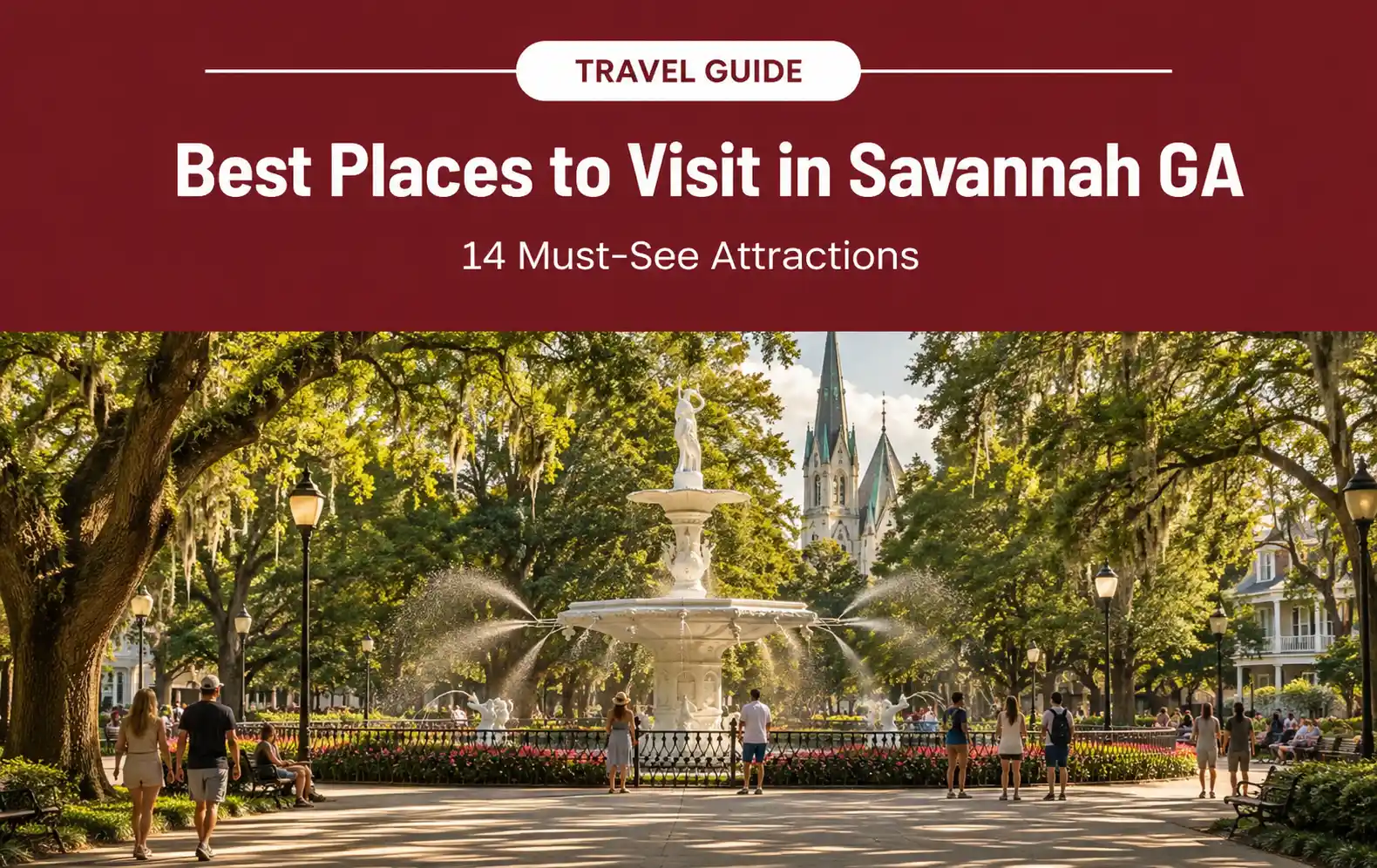
Savannah is one of the most memorable cities in the American South, known for its historic squares, live oak trees, riverfront, preserved architecture, and walkable streets. For first-time visitors, the challenge is not finding things to see. It is deciding which places deserve priority. For the broader planning context, see our guide to things to do in Savannah.
For more ideas that fit this part of your trip, see our guide to lesser-known places in Savannah.
The best places to visit in Savannah GA are the Savannah Historic District, Forsyth Park, River Street, the Cathedral Basilica of St. John the Baptist, and Bonaventure Cemetery. Together, they show the city’s architecture, public squares, waterfront, history, and Southern character. Most first-time visitors can cover the main highlights in two or three days.
This guide explains why each attraction is worth visiting, who it suits, how much time to allow, and how to group nearby places into a practical itinerary.
How to Choose the Best Places to Visit in Savannah
Choose attractions based on your available time and interests. First-time visitors should begin in the Historic District before adding museums, waterfront attractions, historic sites outside downtown, or a Tybee Island day trip.
| Traveler | Places to Visit First |
|---|---|
| First-time visitor | Historic District, Forsyth Park, River Street |
| One-day visitor | Historic District, Cathedral Basilica, River Street |
| Family | Forsyth Park, Old Fort Jackson, Tybee Island |
| History enthusiast | Owens-Thomas House, Bonaventure Cemetery, Wormsloe |
| Photographer | Forsyth Park, Wormsloe, Historic District |
Compare Savannah’s Top Attractions
Most central attractions are walkable, while Bonaventure Cemetery, Wormsloe Historic Site, Old Fort Jackson, and Tybee Island are easier to reach by car, rideshare, or organized tour.
| Attraction | Best For | Time Needed | Admission | Walkable Downtown |
|---|---|---|---|---|
| Historic District | First-time visitors | Half to full day | Free to explore | Yes |
| Forsyth Park | Families and photographers | 1–2 hours | Free | Yes |
| River Street | Dining and shopping | 2–3 hours | Free to explore | Yes |
| Cathedral Basilica | Architecture and history | 30–60 minutes | Donation appreciated | Yes |
| Bonaventure Cemetery | History and photography | 1–2 hours | Free | No |
| Wormsloe Historic Site | History and nature | 1.5–2.5 hours | Paid admission | No |
| Tybee Island | Beach day | Half to full day | Paid parking | No |
Best Places to Visit in Savannah GA
The strongest Savannah itinerary combines iconic public spaces with one or two historic or cultural attractions. The following places offer the best mix of atmosphere, history, convenience, and visitor value.
1. Savannah Historic District
Why visit: Savannah’s Historic Landmark District connects 23 park squares with historic homes, churches, museums, restaurants, and shaded streets. It is the best place to understand the city’s layout and character.
Best for: First-time visitors, couples, history lovers, photographers, and travelers with limited time.
If this is your first visit, start with our Savannah trip planning guide for the main planning decisions.
Highlights: Historic squares, period architecture, walking tours, museums, restaurants, boutiques, and easy access to many major landmarks.
Time needed: Allow at least half a day. A full day gives you time to slow down, enter a museum, and enjoy several squares without rushing.
Good to know: Wear comfortable shoes. Brick paths, cobblestones, curbs, and uneven sidewalks can make walking more tiring than expected.
Do not rush between landmarks.
Some of Savannah’s best moments come from sitting in a square, walking a shaded side street, or noticing architectural details between major attractions.
2. Forsyth Park
Why visit: Forsyth Park is Savannah’s largest public park, covering about 30 acres at the southern end of the Historic District. Its fountain, lawns, shaded paths, playgrounds, and central location make it an easy stop for many traveler types.
Best for: Families, couples, morning walks, picnics, and photography.
Highlights: The Forsyth Fountain, mature live oaks, open lawns, walking paths, playgrounds, and seasonal community events.
Time needed: Plan for one to two hours, or longer if you want to relax or have a picnic.
Good to know: Visit early in the morning for cooler temperatures and fewer people during warm months.
Do not miss nearby: Walk north along Bull Street to Monterey Square and continue through the Historic District toward the Cathedral Basilica.
3. River Street
Why visit: River Street combines Savannah’s historic waterfront with restaurants, candy shops, galleries, boutiques, and views of cargo ships moving along the Savannah River.
Best for: Dining, shopping, evening walks, nightlife, and waterfront views.
Highlights: Historic warehouses, river views, restaurants, local shops, and easy access to the Plant Riverside District.
Time needed: Allow two to three hours, especially if you plan to eat or shop.
Good to know: River Street has uneven cobblestones and steep connections to streets above. Visitors using wheelchairs, strollers, or mobility aids should plan routes carefully.
Do not miss nearby: Continue west into the Plant Riverside District for additional dining, public spaces, and evening entertainment.
4. Cathedral Basilica of St. John the Baptist
Why visit: The Cathedral Basilica is one of Savannah’s most striking architectural landmarks, known for its Gothic Revival design, stained glass, tall interior spaces, and detailed artwork.
Best for: Architecture enthusiasts, history lovers, photographers, and visitors seeking a quiet stop.
Highlights: Stained glass, twin spires, religious artwork, and an ornate interior.
Time needed: Allow 30 to 60 minutes.
Good to know: Dress respectfully and check current visiting hours before arriving because services, weddings, and special events may affect access.
5. Bonaventure Cemetery
Why visit: Bonaventure Cemetery feels like an outdoor museum, with elaborate monuments, live oak trees, Spanish moss, river views, and stories connected to Savannah’s past.
Best for: History enthusiasts, photographers, garden lovers, and visitors who prefer quieter attractions.
Highlights: Historic monuments, landscaped paths, mature trees, notable gravesites, and guided tour options.
Time needed: Allow one to two hours.
Good to know: Bonaventure is outside the Historic District. A car, rideshare, or organized tour is the easiest option for most visitors.
Do not miss nearby: Combine Bonaventure with Wormsloe Historic Site if you have a car and want a history-focused half day outside downtown.
6. Wormsloe Historic Site
Why visit: Wormsloe is known for its long avenue of live oaks and Spanish moss, but the site also includes colonial-era history, ruins, interpretive exhibits, and wooded trails.
Best for: History enthusiasts, nature lovers, photographers, and families.
Highlights: The oak avenue, colonial ruins, interpretive displays, trails, and scenic grounds.
Time needed: Plan for 1.5 to 2.5 hours.
Good to know: Wormsloe is outside central Savannah and is easiest to reach by car. Check current admission details and operating hours before visiting.
7. City Market
Why visit: City Market is a convenient downtown stop for local art, casual dining, shops, and live entertainment. It works best as part of a wider Historic District walk rather than as a stand-alone destination.
Best for: Shopping, casual meals, families, and evening entertainment.
Highlights: Art galleries, boutiques, restaurants, outdoor seating, and live music.
For meal planning and local food ideas, see our guide to where to eat in Savannah.
Time needed: Allow one to two hours, or longer if you stop for a meal.
Good to know: The area becomes livelier in the evening. Travelers seeking a quieter visit may prefer late morning or early afternoon.
8. Chippewa Square
Why visit: Chippewa Square is one of Savannah’s best-known public spaces and is often associated with the movie Forrest Gump. The movie bench is not in the square, but the location remains attractive and easy to include on a downtown walk.
Best for: Movie fans, photographers, walking tours, and visitors exploring Bull Street.
Highlights: Mature trees, landscaped paths, a central monument, and nearby historic buildings.
Time needed: Allow 20 to 30 minutes.
Good to know: Treat Chippewa Square as one stop on a longer route rather than a major attraction requiring a separate visit.
9. Telfair Museums
Why visit: Telfair Museums operates three distinct sites that cover historic architecture, decorative arts, American art, and contemporary exhibitions.
Best for: Art lovers, history enthusiasts, and travelers looking for an indoor activity.
Highlights: Historic interiors, permanent collections, rotating exhibitions, and access to several museum buildings.
Time needed: Allow two to three hours if you plan to visit more than one location.
Good to know: Check current ticket terms and opening days before planning your visit because access arrangements can change.
For help shaping your schedule, use our guide to planning a weekend in Savannah.
10. Owens-Thomas House & Slave Quarters
Why visit: This National Historic Landmark examines Savannah’s Regency architecture and the connected lives of the wealthy families who occupied the property and the people of African descent they enslaved.
Best for: History enthusiasts, architecture lovers, and visitors seeking a deeper understanding of Savannah’s social history.
Highlights: Regency architecture, period interiors, preserved slave quarters, and guided interpretation.
Time needed: Allow about 45 minutes to one hour.
Good to know: Tours operate in small groups and can fill. Check in onsite and arrive before your assigned tour time.
11. SCAD Museum of Art
Why visit: The SCAD Museum of Art focuses on contemporary exhibitions, internationally recognized artists, and emerging creative talent in a restored historic setting.
Best for: Contemporary art lovers, students, design travelers, and architecture enthusiasts.
Highlights: Rotating exhibitions, modern installations, and the adaptive reuse of historic industrial architecture.
Time needed: Allow one to two hours.
Good to know: Exhibitions change, so review the current program before deciding how much time to allow.
12. Old Fort Jackson
Why visit: Old Fort Jackson offers military history, river views, and demonstrations that can be more engaging for children than a traditional museum visit.
Best for: Families, military history enthusiasts, and school-age children.
Highlights: Historic fortifications, exhibits, river views, and scheduled demonstrations.
Time needed: Allow one to two hours.
Good to know: Check the current demonstration schedule before leaving downtown. The fort is outside the main walkable sightseeing area.
13. Plant Riverside District
Why visit: Plant Riverside District adds restaurants, shops, hotel spaces, live entertainment, and river views to the western end of River Street.
Best for: Evening entertainment, dining, couples, and families.
Highlights: Riverside restaurants, rooftop venues, public art, live music, and restored industrial architecture.
Time needed: Allow two to three hours, especially in the evening.
Good to know: Combine it with River Street instead of planning two separate visits.
14. Tybee Island
Why visit: Tybee Island offers beaches, a historic lighthouse, seafood restaurants, dolphin tours, and a relaxed coastal contrast to central Savannah.
Best for: Families, couples, beach lovers, and travelers with at least three days in the area.
Highlights: Public beaches, Tybee Island Light Station, waterfront dining, boat tours, and sunset views.
Time needed: Plan a half day or full day.
Good to know: Public parking is paid and enforced year-round. Arrive early on busy beach days and confirm current parking rules before traveling.
Best Places to Visit by Traveler Type
The best Savannah attractions depend on what you enjoy and how much time you have. These recommendations help narrow the list without repeating the full itinerary.
If you want to keep sightseeing costs down, see our guide to free Savannah activities.
First-Time Visitors
Start with the Historic District, Forsyth Park, River Street, and the Cathedral Basilica. These places provide the clearest introduction to Savannah’s architecture, public spaces, and riverfront.
Families
Choose Forsyth Park, Old Fort Jackson, and Tybee Island. These options offer more space, movement, and variety than a full day of historic house tours.
Couples
Combine the Historic District with Forsyth Park, River Street, and Plant Riverside District. The route works well for a relaxed day that ends with dinner by the river.
History Lovers
Prioritize the Owens-Thomas House, Bonaventure Cemetery, Wormsloe Historic Site, and the Telfair museum sites. Together, they provide a broader view of architecture, social history, and regional development.
Photographers
Visit Forsyth Park early, explore the Historic District during the softer morning or late-afternoon light, and add Wormsloe for its oak avenue and wooded setting.
Suggested Savannah Itineraries
A good Savannah itinerary groups nearby attractions and avoids unnecessary driving. Keep downtown sights together, then reserve a separate half day for outlying locations.
One Day in Savannah
- Morning: Walk through the Historic District, Bull Street squares, and the Cathedral Basilica.
- Lunch: Stop near City Market or the central Historic District.
- Afternoon: Explore Forsyth Park and nearby streets.
- Evening: Walk River Street and continue to Plant Riverside District.
Two Days in Savannah
Day 1: Historic District, Cathedral Basilica, Forsyth Park, River Street, and Plant Riverside District.
Day 2: Choose either a history route with Bonaventure Cemetery and Wormsloe Historic Site or a cultural route with the Owens-Thomas House, Telfair Museums, and SCAD Museum of Art.
Three Days in Savannah
Use the first two days for downtown and historic attractions, then spend the third day at Tybee Island or add a slower museum and neighborhood day.
Where Savannah’s Main Attractions Are Located
Most top attractions are concentrated in the Historic District and riverfront, while Bonaventure Cemetery, Wormsloe Historic Site, Old Fort Jackson, and Tybee Island require transportation.
Historic District
This is the best base for first-time visitors. It includes the Cathedral Basilica, City Market, Chippewa Square, the Owens-Thomas House, Telfair Museums, and many other landmarks.
Riverfront
River Street and Plant Riverside District sit along the Savannah River and work well for shopping, dining, and evening walks.
Outside Downtown
Bonaventure Cemetery, Wormsloe Historic Site, and Old Fort Jackson are easier to visit by car, rideshare, or tour.
Tybee Island
Tybee Island is a separate coastal destination and should be treated as a half-day or full-day trip rather than a quick downtown stop.
Free and Paid Attractions
Savannah offers many strong free experiences, especially its squares, streets, parks, riverfront, and Bonaventure Cemetery. Museums and preserved historic sites generally require paid admission.
| Attraction | Cost Type | Typical Visit Time | Advance Planning |
|---|---|---|---|
| Historic District | Free to explore | Half to full day | Not required |
| Forsyth Park | Free | 1–2 hours | Not required |
| River Street | Free to explore | 2–3 hours | Not required |
| Cathedral Basilica | Donation appreciated | 30–60 minutes | Check current access |
| Bonaventure Cemetery | Free | 1–2 hours | Arrange transportation |
| Wormsloe Historic Site | Paid admission | 1.5–2.5 hours | Check current hours |
| Telfair Museums | Paid admission | 2–3 hours | Check ticket terms |
| Tybee Island | Paid parking | Half to full day | Check parking rules |
Best Time to Visit Savannah’s Attractions
Spring and fall usually offer the most comfortable conditions for sightseeing. Summer visitors should plan outdoor attractions for mornings and evenings, while winter can be a good choice for lighter crowds and cooler walking weather.
For more ideas that fit this part of your trip, see our guide to family-friendly things to do in Savannah.
Spring
Spring brings blooming gardens, popular events, and comfortable temperatures. It is also one of the busiest periods, so book limited-capacity tours early.
Summer
Summer is hot and humid. Visit outdoor places early, move museums and indoor attractions into the afternoon, and carry water.
Fall
Fall often provides pleasant walking weather and a more relaxed pace than peak spring periods.
Winter
Winter is generally mild compared with many U.S. destinations. It can be a practical time for travelers who prefer cooler walks and fewer crowds.
Practical Tips for Visiting Savannah
Savannah is highly walkable, but comfortable shoes, early starts, and realistic daily plans make the experience much easier.
Wear Supportive Shoes
Historic streets include cobblestones, bricks, steps, and uneven sidewalks. Footwear matters more here than it does in many modern downtown areas.
Start Early
Early mornings are quieter and cooler, especially at Forsyth Park and in the Historic District.
Keep Downtown and Driving Days Separate
Avoid moving your car repeatedly while exploring downtown. Save Bonaventure, Wormsloe, Old Fort Jackson, or Tybee Island for a separate driving block.
Do Not Overbook
Two or three meaningful stops often create a better day than rushing through a long attraction list.
Consider a Trolley Tour
A trolley can help first-time visitors understand the city layout, reduce walking, and move between major stops during hot weather.
Common Mistakes to Avoid
- Trying to see every major attraction in one day.
- Spending all your time on River Street and missing the historic squares.
- Assuming Wormsloe and Bonaventure are walkable from downtown.
- Underestimating heat, humidity, and walking distances.
- Failing to check current tour schedules or operating hours.
- Arriving at Tybee Island without reviewing parking rules.
Frequently Asked Questions
What is the number one place to visit in Savannah?
The Savannah Historic District is the best place for most first-time visitors because it combines historic squares, architecture, churches, museums, restaurants, and many of the city’s best-known landmarks in one walkable area.
What should I not miss in Savannah?
Do not miss the Historic District, Forsyth Park, River Street, the Cathedral Basilica, and at least a few of Savannah’s public squares. Add Bonaventure Cemetery or Wormsloe if you have transportation and more than one day.
Is Savannah easy to explore on foot?
Yes. Most attractions in the Historic District are walkable. However, cobblestones, uneven sidewalks, heat, and distances between the northern riverfront and southern parts of downtown can make walking tiring.
How many days do I need in Savannah?
Two to three days is ideal for most first-time visitors. Two days covers the main downtown attractions, while a third day allows time for Tybee Island, Wormsloe, Bonaventure, or additional museums.
For help shaping your schedule, use our guide to two days in Savannah.
Which Savannah attractions are free?
Free places include the Historic District, Forsyth Park, River Street, Bonaventure Cemetery, and Savannah’s public squares. Paid attractions generally include museums, historic homes, forts, and preserved historic sites.
Is Tybee Island worth adding to a Savannah trip?
Tybee Island is worth adding if you have at least three days, enjoy beaches, or want a coastal break from sightseeing. Travelers with only one or two days should usually prioritize Savannah itself.
Savannah Sightseeing Checklist
- Start with the Historic District and nearby squares.
- Group walkable attractions into the same morning or afternoon.
- Wear supportive shoes for cobblestones and uneven sidewalks.
- Confirm current admission details before visiting paid sites.
- Arrange transportation for Wormsloe and Bonaventure.
- Check Tybee Island parking rules before a beach day.
- Reserve limited-capacity tours during busy periods.
Final Thoughts
The best places to visit in Savannah GA depend on your interests, available time, and preferred pace. First-time visitors should begin with the Historic District, Forsyth Park, River Street, and the Cathedral Basilica, then add museums, historic sites, or a coastal day trip based on what matters most to them.
A balanced itinerary works better than a long checklist. Combine Savannah’s major landmarks with time to walk its squares, notice the architecture, and enjoy the slower rhythm that makes the city memorable.
