



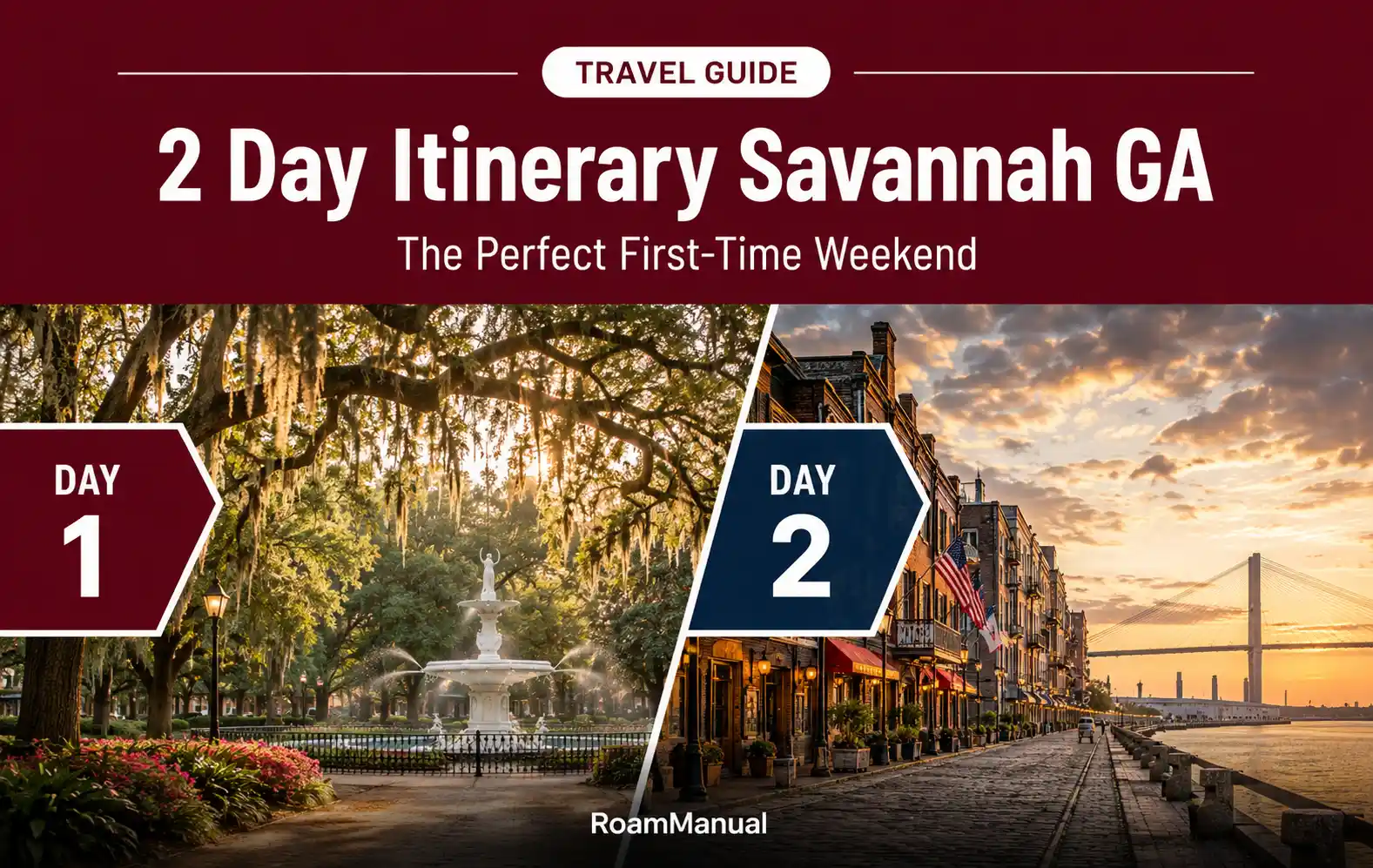
Two full days are enough to experience Savannah’s highlights if you follow a realistic route and avoid trying to see everything. This 2 day itinerary Savannah GA is designed for first-time visitors who want to explore the Historic District, famous squares, Forsyth Park, River Street, City Market, historic architecture, and local dining without wasting time crossing the city. For the broader planning context, see our guide to weekend in Savannah.
For help shaping your schedule, use our guide to how many days in Savannah.
Can you see Savannah in two days?
Yes. Two full days are enough to visit Forsyth Park, the Historic District, River Street, City Market, the Cathedral Basilica of St. John the Baptist, and several historic squares. Most first-time visitors can complete the main itinerary without a car. Tybee Island and Wormsloe Historic Site are better treated as optional additions rather than essential stops.
Most of the itinerary is walkable, and you do not need a rental car unless you choose an optional afternoon trip to Wormsloe Historic Site or Bonaventure Cemetery.
Who This Savannah Itinerary Is Best For
| Traveler | Suitability | What to Know |
|---|---|---|
| First-time visitors | Excellent | Covers Savannah’s essential sights at a manageable pace. |
| Couples | Excellent | Includes scenic walks, rooftop options, and waterfront dining. |
| Families | Good | Replace the evening ghost tour with a family-friendly activity. |
| Solo travelers | Excellent | The route is easy to follow and stays within busy visitor areas. |
| Seniors | Good | Use the free shuttle or a trolley tour to reduce walking. |
How to Use This Itinerary
This plan assumes you have two full sightseeing days and are staying in or near Savannah’s Historic District. Expect to walk about 3 to 4 miles each day, although you can reduce that distance by using the free downtown shuttle, a trolley, or an occasional rideshare.
The schedule prioritizes Savannah’s most memorable first-visit experiences. Optional attractions are clearly separated so you can adapt the plan to your interests, mobility, weather, and available time.
For more ideas that fit this part of your trip, see our guide to things to do in Savannah with kids.
- Essential: Prioritize these stops on a first visit.
- Recommended: Include them when they match your interests.
- Optional: Skip them when time is limited.
Pacing tip
Build in 10 to 15 minutes of flexible time each morning and afternoon for photographs, coffee, restrooms, shopping, or unexpected discoveries. Savannah rewards a slower pace, and some of its most memorable moments happen between the major attractions.
Seasonal Planning Tips
| Season | What to Know |
|---|---|
| Spring | Pleasant walking weather, but hotels and popular restaurants can fill quickly. Reserve early around major events and holiday weekends. |
| Summer | Start early to avoid the hottest part of the day. Use lunch and indoor attractions as afternoon breaks. |
| Fall | Comfortable temperatures make this one of the easiest seasons for following the itinerary as written. |
| Winter | Cooler weather is good for walking, but shorter daylight hours make an early start more important. |
Where Should You Stay for a Two-Day Savannah Trip?
Most first-time visitors should stay in the Historic District because it places the main attractions, restaurants, squares, and evening activities within walking distance.
For meal planning and local food ideas, see our guide to best restaurants in Savannah.
Historic District
Best for: First-time visitors who want the easiest sightseeing experience.
- Walkable access to most attractions
- Historic streets and squares
- Strong restaurant selection
- Easy access to evening activities
- Little need for a rental car
Near Forsyth Park
This area is quieter than the riverfront and works well for travelers who prefer residential streets, boutique accommodations, local cafés, and a slower atmosphere. You will still be within walking distance of the main Historic District attractions.
Near River Street
Stay near River Street if waterfront views, nightlife, bars, and easy access to the river are priorities. The trade-off is more noise and activity, especially on busy weekends.
Getting Around Savannah
Walking is the best way to explore Savannah’s Historic District, and most visitors do not need a rental car for this two-day itinerary.
For practical transport details, use our guide to Savannah transportation guide.
Can You Walk This Entire Itinerary?
Yes. Most of the route can be completed on foot if you stay in or near the Historic District. Expect to walk about 3 to 4 miles each day. A car is mainly useful for optional attractions outside downtown, including Wormsloe Historic Site and Bonaventure Cemetery.
| Transportation | Best For | Advantages | Trade-Offs |
|---|---|---|---|
| Walking | Most visitors | Flexible, scenic, and free | Can be tiring in heat or rain |
| Free downtown shuttle | Budget travelers | Reduces walking at no cost | Does not stop at every attraction |
| Trolley tour | First-time visitors and seniors | Easy sightseeing with narration | Costs more and follows set routes |
| Rental car | Day trips and outlying attractions | Useful for Wormsloe and Tybee Island | Downtown parking can be inconvenient |
Two-Day Savannah Itinerary at a Glance
| Time | Activity | Area | Estimated Time |
|---|---|---|---|
| Day 1 morning | Forsyth Park and historic squares | Historic District | About 3 hours |
| Day 1 afternoon | Cathedral, Broughton Street, and City Market | Downtown | About 4 hours |
| Day 1 evening | River Street, dinner, and an evening activity | Waterfront | Flexible |
| Day 2 morning | Historic home tour and Jones Street | Historic District | About 3 hours |
| Day 2 afternoon | Historic District or optional excursion | Varies | 2 to 4 hours |
What Is Included in This Savannah Itinerary?
| Experience | Included? |
|---|---|
| Forsyth Park | Yes |
| Historic District | Yes |
| Historic squares | Yes |
| Cathedral Basilica | Yes |
| Broughton Street | Yes |
| City Market | Yes |
| River Street | Yes |
| Ghost tour | Optional |
| Bonaventure Cemetery | Optional |
| Wormsloe Historic Site | Optional |
| Tybee Island | Not recommended for a first two-day visit |
Day 1: Savannah’s Historic Heart
Perfect for: First-time visitors who want to experience Savannah’s most famous landmarks, public squares, architecture, shopping streets, and waterfront in a logical walking route.
Day 1 follows a northbound route from Forsyth Park toward River Street. This avoids unnecessary backtracking and lets you experience the Historic District in a natural sequence.
8:00 AM: Breakfast Near Forsyth Park
Start close to Forsyth Park so you can begin sightseeing before the streets become busier. Allow 45 to 60 minutes for breakfast. On weekends, an early meal can help you avoid longer waits.
9:00 AM: Forsyth Park
Recommended visit: 45 to 60 minutes
Best time to visit: Before 10:00 AM for cooler temperatures, softer light, and fewer visitors.
Forsyth Park is the best place to begin a first visit to Savannah. Its white fountain, oak trees, shaded paths, and surrounding historic homes provide an immediate introduction to the city’s atmosphere.
Spend time beyond the fountain. Walk through the park, enjoy the quieter morning, and look at the architecture along its edges before beginning the route north.
10:00 AM to 11:15 AM: Walk Through Savannah’s Historic Squares
Recommended time: 60 to 75 minutes
Walking time from Forsyth Park: About 10 minutes to the first major square.
Best time to visit: Morning, when the streets are quieter and more shaded.
Bull Street works as the connecting route between several of Savannah’s most memorable public spaces. Rather than treating it as a separate attraction, use it to move naturally through the Historic District.
Recommended stops include:
- Monterey Square
- Madison Square
- Chippewa Square
- Wright Square
- Johnson Square
You do not need to visit every square. Pause at the ones that interest you most, take photographs, and enjoy the monuments, gardens, and surrounding architecture.
11:30 AM: Cathedral Basilica of St. John the Baptist
Recommended visit: 30 to 45 minutes
Walking time from the squares route: About 8 minutes, depending on your final square.
Best time to visit: Late morning outside scheduled services. Check visitor access before arriving.
The Cathedral Basilica of St. John the Baptist is one of Savannah’s most recognizable landmarks. Its twin spires, stained-glass windows, vaulted ceilings, and detailed interior make it worthwhile even for travelers who do not usually include churches in their itineraries.
Dress respectfully, keep your voice low, and remember that religious services may affect public access.
Midday: Lunch in the Historic District
Suggested window: 12:00 PM to 1:30 PM
Walking time from the cathedral: About 5 minutes to many nearby restaurants.
Choose a restaurant close to the route rather than crossing the city for a single meal. A nearby Southern restaurant, café, or patio keeps the day efficient and gives you time to rest before the afternoon walk.
Allow 60 to 90 minutes, especially if you choose a full-service restaurant.
Early Afternoon: Broughton Street
Recommended visit: 45 to 60 minutes
Walking time from lunch: About 6 minutes for many central restaurants.
Best time to visit: Early afternoon, when most shops and cafés are open.
Broughton Street offers a change of pace after the historic squares and cathedral. You will find local boutiques, bookstores, galleries, gift shops, cafés, and dessert stops.
Skip this section if shopping is not important to you. Use the saved time for a museum, historic home, or longer waterfront visit.
Mid-Afternoon: City Market
Recommended visit: 30 to 45 minutes
Walking time from Broughton Street: About 8 minutes.
Best time to visit: Mid- to late afternoon, when galleries, cafés, and entertainment become busier.
City Market is a lively pedestrian area with galleries, restaurants, outdoor seating, shops, and occasional live music. It works best as a short stop and rest point before continuing to River Street.
Late Afternoon: River Street
Recommended visit: 1 to 2 hours
Walking time from City Market: About 4 minutes, plus time for stairs, ramps, or elevators down to the waterfront.
Best time to visit: Late afternoon through sunset, when the temperature is cooler and the waterfront is most scenic.
River Street runs along the Savannah River beneath the Historic District bluff. Its cobblestones, converted warehouses, shops, restaurants, and river views create a livelier atmosphere than the shaded squares farther inland.
Walk slowly, browse the shops, watch passing ships, and take a break along the waterfront. Wear supportive shoes because the cobblestones and level changes can be uncomfortable after a full day of walking.
Sunset Along the Savannah River
If the weather is clear, remain near the waterfront as daylight fades. Public overlooks, riverfront seating, rooftop venues, and elevated viewpoints near the bluff can all work well.
This is a natural place to slow down before dinner rather than rushing to another attraction.
Dinner in the Historic District or Near River Street
Choose dinner based on location, atmosphere, and your energy level. A nearby restaurant prevents unnecessary travel after a long walking day.
- Classic Southern restaurant: Best for first-time visitors who want regional dishes.
- Seafood restaurant: Good for travelers who want a waterfront meal.
- Fine dining: Best for couples or celebrations.
- Casual dinner: Useful if you plan to join an evening tour.
Make reservations for popular Friday and Saturday evenings.
Evening Options
Ghost Tour
A guided ghost tour combines Savannah’s history, architecture, and local legends. It is one of the city’s most popular evening experiences and works especially well for first-time visitors.
Rooftop Drinks
Choose this option if you prefer a relaxed evening with skyline or river views. It is a good alternative after a long day of walking.
Evening Walk
Return to one or two historic squares after dark for a quieter view of the city. Stay aware of your surroundings and use well-lit, active streets when walking at night.
Ahead of schedule?
- Visit Colonial Park Cemetery.
- Add a historic house tour if entry times are available.
- Stop for ice cream or coffee.
- Consider a short riverboat sightseeing cruise.
Running behind?
Skip Broughton Street shopping and continue directly to City Market or River Street. You will still experience Savannah’s main highlights without ending the day in a rush.
Day 2: History, Architecture, and a Flexible Afternoon
Perfect for: Travelers who want to explore Savannah’s history more deeply and customize the afternoon around architecture, photography, museums, or scenic excursions.
8:00 AM: Breakfast at a Local Café
Begin with a relaxed breakfast before returning to the Historic District. Day 2 has more flexibility, so choose a café near your hotel or your first scheduled attraction.
9:00 AM: Tour One Historic Home
Recommended visit: 60 to 90 minutes
Savannah’s historic homes offer insight into local architecture, design, and social history. Choose one property that best matches your interests instead of attempting several rushed tours.
Advance booking can be useful during busy weekends or when tours operate at fixed times.
10:45 AM: Walk Along Jones Street
Recommended visit: 20 to 30 minutes
Jones Street is known for restored townhouses, brick sidewalks, mature trees, and a quieter residential atmosphere. Treat it as a scenic walk rather than a major attraction requiring a long visit.
Respect residents, avoid blocking entrances, and keep noise low while taking photographs.
Late Morning: Browse Local Shops and Galleries
Recommended visit: 45 to 60 minutes
Use this period for independent boutiques, galleries, locally made gifts, or a coffee break. Skip shopping if you would rather spend more time at a museum or historic site.
1:00 PM: Lunch
Choose a restaurant near your planned afternoon option. Keeping lunch geographically close to your next stop reduces unnecessary backtracking.
Choose Your Day 2 Afternoon
First-time visitors should usually remain in the Historic District. Choose Bonaventure Cemetery or Wormsloe Historic Site when you have a specific interest in history, photography, nature, or architecture.
| Afternoon Option | Best For | Car Needed? | Time Required |
|---|---|---|---|
| Historic District | First-time visitors | No | 2 to 3 hours |
| Bonaventure Cemetery | History lovers and photographers | Recommended | 2 to 3 hours including travel |
| Wormsloe Historic Site | Nature lovers, photographers, and repeat visitors | Yes | 3 to 4 hours including travel |
Option 1: Continue Exploring the Historic District
Best for: Most first-time visitors
Spend another 2 to 3 hours visiting attractions you missed on Day 1. Good choices include an additional museum, more public squares, art galleries, cafés, or a slower architecture walk.
This is the most flexible option and avoids losing sightseeing time to transportation.
Option 2: Bonaventure Cemetery
Best for: History lovers and photographers
Recommended time: 2 to 3 hours including travel
Bonaventure Cemetery offers historic monuments, landscaped grounds, large oak trees, and peaceful walking paths. It requires transportation from downtown, so include travel time when planning your afternoon.
Skip this option if you still have important Historic District attractions to see.
Option 3: Wormsloe Historic Site
Best for: Travelers with a car who prioritize photography, nature, or colonial history
Recommended time: 3 to 4 hours including travel
Wormsloe is known for its oak-lined entrance, walking areas, and historical interpretation. It can consume most of the afternoon, so it is not the best default choice for every first-time visitor.
Skip Wormsloe if you do not have a car or would prefer more time in central Savannah.
Ahead of schedule?
- Add another historic home or museum.
- Visit additional public squares.
- Explore an art museum or gallery.
- Take a sunset cruise or enjoy a longer waterfront dinner.
Running behind?
Remain inside the Historic District instead of driving to Bonaventure Cemetery or Wormsloe Historic Site. This protects your remaining sightseeing time and keeps the afternoon relaxed.
Estimated Cost for Two Days in Savannah
| Expense | Budget | Mid-Range | Premium |
|---|---|---|---|
| Hotel per night | $150 to $220 | $220 to $350 | $350+ |
| Meals per day | $40 to $60 | $70 to $120 | $150+ |
| Attractions | Free to $30 | $30 to $80 | $80+ |
| Transportation | Free to $20 | $20 to $50 | $50+ |
Excluding accommodation, a budget traveler may spend about $80 to $120 per person over two days. Mid-range travelers may spend about $150 to $250, while premium dining, tours, and transportation can raise the total above $300 per person.
Prices vary by season, booking date, restaurant choice, and the number of paid attractions included.
What Should You Book in Advance?
- Popular restaurants, especially on Friday and Saturday evenings
- Ghost tours and evening walking tours
- Historic home tours with fixed entry times
- Trolley sightseeing tickets during busy periods
- Hotels during festivals, holidays, and spring travel periods
What to Bring
- Comfortable walking shoes
- Refillable water bottle
- Sunscreen and sunglasses
- Lightweight rain jacket
- Portable phone charger
- Camera or smartphone
- Small day bag
Common Mistakes to Avoid
Trying to Include Tybee Island
Tybee Island is a worthwhile destination, but including it during a first two-day Savannah visit usually means giving up valuable time in the Historic District. Add it only when the beach is one of your highest priorities.
Underestimating the Walking
Savannah is walkable, but the itinerary still includes several miles of walking each day. Heat, humidity, cobblestones, and uneven sidewalks can make the distance feel longer.
Driving Between Downtown Attractions
Parking and one-way streets can make short drives slower than walking. Leave your car parked while exploring the central Historic District.
Skipping Restaurant Reservations
Popular restaurants can develop long waits during weekends and peak seasons. A reservation protects your evening schedule.
Visiting River Street During the Hottest Part of the Day
The waterfront can feel warmer than the shaded squares. Visit in the late afternoon or evening during hot weather.
Frequently Asked Questions
Is Two Days Enough to Visit Savannah?
Yes. Two full days are enough to explore Savannah’s major squares, Forsyth Park, River Street, City Market, historic architecture, and local dining. You will not see every museum or nearby day-trip destination, but you can experience the city’s essential highlights.
If you want to keep sightseeing costs down, see our guide to things to do in Savannah for free.
Do You Need a Car in Savannah?
No. Most first-time visitors can explore the Historic District on foot and use the free downtown shuttle, a trolley, or a rideshare when needed. A car is mainly useful for Wormsloe Historic Site, Tybee Island, or other attractions outside downtown.
For more ideas that fit this part of your trip, see our guide to Savannah attractions and activities.
Is Savannah Walkable?
Yes. Savannah’s Historic District is compact and designed around interconnected streets and public squares. Expect uneven sidewalks, cobblestones, and several miles of walking over a full sightseeing day.
Should You Include Tybee Island in a Two-Day Trip?
Usually not on a first visit. Tybee Island requires travel time and can take most of a day. First-time visitors generally get more value from focusing on Savannah itself unless the beach is a top priority.
Is Savannah Worth Visiting for Just a Weekend?
Yes. Savannah is well suited to a weekend because many of its top attractions are concentrated within the walkable Historic District. Two days provide enough time for its architecture, squares, waterfront, dining, and evening atmosphere.
What Should You Not Miss in Savannah?
Prioritize Forsyth Park, the Historic District, several public squares, River Street, City Market, and the Cathedral Basilica of St. John the Baptist. Together, these stops capture Savannah’s architecture, history, and atmosphere.
What Is the Best Area to Stay in Savannah?
The Historic District is the best choice for most first-time visitors because it places the city’s main attractions, restaurants, and evening activities within walking distance.
When Is the Best Time to Visit Savannah?
Spring and fall generally offer the most comfortable walking weather. Summer is hotter and more humid, while winter can be quieter and cooler with shorter daylight hours.
Final Thoughts
Two days is enough to experience the best of Savannah when you focus on the Historic District and follow a logical walking route. Begin at Forsyth Park, move through the city’s historic squares, and finish Day 1 along River Street. Use Day 2 for architecture, local history, and an afternoon that matches your interests.
Rather than trying to include every museum, neighborhood, and day trip, prioritize Savannah’s parks, squares, waterfront, architecture, and atmosphere. Wormsloe Historic Site, Bonaventure Cemetery, and Tybee Island can be valuable additions, but they are not essential for a memorable first visit.
