



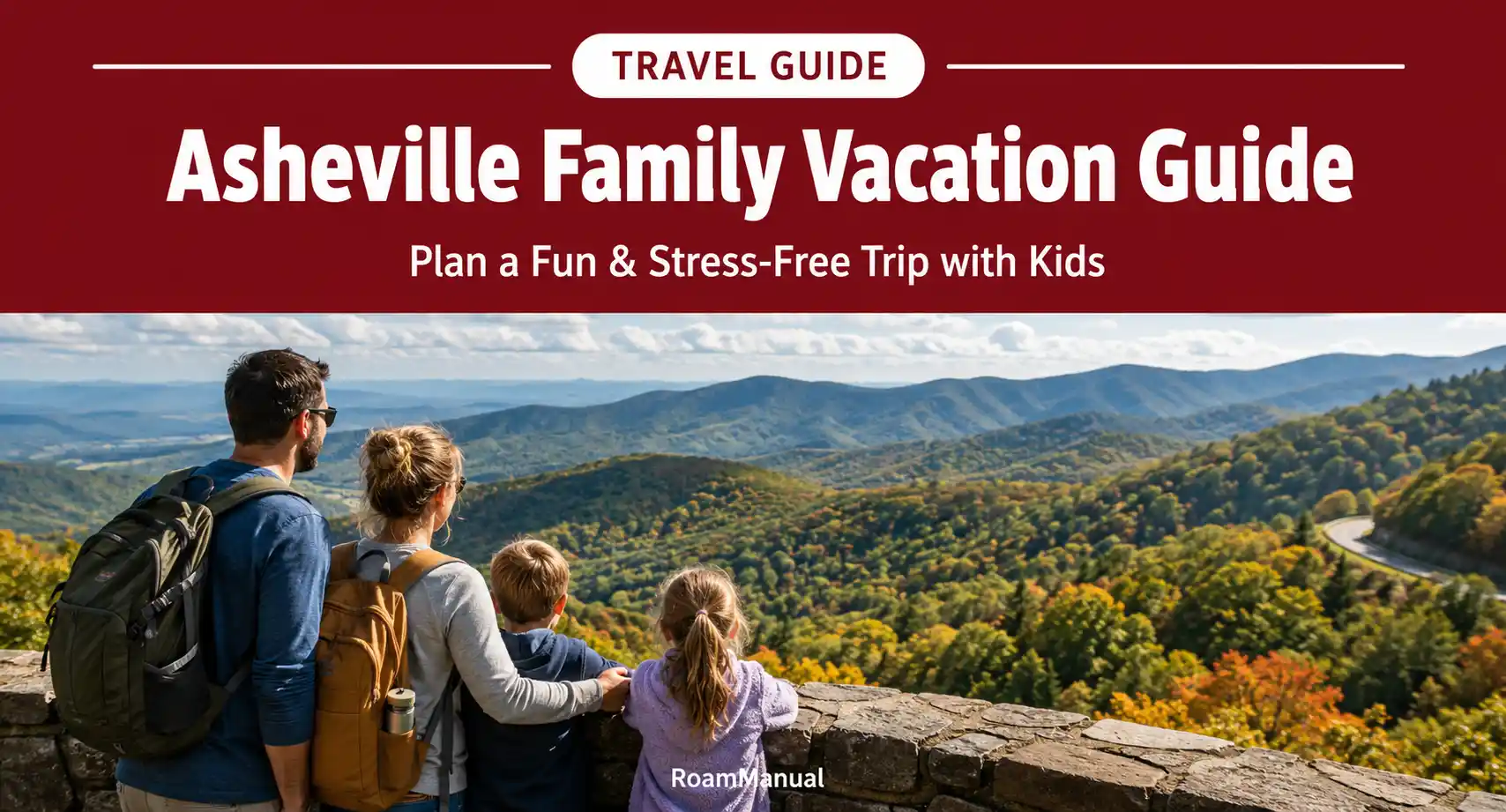
Planning an family vacation to Asheville can feel overwhelming when you are trying to balance different ages, interests, budgets, and energy levels. This Asheville family vacation guide is going to be your top priority. Asheville, North Carolina, gives families a rare mix of mountain scenery, outdoor activities, wildlife experiences, historic attractions, and a lively downtown. For the broader planning context, see our guide to Asheville travel guide for first-time visitors.
For most first-time families, the best approach is to slow down. Plan one major activity each day, leave room for meals and rest, and choose a base that reduces unnecessary driving. This guide will help you decide how long to stay, where to base your trip, and how to create a family-friendly Asheville itinerary that feels enjoyable instead of rushed.
The main challenge is not finding things to do. It is fitting them into a realistic schedule. Family attractions are spread across downtown Asheville, nearby mountain roads, and surrounding communities, so trying to see everything often leads to long days, extra driving, and tired children.
For more ideas that fit this part of your trip, see our guide to things to do in Asheville with kids.
Asheville Family Trip at a Glance
- Best trip length: Three nights for most first-time families
- Car needed: Yes, for most family itineraries
- Best for: Nature, wildlife, scenic drives, and relaxed sightseeing
- Ideal pace: One major activity plus one flexible activity each day
- Main challenge: Attractions are spread across the city and nearby mountains
- Best planning move: Keep one half-day flexible for weather or rest
Is Asheville a Good Family Vacation Destination?
Yes. Asheville is a good family vacation destination for travelers who enjoy nature, mountain scenery, wildlife, casual dining, and flexible outdoor activities. It works especially well for families who want a slower Blue Ridge Mountains getaway rather than a trip built around theme parks or nonstop entertainment.
One of Asheville’s strengths is its variety. Younger children can enjoy animals, parks, short walks, and hands-on attractions. Older children and teenagers may prefer scenic drives, easy hikes, river activities, local food, and the River Arts District. Adults can enjoy the city’s historic sites, restaurants, architecture, and mountain views without feeling that the entire trip is designed only for children.
The main trade-off is transportation. Downtown Asheville is partly walkable, but many family attractions are spread across western North Carolina. Most families will need a car to reach Biltmore Estate, the North Carolina Arboretum, the Western North Carolina Nature Center, the Blue Ridge Parkway, Pisgah National Forest, and nearby waterfall areas.
Before booking accommodation, use our guide to affordable Asheville hotels.
Asheville Is Best for Families Who
- Enjoy spending time outdoors
- Want a relaxed mountain vacation
- Like scenic drives and natural landscapes
- Prefer flexible plans instead of a packed schedule
- Have children who enjoy animals, nature, or short outdoor activities
- Are taking a western North Carolina road trip
Asheville May Not Be Ideal for Families Who
- Want theme parks or large entertainment complexes
- Prefer a fully car-free vacation
- Dislike weather-dependent activities
- Expect every attraction to be close together
- Have only one day but want to see both the city and the mountains
Asheville rewards families who choose a few meaningful experiences and allow time to enjoy them.
How Many Days Does a Family Need in Asheville?
Three nights is the best starting point for most first-time families. That gives you enough time for a city experience, one major attraction, and one mountain or nature day without forcing every activity into a rushed schedule.
Two Nights
A two-night trip works for a short weekend or a family combining Asheville with another destination.
For practical visitor-safety advice, read our guide on safety in Asheville.
It is best for:
- A quick mountain getaway
- One major paid attraction
- A short downtown visit
- One scenic or outdoor experience
Main trade-off: There is little room for weather changes, long meal waits, or children needing extra rest.
Three Nights
Three nights give most families the best balance of sightseeing and flexibility.
You can usually include:
- One downtown or city-focused day
- One major attraction such as Biltmore Estate
- One mountain, wildlife, or nature day
- Relaxed evenings and proper rest
For most first-time families, three nights provide enough variety without making the trip exhausting.
Four or Five Nights
A longer stay is better for families who want a slower pace or plan to combine Asheville with nearby waterfalls, scenic drives, or mountain communities.
Four or five nights work especially well for:
- Families with toddlers
- Multi-generational groups
- Travelers visiting Biltmore and the mountains
- Families planning several outdoor experiences
- Visitors who want a flexible weather day
| Trip Length | Best For | Realistic Pace | Main Limitation |
|---|---|---|---|
| Two nights | Short weekend | One main attraction and limited sightseeing | Very little flexibility |
| Three nights | Most first-time families | Balanced city, attraction, and nature time | Covers highlights rather than everything |
| Four or five nights | Slower or multi-generational trips | More rest and weather flexibility | Higher accommodation cost |
Choose Between a City-Based and Mountain-Based Trip
Your accommodation location will affect driving time, meal options, evening plans, and how relaxed the vacation feels. The right base depends on whether your family values convenience, space, or mountain scenery most.
Downtown-Focused Trip
A downtown base works well for first-time visitors who want restaurants, shops, cafés, and short evening walks close to their accommodation.
Best for:
- Short stays
- Families with older children or teenagers
- Travelers who enjoy walking to dinner
- Families planning several city activities
Trade-offs: Downtown hotels may have smaller rooms, parking fees, traffic, and more street noise.
Before booking accommodation, use our guide to top Asheville hotels.
Cabin or Mountain-Based Trip
A cabin outside Asheville can provide more space, privacy, and mountain scenery. It is a strong choice for longer trips, large families, and travelers who plan to spend most days outdoors.
Best for:
- Multi-generational families
- Longer stays
- Outdoor-focused travelers
- Families wanting a kitchen or additional bedrooms
Trade-offs: You may face winding roads, longer drives, and fewer convenient restaurant choices.
Split Stay
Families visiting for five nights or longer may enjoy dividing the trip between a city base and a mountain cabin.
This can reduce long daily drives and give you both downtown convenience and a quieter mountain experience. The disadvantage is the time and effort required to repack and change accommodations.
Before booking accommodation, use our guide to best areas to stay in Asheville.
| Base Style | Best For | Driving Needs | Main Trade-Off |
|---|---|---|---|
| Downtown | Short trips and older children | Less driving for meals, more for mountain activities | Parking, noise, and smaller rooms |
| Cabin or mountain base | Large groups and longer stays | More driving for restaurants and city attractions | Winding roads and fewer nearby services |
| Split stay | Trips of five nights or more | Can reduce repeated long drives | Requires moving accommodations |
Which Asheville Base Works Best for Your Family?
Instead of choosing a hotel first, decide which area best supports your planned activities.
Downtown Asheville
Downtown is practical for first-time visitors, short weekend trips, and families who want to walk to restaurants and shops. It often suits families with older children better than those with toddlers because parking, noise, and smaller rooms can make logistics harder.
Biltmore Village and Nearby Areas
This area works well for families planning a Biltmore visit or travelers who want easier access to major roads. It can feel calmer than downtown while keeping restaurants and services nearby.
West Asheville
West Asheville has a more residential feel, casual restaurants, and convenient access to the French Broad River area. It suits families who do not mind driving into downtown but prefer to stay outside the busiest visitor zone.
Mountain Cabins Outside Asheville
Cabins are a good fit for larger families, multi-generational groups, and longer vacations. Before booking, check the road surface, elevation, distance to groceries, and estimated driving time after dark.
A beautiful view may not be worth it if every meal or activity requires a long drive on winding roads.
Match the Trip to Your Children’s Ages and Needs
The right Asheville itinerary depends on more than a child’s age. Walking tolerance, sensory needs, weather comfort, meal schedules, and energy levels can affect the day just as much as the attraction itself.
Babies and Toddlers
Young children usually do best with short activity blocks, easy parking, predictable meals, and time for naps.
Useful planning priorities include:
- One morning activity
- A flexible afternoon
- Short walks rather than long hikes
- Quick access to food and restrooms
- Indoor alternatives for poor weather
Avoid combining Biltmore, downtown, and a mountain drive on the same day.
Ages Four to Seven
This age group often enjoys animals, hands-on learning, playgrounds, and short nature experiences.
A realistic day might include one wildlife or museum visit, lunch, a short walk, and a simple evening activity.
Ages Eight to Twelve
School-age children may be ready for longer walks, waterfall outings, nature programs, scenic overlooks, and outdoor activities along the French Broad River.
They can usually manage longer days, but regular food and rest breaks still matter.
Teenagers
Teenagers often enjoy the trip more when they help choose activities. Give them a voice in selecting food, shopping, outdoor experiences, cafés, photography stops, or time in the River Arts District.
Avoid building the entire itinerary around younger siblings.
Multi-Generational Families
Choose attractions where family members can participate at different levels. Scenic drives, gardens, short walks, wildlife attractions, and flexible meal plans usually work better than activities requiring everyone to maintain the same pace.
Adjust for Mobility, Sensory, and Energy Needs
Before choosing an activity, consider:
- Walking distance
- Noise and crowd levels
- Waiting time
- Terrain and elevation changes
- Rest areas
- Weather exposure
- Restroom and meal access
Check official accessibility information directly with each attraction because conditions and available services can change.
| Family Profile | Best Activity Style | Planning Priority | Common Mistake |
|---|---|---|---|
| Babies and toddlers | Short walks, animals, parks | Naps, meals, easy parking | Planning several long activities |
| Ages four to seven | Hands-on and outdoor discovery | Variety and short activity blocks | Expecting long attention spans |
| Ages eight to twelve | Hikes, wildlife, river activities | Snacks, breaks, activity choice | Overloading the day |
| Teenagers | Adventure, food, art, shopping | Independence and participation | Ignoring their interests |
| Multi-generational groups | Scenic and flexible experiences | Different participation levels | Expecting one pace for everyone |
Is Biltmore Worth Visiting With Kids?
Biltmore can be worthwhile for families, but it should be treated as a major day rather than one stop among many. Whether it belongs in your trip depends on your children’s interests, available time, and activity budget.
Families Most Likely to Enjoy Biltmore
- Families with older children
- Children interested in history, gardens, animals, or large estates
- Travelers willing to spend much of the day there
- Families comfortable with the ticket cost
Some children may enjoy the gardens, trails, farmyard, and Antler Hill Village more than the house itself.
Families Who May Prefer to Skip It
- Families visiting for only one or two full days
- Travelers with a limited attraction budget
- Toddlers with short attention spans
- Families more interested in wildlife, waterfalls, or hiking
How to Make the Day Easier
- Buy or reserve tickets before your visit
- Choose your priorities instead of trying to see everything
- Allow time for food, restrooms, and outdoor breaks
- Keep the evening simple
- Check current hours, ticket rules, and family offers before booking
Planning Reminder
Ticket prices, operating hours, seasonal schedules, road access, and attraction policies can change. Confirm important details on official websites shortly before your trip.
Build a Manageable Asheville Family Schedule
The easiest way to avoid a stressful trip is to plan around one major activity per day.
Use One Major Activity Per Day
A major activity is anything expensive, physically demanding, or likely to take several hours.
Examples include:
- Biltmore Estate
- A Blue Ridge Parkway outing
- A waterfall day
- A wildlife attraction
- A longer hike in Pisgah National Forest
Add Flexible Secondary Activities
After choosing the day’s main experience, add only one or two optional activities.
Good secondary activities include:
- A short downtown walk
- A park visit
- Ice cream or a bakery stop
- Hotel pool time
- A small museum
- An early casual dinner
Sample Two-Night Structure
- Arrival day: Check in, take a short downtown walk, and eat an early dinner
- Full day: Choose one major attraction and one flexible secondary activity
- Departure morning: Visit a park, café, or short family attraction
Sample Three-Night Structure
- Day one: Arrive and explore downtown
- Day two: Visit Biltmore or another major attraction
- Day three: Choose a mountain, wildlife, or nature experience
- Departure day: Keep the morning simple
Sample Four- or Five-Night Structure
- One city day
- One major paid attraction
- One mountain day
- One flexible weather day
- One optional nearby excursion
Plan Meals and Rest Around the Main Activity
Meal planning can have a bigger effect on the day than adding another attraction.
- Eat before starting a long scenic drive
- Pack water and snacks for mountain outings
- Choose lunch options near the main activity
- Avoid relying on remote areas for convenient meals
- Consider accommodation with breakfast or a kitchen
- Keep dinner early and flexible after demanding days
Do Families Need a Car in Asheville?
Yes. Most families should bring or rent a car because Asheville’s major family attractions are spread across downtown, the surrounding mountains, and nearby communities.
Downtown Asheville is partly walkable, but Biltmore Estate, the North Carolina Arboretum, the Nature Center, scenic drives, waterfalls, and mountain trails require transportation.
A car also makes it easier to:
- Carry strollers, snacks, and extra clothing
- Use child safety seats
- Return to the accommodation for naps
- Change plans because of weather
- Reach attractions outside the city
Ride-share services may work for city trips but are less practical for remote mountain areas.
How Much Should Families Budget?
Asheville can work for different budgets because families can combine one major paid attraction with free or lower-cost experiences. Accommodation and premium attractions usually have the biggest effect on the total cost.
Main Family-Trip Expenses
- Accommodation
- Attraction tickets
- Meals
- Parking
- Fuel or rental car costs
- Outdoor tours or equipment
- Rainy-day activities
Where Families Can Save
- Choose one major paid attraction
- Use parks, scenic drives, and short trails
- Stay somewhere with breakfast or kitchen access
- Pack snacks and refillable water bottles
- Avoid changing accommodations during a short trip
- Compare the cost of downtown convenience with parking and driving expenses
| Expense | Lower-Cost Approach | Higher-Cost Approach |
|---|---|---|
| Accommodation | Stay outside downtown or use a rental with a kitchen | Downtown hotel, resort, or premium cabin |
| Attractions | Parks, scenic drives, and short hikes | Biltmore, guided tours, and paid activities |
| Meals | Breakfast included, snacks, and picnic lunches | Multiple restaurant meals each day |
| Transportation | Drive your own vehicle and stay near planned activities | Rental car, downtown parking, and longer daily drives |
Create a Weather and Rainy-Day Backup Plan
Families should keep at least one half-day flexible because mountain weather and road conditions can change quickly.
Prepare an Indoor Backup List
Possible alternatives include:
- Asheville Museum of Science
- A children’s museum in a nearby community
- Indoor play
- Hotel pool time
- A café, bakery, or casual meal
- A short shopping or art stop
Keep One Flexible Half-Day
A flexible period gives you room to move an outdoor activity, rest after a demanding day, or spend more time somewhere the family enjoys.
Check Road and Attraction Conditions
Before driving into the mountains, verify:
- The weather forecast
- Blue Ridge Parkway road status
- Temporary closures
- Attraction operating hours
- Ticket reservations
Do not rely on an older article or map for current Parkway access. Check the National Park Service road-status information shortly before leaving.
Pack for Changing Mountain Weather
- Comfortable walking shoes
- Light rain jackets
- Layers
- Reusable water bottles
- Sunscreen
- Extra clothing for young children
- Snacks
- Basic first-aid supplies
- Car sickness supplies for winding roads
Best Time to Visit Asheville With Kids
Spring and early fall often provide comfortable conditions, but every season has family-friendly benefits and trade-offs.
Spring
Spring is good for gardens, mild temperatures, and outdoor activities.
Trade-offs: Rain and changing temperatures.
Summer
Summer offers long daylight hours and full activity schedules.
Trade-offs: Larger crowds, higher accommodation demand, heat, and afternoon storms.
Fall
Fall is popular for foliage, scenic drives, and comfortable hiking weather.
Trade-offs: Higher prices, traffic, and heavy visitor demand during peak color periods.
Winter
Winter works for quieter trips, holiday events, and cabin stays.
Trade-offs: Cold weather, shorter days, and possible mountain road closures.
Common Mistakes Families Make in Asheville
Planning Too Many Major Activities
Several major attractions in one day usually lead to rushed meals, extra driving, and tired children.
Underestimating Driving Time
Mountain roads can take longer than expected. Add extra time and avoid scheduling reservations too close together.
Ignoring Different Family Needs
Age does not always predict energy, comfort, or attention span. Plan around the family member who needs the slowest pace.
Booking a Remote Cabin Without Checking Access
Review the road, distance to food, and after-dark driving conditions before booking.
Depending Entirely on Outdoor Activities
Keep at least one indoor option available for rain, cold, or low-energy days.
Failing to Plan Meals and Rest
Long waits and delayed meals can make an otherwise good day difficult.
Spending Too Much on One Activity
Compare the price, time commitment, and family interest before booking a premium attraction.
Not Rechecking Current Information
Roads, hours, tickets, and seasonal schedules can change. Verify important details before leaving your accommodation.
How to Make Your Asheville Family Vacation Easier
A successful Asheville family vacation is not about checking every attraction off a list. It is about creating a realistic trip that suits your family.
- Stay three nights when possible
- Choose your base around the activities you value most
- Plan one major activity each day
- Match the pace to the least energetic traveler
- Keep one half-day flexible
- Prepare indoor alternatives
- Check current road, ticket, and operating information
Families who slow down often enjoy Asheville more than those who try to fit the entire city and surrounding mountains into one weekend.
Frequently Asked Questions
Is Asheville Good for Toddlers?
Yes. Asheville can work well for toddlers when families choose short activities, easy walks, animals, parks, and flexible meal and nap times. Avoid planning several long drives or major attractions on the same day.
Is Asheville Fun for Teenagers?
Yes. Teenagers may enjoy mountain activities, scenic photography, cafés, shopping, river experiences, and the River Arts District. Giving them a role in choosing activities usually improves the trip.
Is Downtown Asheville Stroller-Friendly?
Many downtown streets can be explored with a stroller, but hills, older sidewalks, crowds, and street conditions vary. A lightweight stroller may be easier to manage, and families should check accessibility details for individual attractions.
Can Families Visit Asheville Without a Car?
Families can explore parts of downtown without a car, but most visitors will need a vehicle to reach Biltmore, the Blue Ridge Parkway, the Arboretum, wildlife attractions, waterfalls, and mountain trails.
For more ideas that fit this part of your trip, see our guide to best things to do in Asheville.
Should Families Stay Downtown or in a Cabin?
Downtown is better for short trips, restaurants, and walkable evenings. A cabin is better for larger groups, longer stays, privacy, and mountain scenery. Choose based on whether convenience or space matters more.
Is Asheville Expensive for Families?
Asheville can be expensive if a family chooses premium accommodation, Biltmore tickets, guided activities, and restaurant meals every day. Costs can be reduced by combining one major paid attraction with parks, scenic drives, short hikes, and accommodation with breakfast or kitchen access.
Conclusion
Asheville is one of North Carolina’s most rewarding family destinations because it combines mountain scenery, wildlife, outdoor experiences, and an interesting downtown. The key is not trying to see everything.
For most first-time visitors, three nights provides a good balance of sightseeing and rest. Build each day around one main activity, choose a convenient base, and leave enough flexibility for weather, meals, and changing energy levels.
If you want to keep sightseeing costs down, see our guide to things to do in Asheville for free.
With realistic expectations and a slower pace, an Asheville family vacation can be enjoyable for children, parents, and grandparents alike.
