



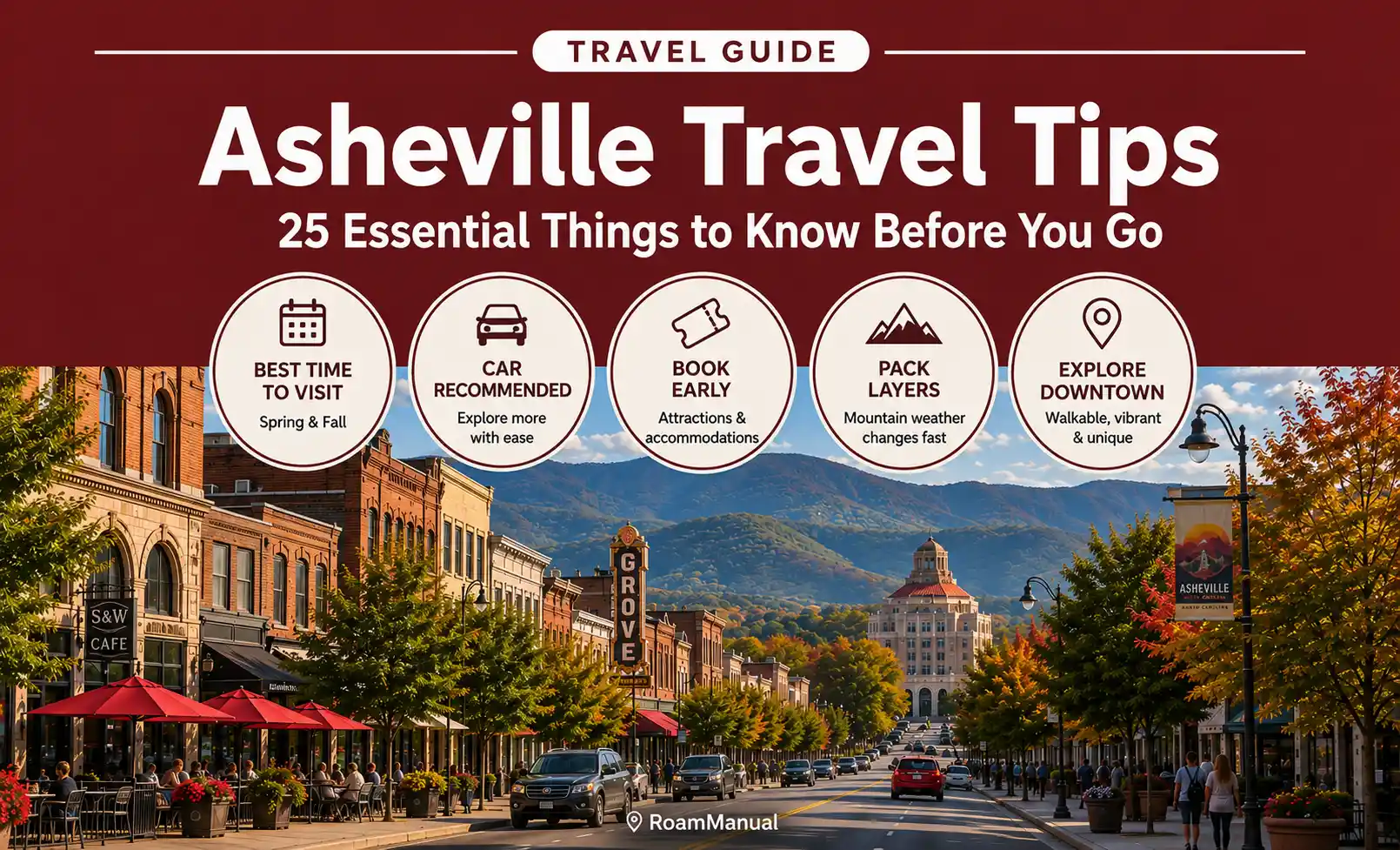
Planning your first trip to Asheville and looking for best Asheville Travel tips? You’re about to visit one of the most charming mountain destinations in the United States. Surrounded by the Blue Ridge Mountains, Asheville blends outdoor adventure, award-winning restaurants, craft breweries, vibrant arts, and historic attractions into one unforgettable destination.
But many first-time visitors make the same mistakes. Some underestimate mountain driving times, others visit during the busiest weekends without booking ahead, and many try to cram too much into a short itinerary.
Before You Visit
- Ideal trip length: 3–4 days
- Best time to visit: April–May and September–October
- Need a car? Yes, if exploring beyond downtown
- Downtown walkable? Yes
- Book early? Especially during October
These 25 practical Asheville travel tips will help you avoid common mistakes, save money, beat the crowds, and experience the city with greater confidence. Whether you’re planning a romantic getaway, family vacation, or Blue Ridge road trip, these tips will help you make smarter decisions before and during your visit.
For practical visitor-safety advice, read our guide on safety in Asheville.
Before You Book Your Trip
Tip #1: Visit During the Right Season for Your Travel Style
One of the biggest decisions you’ll make is when to visit Asheville. Every season offers a different experience, so choose the one that matches your interests instead of automatically choosing the most popular month.
| Season | Best For | Things to Consider |
|---|---|---|
| Spring | Wildflowers, hiking, mild weather | Occasional rain showers |
| Summer | Festivals, waterfalls, outdoor adventures | Warm temperatures and larger crowds |
| Fall | Colorful foliage, scenic drives | Higher hotel prices and busy weekends |
| Winter | Budget trips, breweries, cozy cabins | Some mountain roads may close during winter weather |
If your schedule is flexible, late April, early May, or mid-September can offer pleasant conditions with fewer visitors than peak October weekends.
Tip #2: Stay for at Least Three Nights
Many travelers book only a weekend and quickly realize they don’t have enough time.
A well-balanced Asheville itinerary may include:
- Downtown Asheville
- Biltmore Estate
- Blue Ridge Parkway
- Local restaurants
- Breweries or wineries
- Hiking or waterfalls
Three or four days gives you enough time to experience the city and surrounding mountains without rushing.
| Trip Length | Best For |
|---|---|
| 2 Days | Downtown Asheville and Biltmore Estate |
| 3 Days | Most first-time visitors |
| 4 Days | Scenic drives, hiking, and waterfalls |
| 5+ Days | Exploring surrounding mountain towns |
Tip #3: October Is Beautiful—but Also the Busiest Month
Asheville is especially popular during fall foliage season. The scenery can be spectacular, but demand also increases.
Expect:
- Higher hotel prices
- More traffic on scenic roads
- Longer restaurant waits
- Busier hiking trails
- More competition for downtown parking
RoamManual Tip
For peak October weekends, book accommodations well in advance. Boutique hotels and cabins can fill quickly during popular foliage periods.
Tip #4: Reserve Biltmore Estate Before You Arrive
Biltmore Estate is one of Asheville’s best-known attractions, and many visitors underestimate how much time they may spend there.
If you want to keep sightseeing costs down, see our guide to things to do in Asheville for free.
If Biltmore is part of your itinerary:
- Buy tickets in advance.
- Arrive early.
- Allow plenty of time.
- Wear comfortable walking shoes.
The estate includes much more than the house itself, with gardens, walking areas, shops, dining, and other visitor experiences.
Getting Around Asheville
Tip #5: Rent a Car If You Want the Complete Asheville Experience
Do you need a car in Asheville? If you only plan to stay downtown, you may be able to manage without one. If you want to explore the mountains, scenic drives, trails, or nearby towns, having a car is strongly recommended.
For practical transport details, use our guide to how to get around Asheville.
A vehicle makes it easier to reach:
- Blue Ridge Parkway
- Pisgah National Forest
- Craggy Gardens
- Waterfalls
- Mountain overlooks
- Nearby small towns
Car or No Car?
Stay downtown only: You may not need a car.
Planning mountain day trips: Bring or rent one.
Tip #6: Downtown Is Smaller Than You Think
Downtown Asheville is compact compared with many larger cities, which makes it easy to explore on foot.
Within a relatively small area you’ll find:
- Independent bookstores
- Rooftop bars
- Coffee shops
- Boutique shopping
- Local bakeries
- Art galleries
- Live music venues
Instead of driving between every stop, park once and explore on foot.
Tip #7: Mountain Drive Times Are Longer Than They Look
One of the most common planning mistakes is assuming every attraction is close simply because the mileage looks short.
Mountain roads may include:
- Sharp curves
- Lower speed limits
- Scenic overlooks
- Traffic during peak travel periods
A drive that looks short on a map can take considerably longer once real road conditions and scenic stops are considered.
Tip #8: Parking Is Easier If You Know Where to Go
Instead of circling downtown searching for street parking, using a public garage can save time and reduce stress.
Parking is usually more competitive during:
- Friday evenings
- Saturdays
- Holiday weekends
- October
- Festival weekends
Once parked, downtown Asheville is easy to explore on foot.
Tip #9: Start Your Days Earlier Than You Normally Would
Starting early is one of the simplest ways to improve your Asheville trip.
Morning advantages include:
- Cooler hiking temperatures
- Easier parking
- Smaller crowds
- More relaxed scenic drives
- Better light for photography
If you’re planning to drive the Blue Ridge Parkway, an early start can make the experience significantly calmer than visiting later in the day.
Budgeting, Packing, and Local Planning
Tip #10: Set a Realistic Budget Before You Arrive
Asheville can work for several travel budgets, but accommodation prices can rise noticeably during busy weekends and peak fall travel.
| Travel Style | Estimated Daily Budget |
|---|---|
| Budget | $125–175 |
| Mid-Range | $200–350 |
| Luxury | $400+ |
You can reduce costs by combining paid attractions with free experiences such as scenic overlooks, downtown walking, parks, galleries, and outdoor recreation.
Tip #11: Pack Layers—Mountain Weather Changes Quickly
Mountain weather can shift throughout the day. A cool morning may turn into a warm afternoon before temperatures drop again after sunset.
Useful items include:
- Comfortable walking shoes
- Rain jacket
- Sweater or fleece
- Reusable water bottle
- Sunscreen
- Sunglasses
- Daypack
- Portable phone charger
Packing Tip
Conditions at higher elevations can feel noticeably cooler than downtown Asheville, even when the weather in the city feels comfortable.
Tip #12: Always Download Offline Maps
Cell service is generally easier to access in Asheville than in more remote mountain areas.
Before leaving for a scenic drive or hike, consider downloading:
- Offline map areas
- Trail maps
- Attraction tickets
- Reservation confirmations
- Important addresses
This gives you a backup if mobile coverage becomes unreliable.
Eat, Drink, and Explore Like a Local
Tip #13: Asheville’s Best Restaurants Fill Up Quickly
Asheville has a strong food scene, and some popular restaurants become difficult to book during busy weekends.
If there’s somewhere you definitely want to eat, make a reservation ahead of time when possible.
This is especially useful during:
- Friday and Saturday evenings
- Holiday weekends
- Fall foliage season
- Major festivals and events
Tip #14: Don’t Try Every Brewery in One Day
Asheville is known for craft beer, but trying to visit too many breweries in a single afternoon can turn a relaxed experience into a rushed checklist.
Choose two or three that genuinely interest you, spend time enjoying the atmosphere, and use rideshare services or walk when practical.
Quality usually beats quantity.
Tip #15: Leave Half a Day Unplanned
Asheville rewards travelers who leave room for spontaneous discoveries.
An open afternoon might lead you to:
- A hidden bookstore
- A scenic overlook
- A local art gallery
- A street performance
- A neighborhood café
- A weekend market
RoamManual Recommendation
Plan one major activity each morning and one each afternoon. Leave some of the remaining time flexible so you can enjoy unexpected discoveries without feeling rushed.
Tip #16: Don’t Underestimate How Much You’ll Walk
Although downtown Asheville is compact, it’s easy to walk several miles over the course of a sightseeing day.
You may be walking through:
- Downtown streets
- Galleries
- Biltmore Estate
- Neighborhoods
- Parks
- Scenic areas
Comfortable, supportive footwear can make a noticeable difference.
Tip #17: Have a Rainy-Day Backup Plan
Mountain weather can be unpredictable, so keep several indoor alternatives ready.
Possible rainy-day options include:
- Biltmore Estate
- Art museums
- Local galleries
- Coffee shops
- Brewery experiences
- Cooking classes
- Boutique shopping
- Live music venues
A backup plan prevents bad weather from wasting an entire day.
Tip #18: Respect Asheville’s Relaxed Pace
One reason travelers enjoy Asheville is that the city rewards slower exploration.
Instead of rushing from one stop to another:
- Take your time over breakfast.
- Browse independent bookstores.
- Visit local galleries.
- Enjoy scenic overlooks.
- Listen to live music.
- Spend time in a neighborhood café.
Avoid Common Mistakes and Travel Smarter
Tip #19: Don’t Try to See Everything in One Trip
Trying to combine downtown Asheville, Biltmore Estate, Blue Ridge Parkway, hiking, waterfalls, breweries, and fine dining into one day usually creates an exhausting itinerary.
A better approach is to group experiences by area.
| Day | Main Focus |
|---|---|
| Day 1 | Downtown Asheville, Pack Square, Grove Arcade, South Slope |
| Day 2 | Biltmore Estate and Biltmore Village |
| Day 3 | Blue Ridge Parkway, scenic overlooks, and a short hike |
Tip #20: Check Parkway and Road Conditions Before Leaving
Mountain weather, maintenance, fallen trees, fog, snow, or other conditions can affect roads in western North Carolina.
Before heading out, check:
- Weather forecasts
- Road closures
- Blue Ridge Parkway conditions
- Trail updates
Why It Matters
Sunshine in downtown Asheville does not always mean clear conditions at higher elevations. Checking conditions before leaving can save significant time.
Tip #21: Carry Some Cash—but Not Too Much
Most businesses accept cards, so you generally don’t need to carry much cash.
A small amount can still be useful for:
- Farmers markets
- Small vendors
- Festival booths
- Tips
- Occasional cash-only purchases
For many travelers, carrying around $20–40 is enough as a backup.
Tip #22: Explore Beyond the Famous Attractions
Biltmore Estate and the Blue Ridge Parkway deserve their popularity, but Asheville becomes more interesting when you explore beyond the headline attractions.
Consider:
- River Arts District
- Pack Square
- Grove Arcade
- Independent bookstores
- Neighborhood bakeries
- Local galleries
- Quiet scenic overlooks
Tip #23: Respect Nature and Leave No Trace
The Blue Ridge Mountains are one of Asheville’s greatest assets. Visitors can help protect them by following responsible outdoor practices.
- Stay on marked trails.
- Pack out your trash.
- Respect wildlife.
- Leave plants undisturbed.
- Follow posted rules.
Tip #24: Build Flexibility Into Every Day
Unexpected discoveries are part of Asheville’s appeal.
You may come across:
- A live music event
- An artisan market
- A scenic overlook
- A hidden coffee shop
- A local recommendation
Leaving one or two hours unscheduled each day gives you room to take advantage of those moments.
Tip #25: Remember That Every Season Feels Different
Asheville changes noticeably throughout the year.
Spring brings blooming landscapes. Summer emphasizes outdoor recreation. Fall transforms the mountains with seasonal color. Winter brings quieter streets and a slower pace.
This seasonal variety is one reason many travelers return more than once.
Sample 3-Day Asheville Itinerary
| Day | Morning | Afternoon | Evening |
|---|---|---|---|
| Day 1 | Explore Downtown Asheville | Grove Arcade and Pack Square | Dinner and live music in South Slope |
| Day 2 | Biltmore Estate | Gardens and additional estate experiences | Dinner near Biltmore Village |
| Day 3 | Drive the Blue Ridge Parkway | Craggy Gardens or a short hike | Scenic overlook or relaxed dinner |
Frequently Asked Questions About Asheville Travel
Is Asheville worth visiting?
Yes. Asheville combines mountain scenery, outdoor recreation, historic attractions, a strong arts scene, food, craft beer, and a walkable downtown. It works especially well for weekend getaways and short mountain vacations.
How many days do you need in Asheville?
Three to four days is ideal for many first-time visitors. This gives you enough time for downtown Asheville, Biltmore Estate, part of the Blue Ridge Parkway, and at least one outdoor experience without making the trip feel rushed.
For help shaping your schedule, use our guide to weekend in Asheville.
Do you need a car in Asheville?
You can explore downtown without a car, but a vehicle is strongly recommended if you want to visit the Blue Ridge Parkway, Pisgah National Forest, waterfalls, hiking trails, or nearby mountain towns.
What is the best month to visit Asheville?
April, May, September, and October are popular because of comfortable weather and seasonal scenery. October is especially popular for fall foliage but also tends to bring larger crowds and higher accommodation prices.
Is Asheville expensive?
Asheville is generally a mid-range destination, though accommodation costs can increase during busy weekends and fall foliage season. Travelers can control spending by balancing paid attractions with free outdoor experiences and lower-cost dining options.
Asheville Trip Planning Checklist
Before You Leave Home
- Choose the season that best matches your travel style.
- Book accommodation early if visiting during fall.
- Reserve Biltmore Estate if it is a priority.
- Decide whether you’ll need a rental car.
- Download offline maps for mountain drives.
- Pack comfortable walking shoes and layered clothing.
- Check weather and road conditions before mountain trips.
- Leave room in your itinerary for spontaneous discoveries.
Final Thoughts on Asheville Travel Tips
The best Asheville vacations aren’t measured by how many attractions you check off a list. They’re often remembered for the quieter moments in between—a relaxed morning in a neighborhood café, an unexpected mountain overlook, time spent browsing local art, or a scenic drive that takes longer because you kept stopping for the views.
These 25 Asheville travel tips can help you avoid common mistakes, make smarter planning decisions, and experience the city with greater confidence.
Plan ahead where it matters, stay flexible when you can, and give yourself enough time to enjoy both Asheville and the Blue Ridge Mountains at a comfortable pace.
“`
