



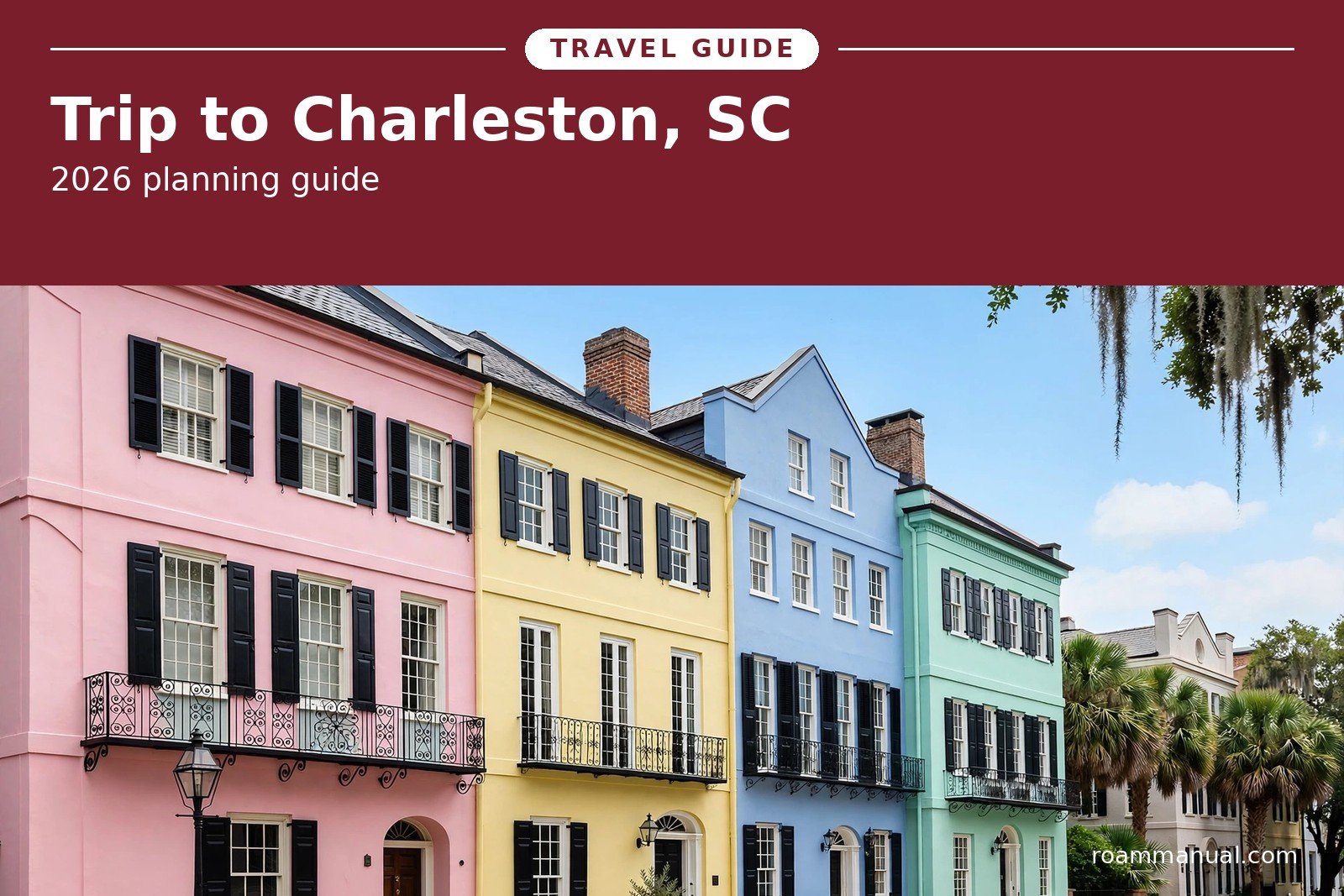
Last updated: October 1, 2026
Charleston, South Carolina, mixes historic streets, harbor views, and some of the best food in the South. Prices, crowds, and weather change a lot through the year, so a little planning goes a long way.
This 2026 planning guide covers the best time to visit, how many days you need, where to stay, what to eat, how to get around, and what the trip will cost.
Best Time to Visit Charleston
Spring, from March through May, is the sweet spot. Daytime highs sit in the 70s and low 80s, flowers bloom across the Historic District, and the festival calendar peaks.
Hotel prices run high, but the weather makes it worth it for most visitors.
Spring is also festival season. In 2026, the three big spring festivals were:
- Southeastern Wildlife Exposition (SEWE): February 13 to 15
- Charleston Wine + Food: March 4 to 8, in its 20th year
- Spoleto Festival: May 22 to June 7
These festivals return every year, so the same windows matter for future trips.
Still to come in 2026: the Food and Wine Classic, November 13 to 15.
Summer, from June through August, brings heat and humidity with highs around 90 and frequent afternoon storms. Beach time is at its best, and hotel prices stay high, so plan around the midday heat. Our guide to Charleston beaches will help you choose between Folly Beach, Isle of Palms, and the other nearby beaches.
Fall, from September through November, is a favorite for many travelers. Temperatures drop back into the 70s and 80s, the ocean stays warm into October, and crowds thin out after Labor Day.
Early fall is still hurricane season, so watch the forecast.
Winter, from December through February, is the quiet season. Highs hover in the 50s and low 60s.
Many visitors skip these months, which means hotel prices hit their lowest. January is the cheapest month to book a downtown hotel, with average rates near $206 a night according to KAYAK.
A Note on Hurricane Season
Atlantic hurricane season runs June 1 through November 30. The risk to Charleston peaks from mid-August through October.
NOAA forecast a below-normal 2026 season because of a strong El Nino, with 7 to 13 named storms expected and a 75 percent chance of below-normal activity.
That does not mean zero risk. Forecasters warned that smaller storms can still form quickly near the coast. If you visit between August and October, buy travel insurance and check the National Hurricane Center forecast before your flight.
How Many Days Do You Need for a Trip to Charleston?
Three days works well for a first visit. It gives you enough time to see the Historic District, take a harbor cruise or plantation tour, and enjoy the food scene without rushing.
Two days can work if you keep it simple. Focus on the Historic District on day one: Rainbow Row, the Battery, King Street, and the City Market.
Spend day two at a plantation or on a harbor tour, then fit in one great dinner.
Five days lets you slow down. Add a beach day at Folly Beach or Isle of Palms, a day trip to Boone Hall Plantation or Patriots Point, and an extra dinner or two.
Seven days or more makes sense if you want to combine Charleston with the rest of the Lowcountry, or if you are planning a bigger Southern road trip.
If you are torn between the two cities, read our Charleston vs Savannah guide before you decide where to spend your time.
Where to Stay in Charleston
Charleston has four main areas to choose from. Each one suits a different budget and trip style.
Historic District
Stay here if this is your first trip and you want to walk everywhere. You will pay for the location.
Average hotel rates across Charleston run around $344 a night, and downtown double rooms average about $468, according to recent KAYAK and momondo data.
Upscale four-star hotels typically run $500 to $700 a night, and five-star properties can top $900 in peak months.
Mount Pleasant
Mount Pleasant sits across the Cooper River, about 15 minutes by car from downtown. Hotels here cost less than downtown, with mid-range options often running $150 to $300 a night.
You get a calmer base near Shem Creek restaurants, but you will need a car or rideshare to reach the Historic District.
Folly Beach
Folly Beach is the pick if the ocean matters most. This laid-back beach town sits about 25 minutes from downtown, with vacation rentals, condos, and a handful of small hotels.
Seasonal prices often run $150 to $350 a night, and beachfront options are limited.
West Ashley
West Ashley offers the best value. Budget motels and chain hotels near Savannah Highway run $80 to $150 a night, with some simple options dropping near $60 to $75 in the off season.
It is a 10 to 15 minute drive to downtown, which makes it a smart base for budget travelers with a car.
Top Things to Do in Charleston
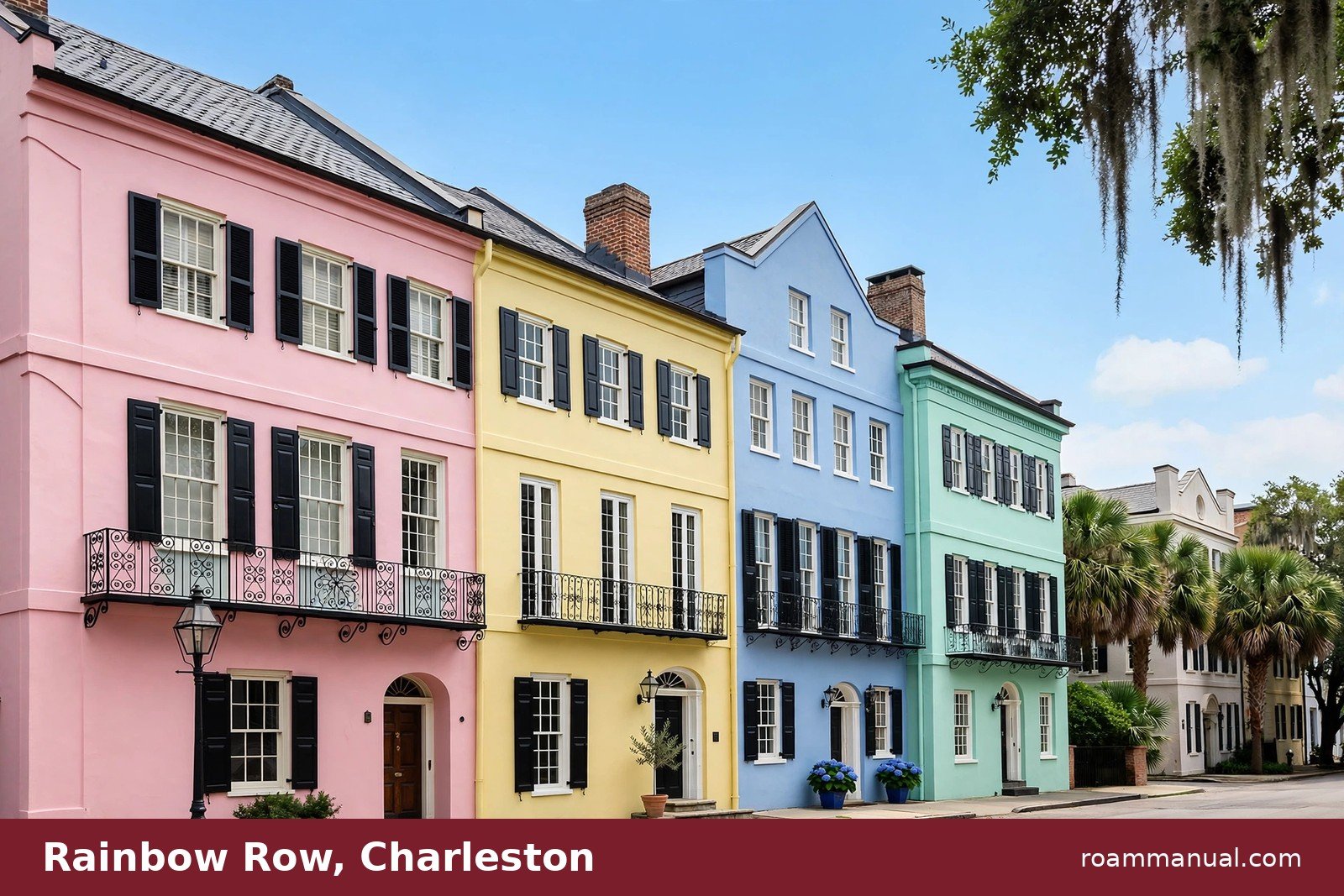
Start in the Historic District. Rainbow Row is the famous stretch of pastel Georgian row houses on East Bay Street. It is free to walk past and photograph, and it sits close to the Battery.
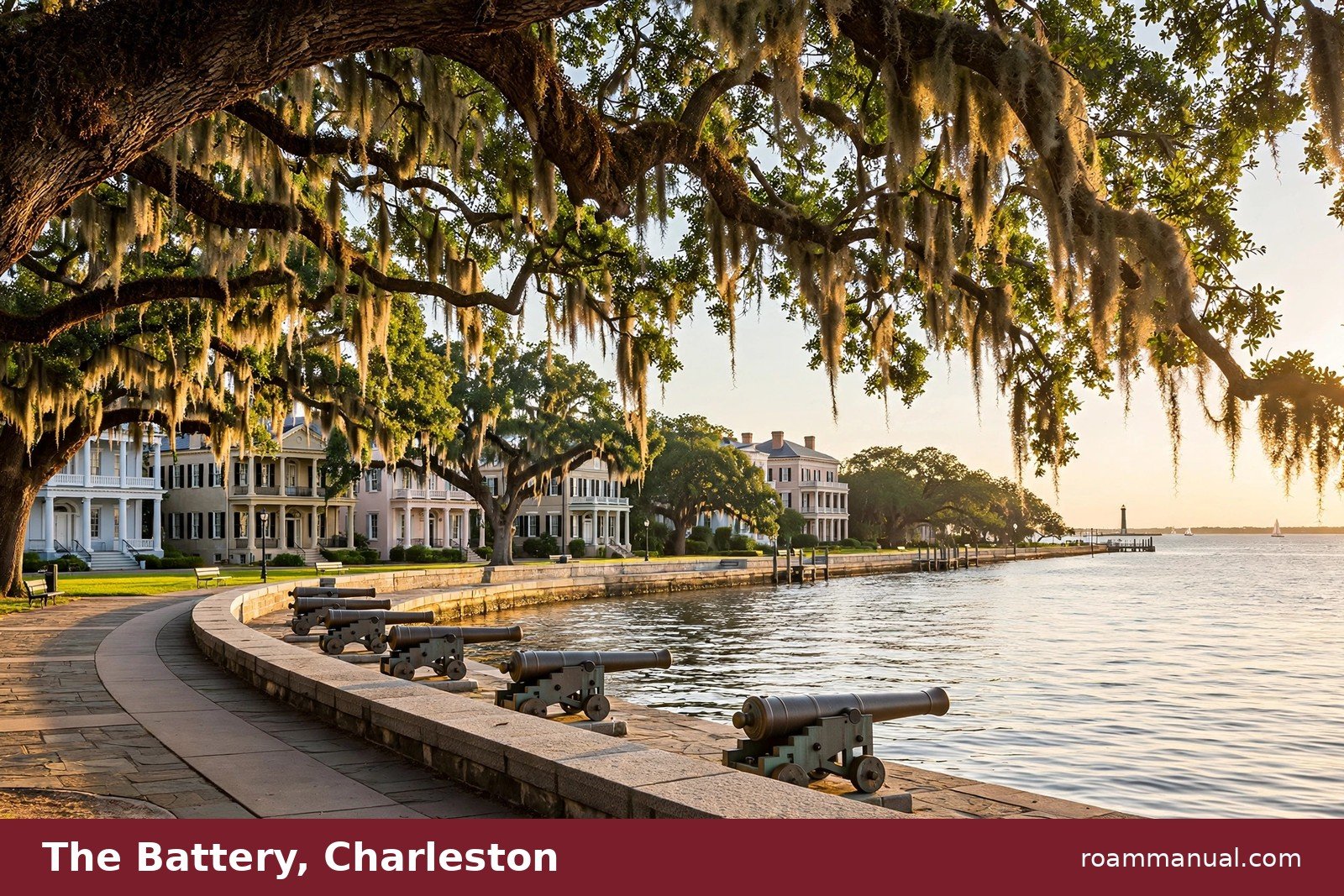
The Battery and White Point Garden form the scenic promenade at the tip of the peninsula. Walk the seawall for harbor views, then stroll under the live oaks. Both are free and best in the early morning or late afternoon.
Waterfront Park and its Pineapple Fountain make a good midday break. The park is free, partly shaded, and sits right on the harbor.
King Street handles shopping and people watching. The Charleston City Market, one of the oldest public markets in the country, sells sweetgrass baskets and local crafts. Go early to beat the crowds.
For history, tour one of the house museums. The Nathaniel Russell House and the Aiken-Rhett House each show a different side of 19th-century Charleston life, with admission typically running $10 to $15 per house.
Plantations are worth a half day. Magnolia Plantation and Gardens charges about $35 for adults, with gardens, a house tour, and a wildlife center.
Middleton Place and Boone Hall are the other big names, each about 30 to 45 minutes from downtown. Our guide to Charleston plantations will help you choose which one to visit.
Fort Sumter sits in the harbor and is only reachable by boat. Tour boats leave from downtown and Patriots Point, and the round trip takes about two and a half hours. Book ahead in peak season.
Sunset harbor cruises typically start around $65 per person. Guided walking tours start around $30, and carriage or trolley tours run around $40. See our guide to Charleston tours to compare the best options.
Patriots Point in Mount Pleasant is home to the USS Yorktown aircraft carrier. It makes a full half day if you like military history.
What to Eat in Charleston
Charleston is a food city, so plan your meals with care. Start with the Lowcountry classics: shrimp and grits, she-crab soup, Lowcountry boil, and fresh oysters.
Food prices in 2026 reflect the city’s popularity:
- Casual lunch at a counter-service spot: $15 to $25 per person
- Mid-range dinner with an appetizer and entree: $40 to $70 per person
- Three-course dinner for two at a mid-range restaurant: about $135
- Fine dining: easily tops $100 per person before drinks
Reservations matter. Popular restaurants book out days or weeks ahead, especially on weekends. Make reservations as soon as you know your dates, and try lunch instead of dinner if a place you want is full.
Do not skip the food tours. Walking food tours run about two and a half hours and cost around $110, and they double as a history lesson across several restaurants.
Getting Around Charleston
The Historic District is very walkable. Most major sights sit within a compact area south of Calhoun Street, and you can cover Rainbow Row, the Battery, King Street, and the City Market on foot in a single day.
For longer hops, ride the free DASH shuttle. It runs three downtown routes, and all stop at the Charleston Visitor Center at 375 Meeting Street.
Parking downtown takes planning. Street meters cost $2 per hour, run Monday through Saturday, 9 a.m. to 6 p.m., with a two-hour limit.
City garages are the better bet for longer stays, with many charging about $2 an hour or $18 to $24 for a full day.
Hotel valet parking downtown can cost $40 to $60 a night, so ask about parking fees before you book.
A smart move: park once at a garage or the Visitor Center and walk or ride DASH for the rest of the day. Driving between sights in the Historic District wastes time on narrow one-way streets.
Getting From the Airport
Charleston International Airport (CHS) sits about 12 miles northwest of downtown, roughly a 20-minute drive. A taxi to downtown typically costs $60 to $75. Rideshares usually run $35 to $50 depending on demand.
The budget option is CARTA bus Route 11, which connects the airport area to downtown for a few dollars but takes over an hour.
Rental cars are easy to find at the airport if you plan day trips or a beach stay.
How Much Does a Trip to Charleston Cost?
Daily budgets vary a lot by travel style. These estimates are per person per day and exclude flights.
Budget: $150 to $200 a day. Stay in West Ashley or a budget motel ($80 to $130 a night), eat casual meals ($15 to $25 per meal), and lean on free sights like the Battery, Rainbow Row, and Waterfront Park.
Walk and ride the free DASH shuttle.
Mid-range: $280 to $400 a day. Stay in a downtown or Mount Pleasant hotel ($250 to $400 a night), enjoy one nice dinner out ($50 to $70), take a tour or two ($30 to $65 each), and use rideshares when needed.
Luxury: $550 and up a day. Book a four- or five-star downtown hotel ($500 to $900 a night), dine at the city’s best restaurants ($100 or more per person), and add private tours or a harbor cruise.
Couples can trim costs by splitting hotel rooms. Travelers who visit in January or February will find the lowest hotel rates of the year, often 30 percent below peak season.
Quick Planning Takeaways
- Visit in spring (March to May) for the best weather and festivals, or in fall (September to November) for warm days and smaller crowds.
- Three days covers the highlights; five days lets you add a beach day and a plantation without rushing.
- Stay downtown if you want to walk everywhere, in West Ashley if you want to save money, or at Folly Beach if the ocean is the priority.
- Book hotels and restaurant reservations early for spring and fall weekends, when prices peak.
- Budget at least $150 a day for a lean trip and $280 to $400 a day for a comfortable mid-range visit.
Day Trips From Charleston
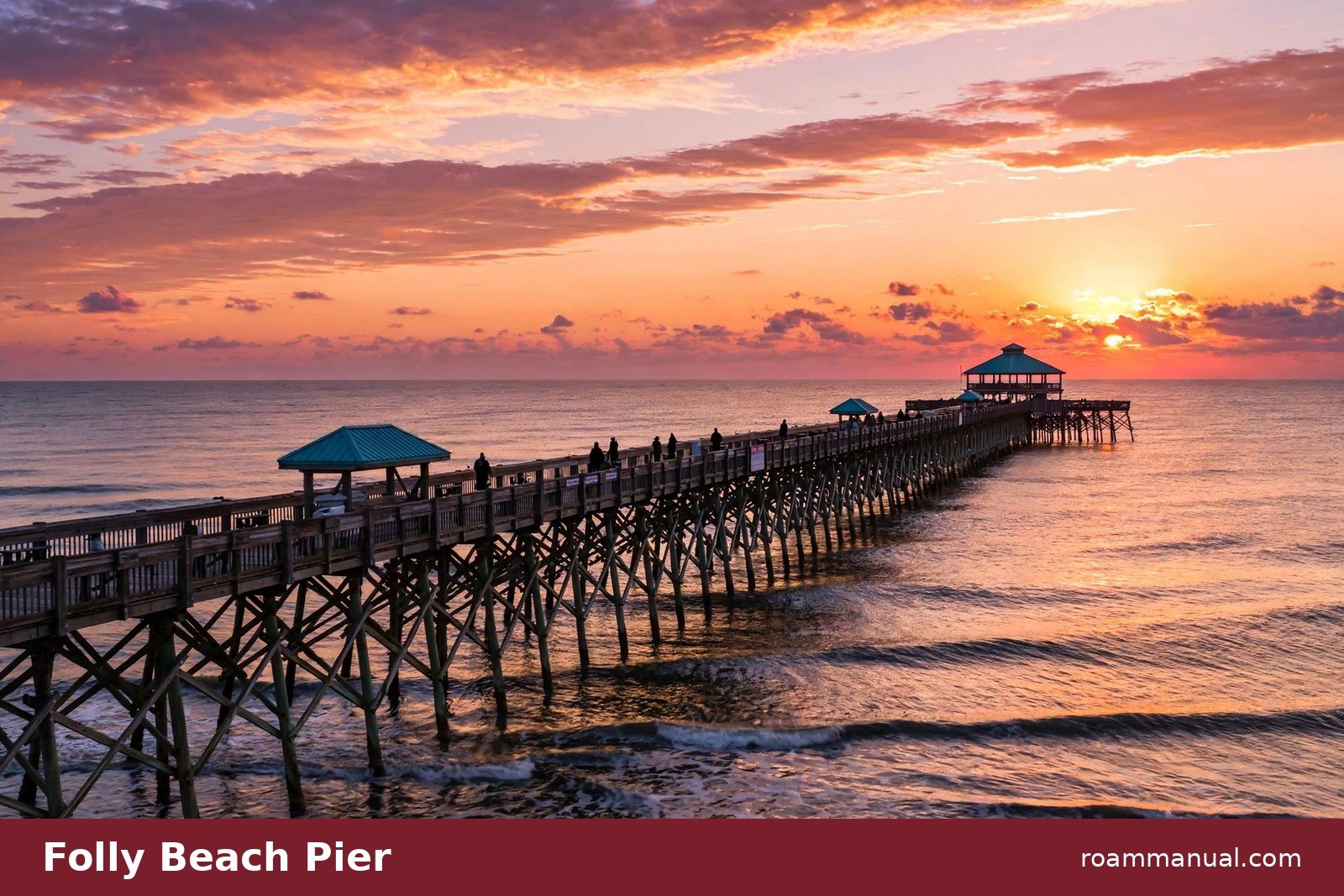
Folly Beach makes the easiest day trip, about 25 minutes from downtown. The beach is free, the pier area has casual restaurants, and the surf is gentle enough for beginners.
Isle of Palms and Sullivan’s Island sit northeast of the city, about 20 to 30 minutes away. Isle of Palms has wider beaches, while Sullivan’s Island feels quieter.
Fort Moultrie on Sullivan’s Island adds a history stop to a beach day.
Boone Hall Plantation in Mount Pleasant is about 30 minutes from downtown and famous for its Avenue of Oaks. Drayton Hall, closer to the city, is one of the oldest preserved plantation houses open to the public in the country.
If you have a full spare day, Kiawah Island offers golf, nature trails, and quiet beaches about 45 minutes southwest. Travelers choosing between Charleston and its Georgia neighbor can compare the two in our Charleston vs Savannah comparison.
Practical Tips for Your Trip to Charleston
Book ahead. Hotels, popular restaurants, and plantation tours sell out on spring and fall weekends. Reserve dinner tables as soon as your dates are set.
Respect the neighborhoods. Much of the Historic District is residential.
Carry a light rain jacket in summer. Afternoon thunderstorms are common and usually pass within an hour.
Watch out for street flooding. Low-lying streets near the Battery can flood during heavy rain or king tides.
Bring a credit card for parking. Meters and garages take cards, and many garages no longer accept cash.
FAQs
Is Charleston worth visiting?
Yes. Charleston pairs well-preserved history with a harbor setting and a nationally known food scene. Three days is enough for the highlights, and many visitors return for the restaurants alone.
When is the best time to visit Charleston?
March through May offers the best mix of mild weather and events, including SEWE, Charleston Wine + Food, and Spoleto Festival. September through November brings warm days and fewer crowds. January and February have the lowest hotel prices.
How many days do you need in Charleston?
Two days covers the Historic District and one big outing, such as a plantation or harbor tour. Three days is the sweet spot for a first trip. Five days adds a beach day and slower pacing.
Is Charleston walkable?
The Historic District is very walkable, with most sights within a compact area south of Calhoun Street. The free DASH shuttle covers longer hops downtown. You only need a car for plantations, beaches, and day trips.
How much does a trip to Charleston cost?
Budget travelers can manage $150 to $200 a day per person by staying outside downtown and eating casually.
A comfortable mid-range trip runs $280 to $400 a day. Luxury trips with downtown hotels and fine dining start around $550 a day.
Is Charleston safe for tourists?
The main tourist areas, including the Historic District, King Street, and the Battery, are generally safe and well traveled. Use normal city awareness at night: stick to lit streets, lock your car, and keep valuables out of sight.
Do you need a car in Charleston?
Not for the Historic District itself, which is best explored on foot with the free DASH shuttle. Rent a car if you plan to visit plantations, beaches, or nearby towns like Mount Pleasant and Folly Beach.
What is hurricane season in Charleston?
Atlantic hurricane season runs June 1 through November 30, with the highest risk from mid-August through October.
NOAA forecast a below-normal 2026 season, but travelers visiting in late summer and fall should still buy travel insurance and check forecasts before flying.
