



Travel budget planning is the most important step if you want a stress-free trip. Without a clear plan, it is easy to overspend in the first few days and struggle later. Budgeting fits into the wider process explained in our guide on how to plan a trip step by step.
I’ve made that mistake myself, spending too much early and then cutting back on experiences. This guide shows how to plan your budget the right way from the start.
Travel budget planning means deciding how much money you need for your trip and how you will spend it. It helps you avoid overspending and travel with confidence.
- What is travel budget planning? Planning your total trip cost and daily spending in advance
- How much does a USA trip cost? About $120 to $350 per day for most travelers
- What should a travel budget include? Flights, stay, food, transport, activities, and extra costs
What Is Travel Budget Planning and Why It Matters
Travel budget planning helps you control your money before and during your trip. It removes guesswork and helps you enjoy your trip without stress.
A clear budget also helps you make better choices and avoid running out of money halfway through the trip.
- Keeps spending clear
- Helps avoid running out of money
- Makes decisions easier
What a Travel Budget Includes
A proper travel budget includes all major and hidden costs. Missing even a few small expenses can throw off your full plan.
- Flights or transport
- Accommodation
- Food and drinks
- Activities
- Insurance and extra fees
Why Most Travelers Overspend (Real Insight)
On one of my trips, I planned flights and hotels but ignored daily costs like food, parking, and tips. By day three, I was already over budget.
Build a travel itinerary before finalising the budget because trip length and daily activities affect the total cost. That experience taught me that the problem is usually not one big expense. It is a long list of small ones that build up fast.
- Small daily spending adds up
- Hidden costs are ignored
- No daily tracking
Important Point
Most overspending does not come from luxury choices. It usually comes from poor daily planning and missed small costs.
How Much Does a Trip Cost? (Real USA Travel Costs)
Travel costs in the USA are higher than many people expect. Knowing realistic numbers helps you plan better and avoid surprises.
Your total cost depends on travel style, destination, and season. Still, these ranges give you a useful starting point.
| Travel Style | Daily Cost (USA) | 7-Day Trip Estimate |
|---|---|---|
| Budget | $120 | $850 to $1,200 |
| Mid-range | $300 to $350 | $2,100 to $2,500 |
| Luxury | $900+ | $6,000+ |
Why Travel Costs Change by Destination
Where you go affects almost every part of your budget. Hotels, food, parking, and activities can vary a lot from one place to another.
Our guide on how to choose a travel destination can help you compare local prices, distance, seasons, and trip style before setting your final budget.
- Big cities usually mean expensive hotels and food
- Tourist areas usually have higher activity prices
- Smaller towns usually cost less
MUST READ: Use our travel budget calculator to total flights, hotels, food, transport, activities, and emergency funds.
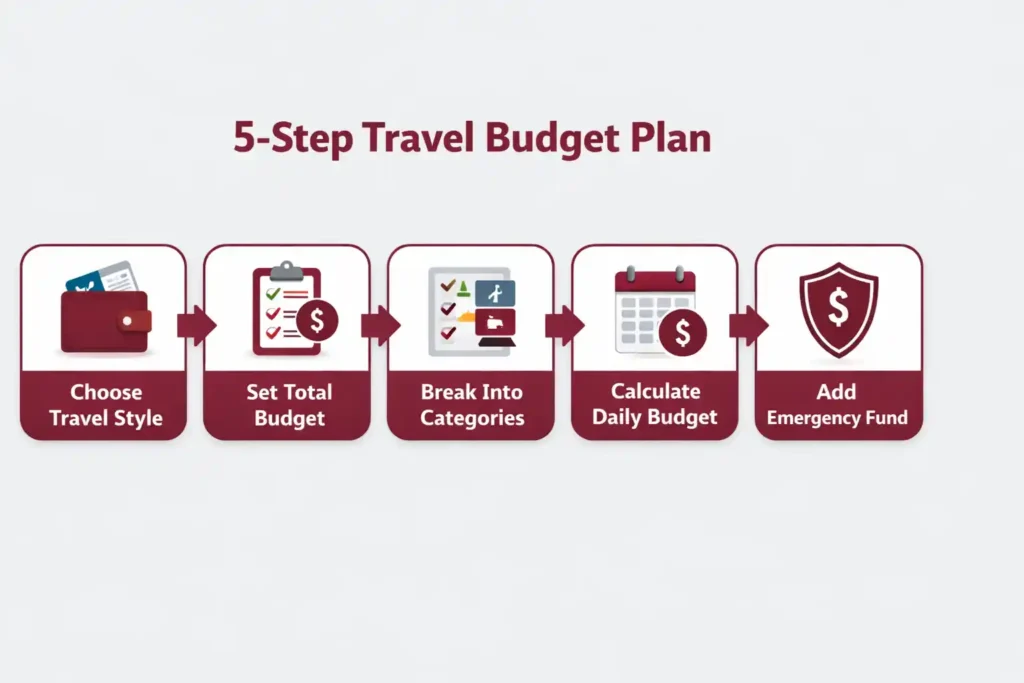
My Simple 5-Step Travel Budget Planning Method
This is the exact method I use now. It keeps things simple and avoids the mistakes that usually lead to overspending.
Plan Your Travel Budget the Smart Way
Download your free Travel Budget Planner and organize your trip step by step. Track expenses, set daily limits, and avoid overspending.
Use Excel if you want to customize your budget. Use PDF for a quick and simple version.
Download Excel Planner Download PDF VersionNo signup required • Instant download
Once you break the budget into clear steps, the full trip starts to feel much easier to manage.
Step 1: Decide Your Trip Style
Your trip style shapes almost every cost. Start here before setting exact numbers.
- Budget → basic travel
- Comfort → balanced travel
- Luxury → premium travel
Step 2: Set Your Total Budget
Choose the maximum amount you can spend on the full trip. This helps you stay realistic from the start.
- Decide what you can afford
- Avoid depending on credit
- Plan the full trip cost, not just the big parts
Step 3: Break Budget into Categories
Once you know your total limit, divide it into the parts that matter most.
- Flights
- Hotels
- Food
- Activities
- Transport
Step 4: Calculate Your Daily Budget
Your daily budget keeps spending under control during the trip.
Daily Budget Formula:
Total trip cost ÷ number of days = daily budget
Step 5: Add Emergency Buffer
No travel plan is complete without backup money. This gives you breathing room if prices go up or something unexpected happens.
- Add 10 to 20 percent extra
- Use it for unexpected costs
- Keep your trip stress-free
Tip
If you feel stuck, set your hotel and transport budget first. Those two usually shape the rest of the trip faster than anything else.
Example Travel Budget (City Trip vs Road Trip)
Seeing real examples makes travel budget planning much easier. It turns general advice into something you can picture and use.
These sample budgets show how trip style changes your costs, even with the same number of days.
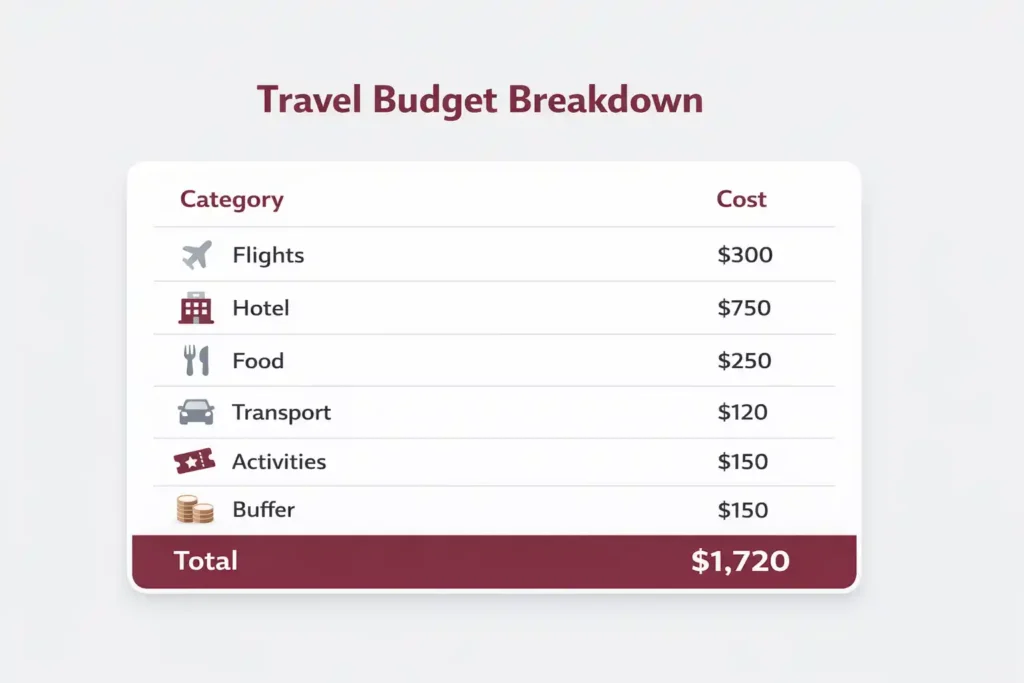
City Trip Example (5 Days)
| Expense | Cost |
|---|---|
| Flights | $300 |
| Hotel | $750 |
| Food | $250 |
| Transport | $120 |
| Activities | $150 |
| Buffer | $150 |
| Total | $1,720 |
Road Trip Example (5 Days)
| Expense | Cost |
|---|---|
| Gas | $200 |
| Hotels | $600 |
| Food | $250 |
| Parking/Tolls | $120 |
| Activities | $100 |
| Buffer | $130 |
| Total | $1,400 |
Road trips can be cheaper if planned well, but costs like gas, tolls, and parking still need to be tracked closely. Our guide on how to plan a road trip covers fuel, tolls, parking, accommodation, and route-based costs.
Complete Travel Cost Breakdown (Don’t Miss These Expenses)
Many people only plan the big costs and forget smaller ones. That is where budgets usually fail.
A full breakdown helps you see how each category affects the total trip cost.
| Expense Category | Typical Share | Example Cost |
|---|---|---|
| Flights | 30 to 40% | $300 to $800 |
| Accommodation | 25 to 35% | $700 to $1,500 |
| Food | 15 to 20% | $200 to $400 |
| Activities | 10 to 15% | $100 to $300 |
| Transport | 5 to 10% | $50 to $150 |
| Hidden Costs | 5 to 10% | $50 to $200 |
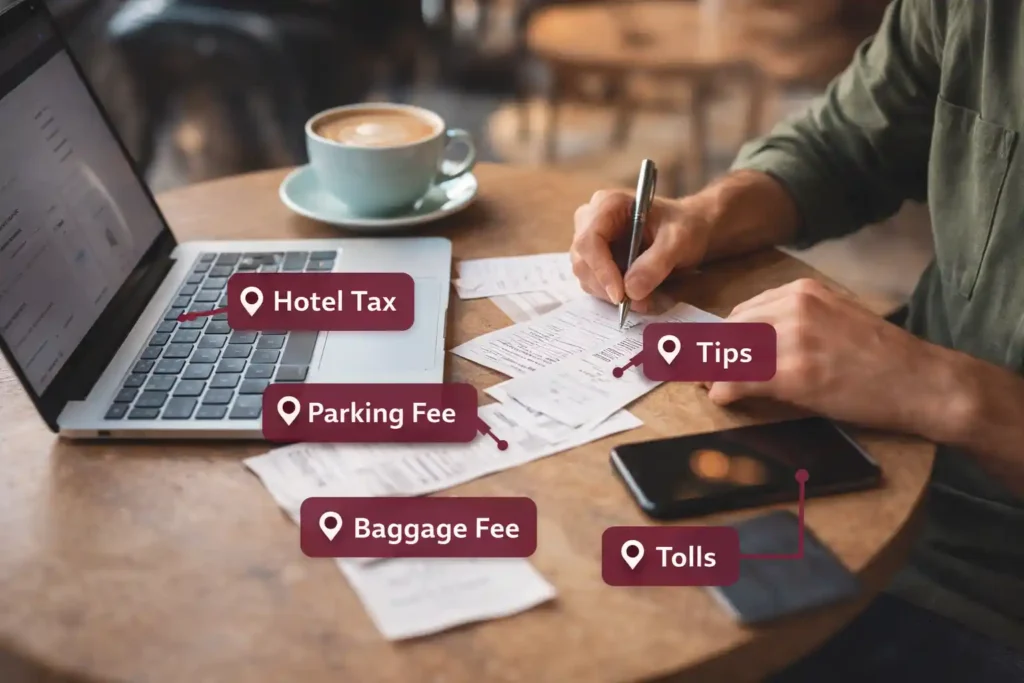
USA Hidden Travel Costs Most People Miss
This is where most budgets break. These costs are common in the USA, and many travelers forget to include them.
Even if each one seems small, together they can add a surprising amount to your total.
| Hidden Cost | Typical Range |
|---|---|
| Hotel taxes | 10 to 20% |
| Resort fees | $20 to $50/night |
| Parking | $10 to $40/day |
| Tolls | $5 to $25/day |
| Tips | 10 to 20% |
| Baggage fees | $30 to $60 |
These missed costs can easily add $200 or more to your trip.
Note
If you are planning a city trip in the USA, parking, hotel taxes, and tips are often the first hidden costs that break the budget.
Travel Budget Based on Your Travel Style
Your budget should match how you travel. Trying to copy someone else’s style usually leads to overspending or disappointment.
This is why two people can visit the same place and spend very different amounts.
| Travel Style | Stay | Transport | Food | Activities |
|---|---|---|---|---|
| Budget | Cheap hotels | Public | Local food | Free |
| Mid-range | 3-star hotels | Mixed | Balanced | Paid + free |
| Luxury | 5-star hotels | Private | Fine dining | Premium |
Travel Budget Based on Destination
Where you travel in the USA changes your budget a lot. Some cities are much more expensive than others.
This is why checking local cost levels before booking can save you from a bad surprise later.
- Expensive: New York, San Francisco
- More affordable: smaller cities, national park areas, some road trip routes
Always check local hotel prices, parking, food costs, and activity fees before finalizing the trip.
Best Tools to Plan and Track Your Travel Budget
Using tools makes travel budget planning easier and more accurate. They help you estimate, compare, and track costs without doing everything by hand.
You do not need many tools. A few good ones are usually enough.
- Google Flights → track prices
- Skyscanner → compare deals
- Numbeo → check costs
- Splitwise → share expenses
- TravelSpend → track daily spending
How to Track Your Spending During Your Trip
Tracking is what keeps your budget working. Without it, even a good plan can fail once the trip starts.
A simple daily check helps you stay in control and adjust early if needed.
- Track daily spending
- Compare with your daily budget
- Adjust the next day if needed
Simple tracking saves money and reduces stress.
Smart Ways to Save Money While Traveling
Saving money is about making better choices, not cutting your whole experience. The goal is to spend where it matters and reduce waste where it does not. Travelling during the cheapest time to travel may reduce airfare, hotel rates, and activity costs.
Small decisions before and during the trip can make a big difference.
- Book early
- Avoid peak season
- Eat local food
- Use public transport
Common Travel Budget Mistakes to Avoid
Avoiding mistakes usually saves more money than any one tip. A lot of budget problems come from the same few habits.
- Underestimating costs
- Ignoring hidden fees
- Not keeping an emergency fund
How Much Emergency Fund Do You Need
Every travel budget needs backup money. This protects you from unexpected price jumps, delays, or daily overspending.
Without a buffer, one problem can affect the whole trip.
- Keep 10 to 20% extra
- Enough for 2 to 3 days if needed
- Store it separately from your main budget
Download Your Travel Budget Planner
Track your trip cost, daily budget, hidden expenses, and final totals in one simple planner before you book.
Final Tips for Travel Budget Planning That Works
Travel budget planning is not about limiting your trip. It is about making sure your money supports what matters most. From my own trips, I’ve learned that the biggest stress comes from unclear spending, not from having a smaller budget.
Over time, I stopped trying to save on everything and focused on spending smart. That means choosing the experiences that matter, cutting what does not, and adjusting during the trip. A simple, flexible plan gives you more control, better experiences, and a smoother journey.
Travel Budget Planning FAQ
How much money should I save for a trip?
Save enough for your daily costs plus a 10 to 20 percent buffer.
What is a good daily travel budget?
About $120 to $350 per day in the USA for most travelers.
Can I travel on a low budget?
Yes, with cheaper stays, local food, and smart transport choices.
What is the biggest travel expense?
Flights and accommodation are usually the biggest travel expenses.
How do I avoid overspending?
Track daily spending, plan ahead, and leave room for hidden costs.
