



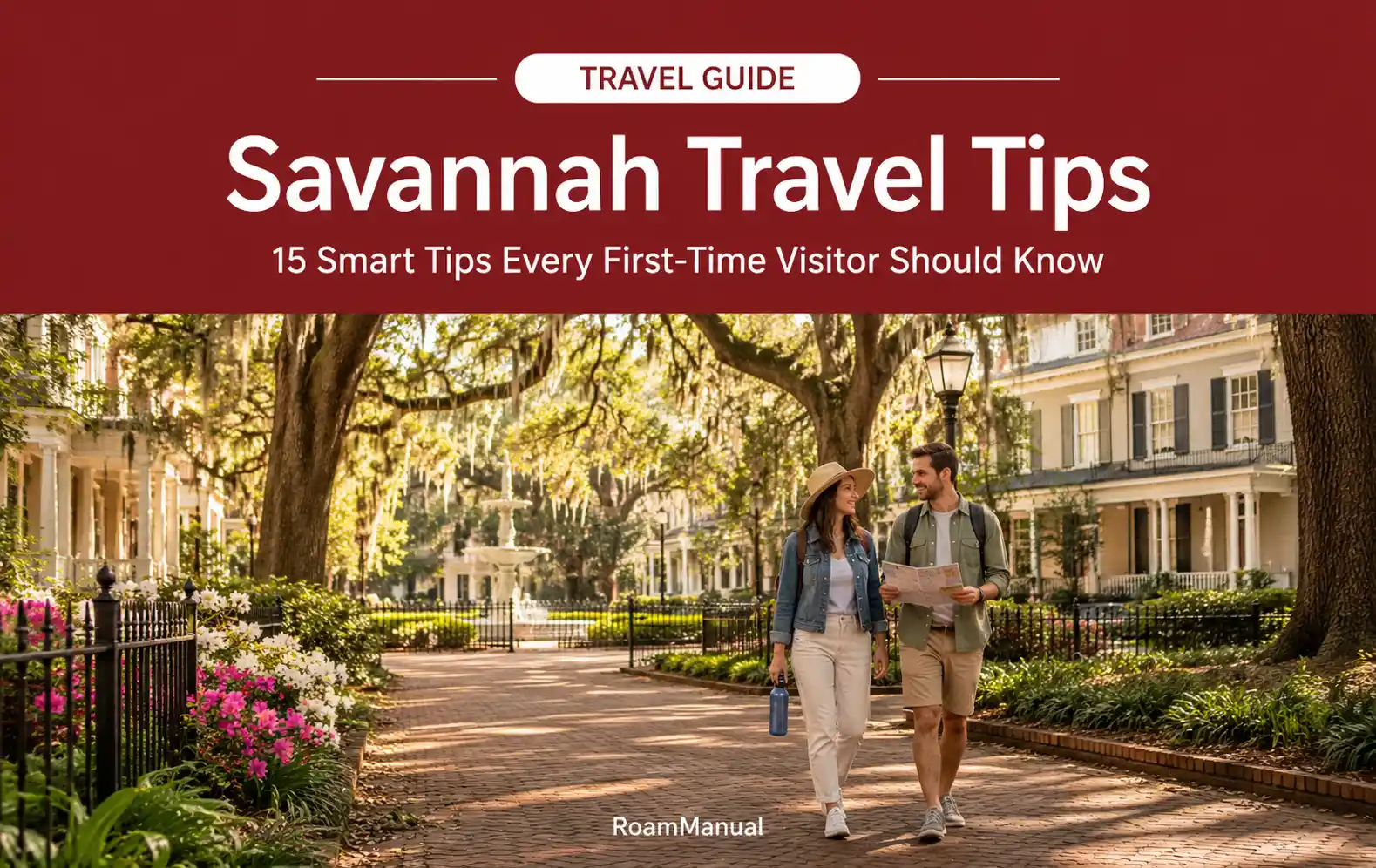
Planning your first trip to Savannah is exciting, but a little preparation can make a big difference. Before choosing your dates, compare the when to visit Savannah for weather, crowds, and seasonal prices. The city is easy to explore, yet first-time visitors often underestimate the walking, summer humidity, restaurant demand, parking challenges, and value of leaving room in the schedule.
Savannah is one of the easiest Southern cities for first-time visitors to explore, but planning ahead matters. Comfortable walking shoes, early restaurant reservations, realistic daily plans, and preparation for the weather will help you avoid the most common mistakes and enjoy a more relaxed trip.
For more ideas that fit this part of your trip, see our guide to Savannah attractions and activities.
These Savannah travel tips focus on practical decisions that can save time, reduce stress, and help you enjoy the city at a comfortable pace. They are especially useful for weekend travelers, couples, families, and anyone visiting Savannah for the first time.
1. Start with the Historic District, but Do Not Try to See Everything
The Historic District is the center of most first-time visits. It includes many of Savannah’s best-known squares, historic homes, restaurants, shops, and waterfront streets.
Even so, trying to cover the entire district in one day usually leads to a rushed experience. Savannah is best enjoyed as a place to explore rather than a checklist to complete.
Choose a few priorities, then leave open time to walk between historic squares, stop at a café, or explore streets that catch your attention. Places such as Ellis Square, Chippewa Square, Broughton Street, and Forsyth Park can help orient your visit without forcing you into a rigid schedule.
For more ideas that fit this part of your trip, see our guide to family-friendly things to do in Savannah.
On your first afternoon, resist the urge to schedule museums, tours, shopping, and River Street all at once. Spend that time getting familiar with the Historic District instead.
2. Expect to Walk More Than You Think
Savannah is highly walkable, especially within the Historic District. That convenience often causes visitors to underestimate how far they will travel on foot. For practical transport details, read our guide to getting around Savannah.
A day that includes River Street, City Market, Broughton Street, several squares, and Forsyth Park can easily involve several miles of walking. Uneven brick sidewalks and cobblestone surfaces can also make the distance feel longer.
Wear supportive walking shoes rather than fashion footwear. Comfortable shoes can make the difference between enjoying a full day and cutting plans short because of sore feet.
- Carry a refillable water bottle.
- Plan short breaks every few hours.
- Use shaded squares as rest points.
- Allow extra time for uneven walking surfaces.
Accessibility and Mobility Considerations
Travelers using wheelchairs, strollers, or mobility aids should expect some uneven sidewalks, brick paving, and cobblestone areas. Shorter walking routes, extra time between stops, and rideshare support can make sightseeing more comfortable.
3. Summer Heat Can Change Your Entire Day
Savannah’s heat and humidity can be more tiring than the temperature alone suggests. From late spring through early fall, outdoor sightseeing is usually more comfortable early in the morning and later in the day.
Plan outdoor attractions and walking tours before the hottest part of the afternoon. Use midday for lunch, museums, shopping, or a break at your hotel.
| Time of Day | Best Approach |
|---|---|
| Morning | Walk the Historic District and visit outdoor attractions. |
| Afternoon | Choose museums, shops, lunch, or an indoor break. |
| Evening | Return to walking tours, River Street, or outdoor dining. |
Carry water, wear breathable clothing, and check the forecast before leaving your hotel. Summer showers can develop quickly, so a compact umbrella or lightweight rain layer may also be useful.
4. You May Not Need a Rental Car
If you are staying in or near the Historic District, walking and occasional rideshare trips may be easier than driving. Many popular areas are close together, while parking and moving a vehicle several times a day can add unnecessary stress.
A rental car becomes more useful when your plans include Tybee Island, coastal parks, or destinations outside central Savannah.
Savannah’s compact Historic District means many attractions are closer together than they appear on a map. Walking often takes less time than finding parking and returning to your destination.
Use Parking Garages Strategically
If you do drive, a public parking garage is often more convenient than searching repeatedly for street parking. During festivals, holiday weekends, and major events, garages and central spaces can fill earlier than first-time visitors expect.
Parking location can matter more than the lowest hourly price. A well-placed garage may save time and reduce the need to move your car throughout the day.
5. Check In Before You Start Exploring
If you arrive around midday, check into your hotel or store your luggage before beginning your sightseeing. Walking through the Historic District is much more enjoyable without bags, especially during warm or humid weather.
Travelers arriving through Savannah/Hilton Head International Airport should also leave room for transportation, hotel check-in, and a slower first afternoon rather than booking a tightly timed tour immediately after arrival.
6. Book Popular Restaurants Earlier Than You Expect
Savannah has a strong dining scene, and popular restaurants can fill quickly. Weekend evenings, holidays, spring travel dates, and major event periods often create the highest demand.
If there is a restaurant you do not want to miss, reserve it after your travel dates are confirmed. This is especially important for larger groups and special occasions.
- Book Friday and Saturday dinners early.
- Consider weekday lunches for easier availability.
- Choose an early dinner if prime times are full.
- Keep one flexible meal for spontaneous plans.
River Street and nearby dining areas are often busiest during weekend afternoons and evenings. Early morning walks are generally quieter and can also be better for photography.
7. Savannah Rewards a Slower Travel Style
Savannah is not a city that improves when every hour is scheduled. Its historic squares, shaded streets, cafés, architecture, and public spaces reward slower exploration.
Leave room for unscheduled stops. You may discover a quiet square, browse a local shop on Broughton Street, or spend more time than expected beneath the live oaks near Forsyth Park.
Instead of asking how much you can see in one day, ask how much time you can spend enjoying each place. Savannah is a destination where the quality of the experience matters more than the number of attractions completed.
8. Save Money with a Few Smart Decisions
Savannah can work for a range of budgets because many of its most memorable places are free. Historic squares, public streets, Forsyth Park, and riverfront views can all be enjoyed without admission fees.
Walking between attractions can save money on transportation while also helping you see more of the city. Mixing free experiences with one or two paid tours or museums each day creates a balanced itinerary.
| Smart Choice | Why It Helps |
|---|---|
| Stay within walking distance | May reduce daily parking and rideshare costs. |
| Use free public spaces | Historic squares and parks offer strong value without admission fees. |
| Carry a water bottle | Reduces small purchases and helps with hydration. |
| Mix free and paid activities | Keeps the itinerary varied without increasing the total budget too quickly. |
A downtown hotel may cost more per night, but the ability to walk can reduce parking and transportation expenses enough to offset part of the higher rate.
9. Keep Your Phone Ready for Navigation
Savannah’s grid is manageable, but the many squares and similar-looking historic streets can be confusing at first. Download an offline map before your trip and keep your phone charged during long walking days.
A portable charger can be useful if you plan to use your phone for directions, restaurant reservations, tour confirmations, photography, and rideshare service throughout the day.
10. Respect Savannah Like a Local
Savannah’s historic neighborhoods are active residential communities, not open-air museums. Visitors can help protect the city’s character by treating private homes and quieter streets with care.
- Keep noise low in residential areas.
- Stay on public sidewalks and paths.
- Do not block gates or entrances while taking photos.
- Respect signs marking private property.
- Dispose of trash properly.
SCAD buildings, historic homes, churches, and preserved streets are part of the city’s daily life. Respectful behavior helps both residents and future visitors enjoy them.
11. Visit River Street, but Do Not Spend Your Whole Trip There
River Street is one of Savannah’s best-known areas, with views of the Savannah River, shops, restaurants, and historic buildings. It is worth visiting, especially for first-time travelers.
However, spending most of your trip there can give you a narrow view of the city. Balance it with the historic squares, Forsyth Park, quieter residential streets, and other parts of the Historic District.
If this is your first visit, start with our first-time Savannah travel guide for the main planning decisions.
12. Start Early on Busy Weekends
Weekend afternoons can bring heavier foot traffic to River Street, City Market, popular squares, and restaurant areas. Starting early gives you quieter streets, cooler temperatures, and better access to popular places.
An early start is especially helpful during spring, holiday weekends, and major events. It also leaves room for a slower lunch or afternoon break without losing the best part of the day.
13. Avoid Overloading Each Day
Trying to fit several tours, museums, long meals, shopping, and extended walks into one day can make the trip feel rushed.
Choose two or three major priorities each day. Treat everything else as optional. This gives you enough time for delays, rest, weather changes, and discoveries you did not plan in advance.
| Common Mistake | Better Choice |
|---|---|
| Scheduling every hour | Leave open time between major activities. |
| Planning too many paid attractions | Mix one or two paid experiences with free exploration. |
| Ignoring travel time | Add time for walking, parking, and rest breaks. |
| Treating arrival day like a full day | Use the first afternoon to settle in and learn the area. |
14. Use Normal City Safety Precautions
Tourist areas are generally comfortable to explore with normal precautions, but travelers should still remain aware of their surroundings.
- Keep valuables secure.
- Avoid leaving belongings visible inside a parked vehicle.
- Use well-lit routes at night.
- Choose rideshare service when a late walk feels uncomfortable.
- Ask hotel staff about the most practical route back after dark.
Good safety planning should support your trip without creating unnecessary fear.
15. Prepare for the Trip, Then Leave Room to Wander
The most useful planning often happens before arrival. Reserve important meals and tours, check the weather, confirm transportation, and identify a few priority places.
Once you arrive, avoid turning the trip into a rigid schedule. Savannah’s strongest experiences often come from the time left open between reservations.
Common Mistakes First-Time Visitors Make
- Trying to see the entire Historic District in one day.
- Wearing shoes that are not suitable for long walks.
- Ignoring heat and humidity.
- Waiting too long to reserve popular restaurants.
- Assuming street parking will always be easy to find.
- Scheduling too much on arrival day.
- Spending all their time on River Street.
- Forgetting to allow time for rest and spontaneous stops.
Quick Savannah Travel Checklist
- Reserve your hotel for busy weekends or peak travel periods.
- Book any must-visit restaurants.
- Confirm tour times and opening hours.
- Check the weather forecast.
- Pack supportive walking shoes.
- Bring a refillable water bottle.
- Download an offline map.
- Carry a portable phone charger.
- Plan a lighter arrival day.
- Leave open time in the itinerary.
Frequently Asked Questions
Is Savannah easy to walk around?
Yes. The Historic District is highly walkable, and many major sights are close together. Expect several miles of walking in a full day, and wear supportive shoes because some sidewalks and streets are uneven.
Do I need a rental car in Savannah?
Not if most of your trip is centered on the Historic District. Walking and occasional rideshare trips are often enough. A rental car is more useful for Tybee Island or other destinations outside central Savannah.
Is Savannah expensive to visit?
Savannah can suit many budgets. Hotels, dining, and tours vary widely in price, but historic squares, parks, river views, and neighborhood walks provide many free experiences.
Is Savannah safe for tourists?
Visitors should use normal city precautions. Stay aware of your surroundings, secure valuables, use well-lit routes at night, and choose rideshare service when walking does not feel comfortable.
For practical visitor-safety advice, read our guide on Savannah tourist safety.
How many days should I spend in Savannah?
Two or three days works well for many first-time visitors. That allows time for the Historic District, River Street, Forsyth Park, dining, and a few tours without rushing. A longer stay makes it easier to add nearby destinations.
Final Thoughts
Savannah is not a destination that rewards rushing. Its historic streets, public squares, riverfront, cafés, and slower pace are best enjoyed with a flexible plan.
Prepare for the weather, expect plenty of walking, reserve your most important meals and tours, and avoid filling every hour. Those simple choices can make your first trip smoother, more comfortable, and more memorable.
