



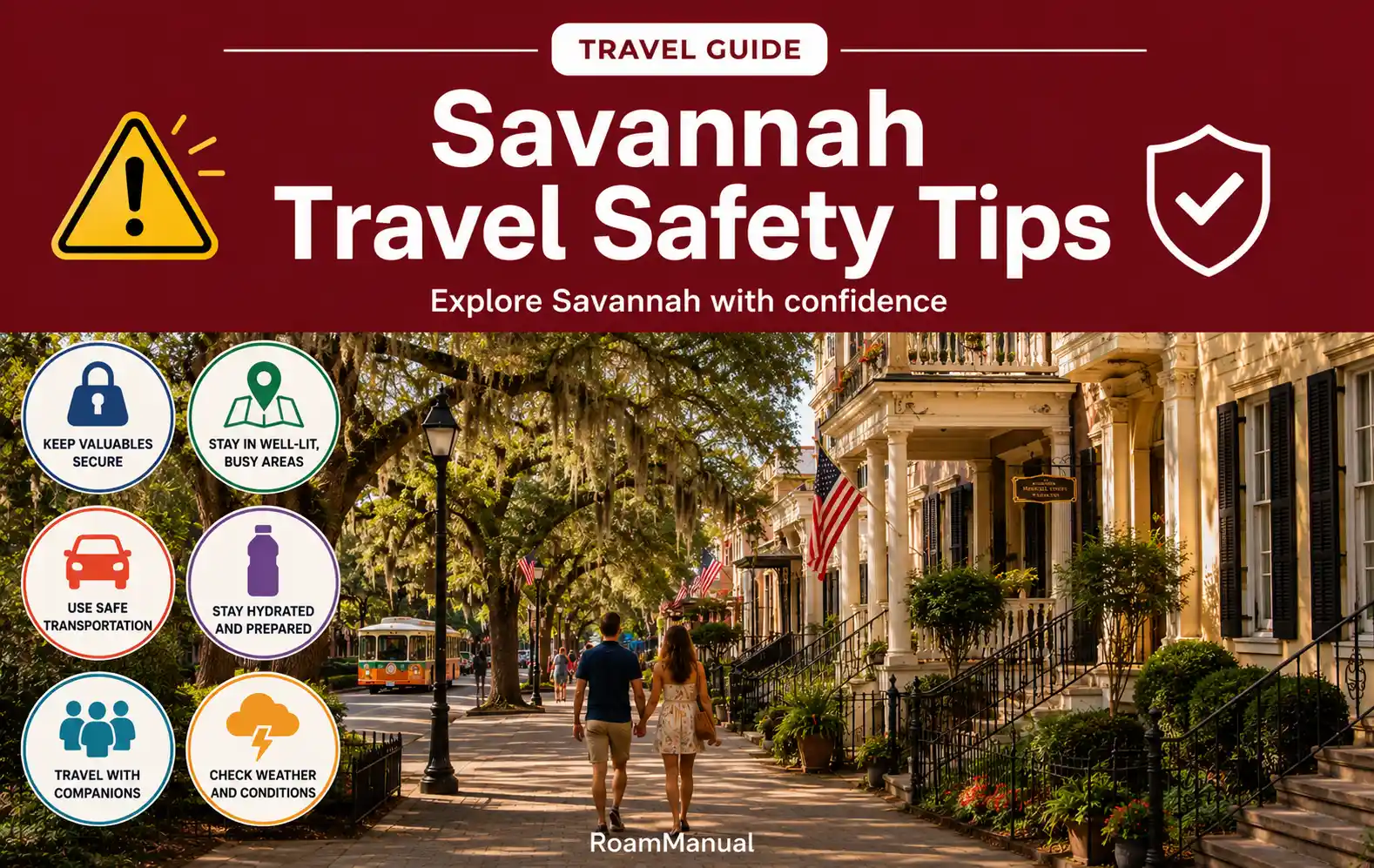
Savannah travel safety tips can help you explore Georgia’s oldest city with more confidence. Savannah is generally a safe destination for tourists, especially in the Historic District, River Street, City Market, and other popular visitor areas. Like any city, however, it has places where extra awareness is sensible. For the broader planning context, see our guide to is Savannah safe for tourists.
Most visitors enjoy Savannah without serious problems. The most practical concerns are often preventable issues, such as leaving valuables visible in a parked car, becoming dehydrated during hot weather, or walking through unfamiliar areas late at night.
RoamManual Tip
Savannah’s most common visitor concerns are often practical rather than dramatic. Secure your belongings, prepare for the weather, and plan how you will return to your hotel after an evening out.
This guide explains what visitors should realistically expect, where to use extra caution, and how to stay safe while traveling solo, with a partner, or as a family.
Quick Savannah Safety Snapshot
| Safety Factor | What Travelers Should Know |
|---|---|
| Overall tourist safety | Most visitors enjoy Savannah without incident when they use normal city precautions. |
| Petty theft | Protect your phone, wallet, luggage, and other valuables. |
| Daytime walking | The Historic District and central visitor areas are commonly explored on foot. |
| Walking after dark | Stay on busy, well-lit streets and use a rideshare when a route feels unfamiliar. |
| Families | Savannah is suitable for families, but parents should plan for traffic, crowds, heat, and uneven streets. |
| Solo travelers | Central visitor areas are manageable for solo visitors who follow normal urban safety habits. |
| Transportation | Walking and rideshare services are convenient, while drivers should pay close attention to parking and vehicle security. |
Is Savannah Safe to Visit?
Yes, Savannah is generally safe for visitors who stay in popular tourist areas, remain aware of their surroundings, and follow normal city precautions.
The Historic District, River Street, City Market, Broughton Street, and other central areas attract visitors throughout the day. Most travelers spend their trip exploring museums, restaurants, public squares, historic buildings, and the riverfront without experiencing a serious safety problem.
That does not mean every part of the city feels the same. Savannah is a living city with residential districts beyond the main visitor zone. Quieter streets can feel different after dark, particularly when you are unfamiliar with the area.
Choose accommodations in an established visitor area, plan evening routes in advance, and avoid wandering through unfamiliar neighborhoods late at night without a clear reason.
Before booking accommodation, use our guide to best areas to stay in Savannah.
Best Savannah Travel Safety Tips
Stay in Well-Populated Visitor Areas
First-time visitors will usually feel most comfortable in and around Savannah’s established tourism districts, including:
If this is your first visit, start with our first-time Savannah travel guide for the main planning decisions.
- The Historic District
- River Street
- City Market
- Broughton Street
- Forsyth Park during active daytime hours
These areas have regular visitor traffic, restaurants, hotels, attractions, and transportation options. They are also easier to navigate than unfamiliar residential streets.
Use More Awareness After Dark
Savannah has an active evening scene, and many visitors walk between restaurants, bars, hotels, and entertainment areas after sunset.
For a more comfortable evening:
- Stay on busy, well-lit streets.
- Walk with companions when possible.
- Avoid shortcuts through quiet or unfamiliar areas.
- Keep your phone accessible, but do not become distracted by it.
- Use a rideshare when the walk back to your hotel feels too long or unclear.
Visitors do not need to avoid going out at night. The goal is to make deliberate choices instead of assuming every route will feel equally comfortable.
Keep Valuables Secure
Petty theft and vehicle break-ins are often crimes of opportunity. A few simple habits can reduce the risk:
- Keep your phone and wallet secure.
- Do not leave bags unattended in restaurants or cafés.
- Lock your vehicle every time you leave it.
- Do not leave luggage, electronics, shopping bags, or other valuables visible inside a parked car.
- Use your hotel’s safe or secure storage when available.
Prepare for Heat and Humidity
Many visitors underestimate Savannah’s warm-weather conditions. High temperatures and humidity can make a normal sightseeing day more demanding than expected.
Carry water, wear lightweight clothing, use sunscreen, and take indoor breaks during the hottest part of the afternoon. If you begin to feel dizzy, weak, nauseated, or unusually tired, stop walking and move to a cooler place.
Wear Shoes Suitable for Uneven Streets
Savannah’s brick sidewalks, historic paving, steps, and cobblestone areas add character, but they can also create tripping hazards. Comfortable shoes with stable soles are usually a better choice than thin sandals or dress shoes for a full sightseeing day.
Choose Transportation Based on the Situation
Walking is often the easiest way to explore central Savannah during the day. A rideshare may be the better choice late at night, during heavy rain, in extreme heat, or when your destination is outside the main tourist zone.
Keep Your Phone Charged
Your phone may be needed for maps, weather alerts, rideshare services, hotel information, and emergency calls. Begin the day with a full charge and consider carrying a portable charger if you plan to spend many hours away from your accommodation.
Areas Where Savannah Visitors Should Be More Aware
Safety conditions can vary by time, crowd level, and the specific street you are using. The following overview is intended as practical planning guidance rather than a guarantee about any location.
| Area | Daytime | Evening | What Visitors Should Know |
|---|---|---|---|
| Historic District | Busy and popular | Generally active in central areas | Stay aware of traffic, uneven sidewalks, belongings, and quieter streets after dark. |
| River Street | Popular with visitors | Active nightlife area | Watch your footing, belongings, alcohol intake, and transportation plan. |
| City Market | Busy dining and shopping area | Regular evening activity | Remain aware in crowds and use a clear route back to your accommodation. |
| Forsyth Park | Popular for walking and relaxing | Quieter later at night | Visit during active hours and avoid isolated sections when the park is quiet. |
| Residential areas outside the tourist core | Conditions vary | Use extra awareness | Visitors generally have little reason to explore unfamiliar residential streets late at night. |
Savannah Safety Myths and Realities
| Myth | Reality |
|---|---|
| Savannah is too dangerous for tourists. | Most visitors enjoy the city without serious problems when they stay in well-traveled areas and use normal precautions. |
| You should not walk around downtown. | Walking is one of the main ways visitors explore the Historic District, particularly during the day and early evening. |
| Every Savannah neighborhood has the same safety profile. | Busy visitor districts and quieter residential areas can feel very different, especially after dark. |
| Crime is the only safety concern. | Heat, dehydration, traffic, uneven surfaces, storms, alcohol, and vehicle security may be more immediate concerns for many visitors. |
Daily Savannah Safety Checklist
Before leaving your hotel or vacation rental, check that you have:
- A fully charged phone
- Your accommodation address saved
- A water bottle
- Comfortable walking shoes
- Sunscreen or rain protection when needed
- Secured valuables
- Your hotel key and identification
- A transportation plan for the evening
- The latest weather forecast
Before an Evening Out
Decide how you will return before leaving your accommodation. A planned route or rideshare pickup is safer and less stressful than making the decision late at night after drinking or when streets are unfamiliar.
Savannah Safety Advice by Traveler Type
Solo Travelers
Savannah can work well for solo travelers because many central attractions are close together and guided tours are widely available.
Stay in or near the Historic District, tell a trusted person your general plans, and use a rideshare when returning late at night. Group walking tours can also provide a structured way to explore while meeting other visitors.
Solo Female Travelers
Many women visit Savannah independently. Central accommodation, well-lit evening routes, situational awareness, and reliable transportation can make the experience more comfortable.
- Avoid wearing noise-canceling headphones while walking alone after dark.
- Share your live location with a trusted contact during evening outings.
- Confirm the driver and vehicle before entering a rideshare.
- Trust your instincts and leave any situation that feels uncomfortable.
Families
Savannah offers parks, museums, tours, and public spaces suitable for families. Parents should pay close attention near traffic, steep steps, crowded sidewalks, and the riverfront.
Keep children close on River Street, carry extra water, and schedule indoor activities during the hottest part of summer afternoons.
Seniors and Travelers with Mobility Concerns
Uneven brick sidewalks, cobblestone surfaces, steps, heat, and longer walking distances can make sightseeing more difficult.
Wear stable shoes, take frequent breaks, use transportation between distant attractions, and confirm accessibility details before booking tours or riverfront activities.
Couples
Savannah is popular for weekend and romantic trips. Couples can enjoy evening walks and riverfront dining while still using normal urban precautions.
Stay on active streets after dinner, secure shopping bags before leaving a parked vehicle, and arrange transportation after late-night activities.
Transportation Safety in Savannah
Walking
Walking is one of the best ways to explore central Savannah. Use marked crossings, pay attention to traffic and tour vehicles, and avoid becoming distracted while looking at maps or taking photographs.
During warm weather, adjust your route to include shade, water, and indoor breaks.
Driving and Parking
Drivers should use official garages or established parking areas whenever practical. Read signs carefully, lock the vehicle, and remove all visible valuables.
For practical transport details, use our guide to where to park in Savannah.
Do not leave luggage in a parked car while sightseeing. When luggage cannot be checked into your accommodation, ask the hotel whether secure storage is available.
Rideshare Services
Rideshare services can be useful after evening events, during extreme heat, in heavy rain, or when traveling beyond the walkable center.
Before entering the vehicle:
- Confirm the driver’s name.
- Check the vehicle make, model, and license plate.
- Wait in a well-lit location.
- Share trip details with a trusted contact when traveling alone.
Public Transportation
Public transportation may be useful for some routes, though many tourists rely more heavily on walking, trolleys, or rideshare services.
For practical transport details, use our guide to getting around Savannah.
Plan the route before boarding, keep your belongings close, and confirm the operating schedule so you are not stranded after service ends.
Weather and Seasonal Safety
Summer Heat
Savannah’s heat and humidity can affect even travelers who are accustomed to warm weather. Begin outdoor sightseeing earlier in the day, drink water regularly, and schedule museums, shops, or meals during the hottest afternoon hours.
Thunderstorms and Heavy Rain
Warm-season storms may develop quickly. Check the forecast before long walking tours and move indoors when lightning is nearby. Avoid sheltering beneath isolated trees.
Heavy rain can also make brick, cobblestone, and metal surfaces slippery.
Hurricane Season
Atlantic hurricane season runs from June through November. A hurricane will not affect every trip during that period, but travelers should monitor forecasts, understand accommodation cancellation policies, and follow official instructions if severe weather threatens the area.
Travel insurance may be worth considering when prepaid arrangements would be expensive to replace.
Festivals and Major Events
Large celebrations, including Savannah’s St. Patrick’s Day events, can bring major crowds and transportation disruptions.
During busy events:
- Keep valuables secure.
- Choose a group meeting point.
- Book transportation early.
- Expect road closures and longer travel times.
- Stay aware of alcohol consumption.
Common Scams and Tourist Awareness
Savannah is not defined by widespread tourist scams, but visitors should still use the same payment and digital security habits they would in other popular destinations.
Public Wi-Fi
Avoid accessing banking or other sensitive accounts through unsecured public Wi-Fi. Use mobile data or a trusted connection when entering passwords or payment details.
ATMs and Payment Cards
Use ATMs inside banks or established businesses when possible. Shield your PIN and monitor your accounts for unfamiliar activity.
Contactless payment can reduce the need to hand a physical card to another person.
Street Solicitations
Visitors may occasionally encounter requests for money, unofficial tour offers, or persistent sales pitches. A polite but firm refusal is usually enough.
Book tours through established companies and verify meeting locations before paying.
QR Codes and Unfamiliar Links
Do not scan an unfamiliar QR code or enter payment information through a link unless you can verify that it belongs to a legitimate business, parking service, attraction, or restaurant.
Common Savannah Tourist Mistakes to Avoid
- Leaving valuables visible inside a parked vehicle
- Walking unfamiliar streets late at night without checking the route
- Underestimating summer heat and humidity
- Wearing unsuitable shoes on brick and cobblestone streets
- Starting a full sightseeing day with a low phone battery
- Drinking alcohol without arranging safe transportation
- Ignoring severe-weather forecasts
- Becoming distracted by a phone near traffic or crowded intersections
- Assuming every public square or park will remain busy late at night
The Most Useful Safety Rule
Stay aware without becoming fearful. Most visitors can enjoy Savannah confidently by choosing sensible routes, protecting their belongings, preparing for the weather, and changing plans when a situation does not feel right.
Emergency Information for Savannah Visitors
Call 911 for police, fire, or medical emergencies.
Before your trip, save the address and phone number of your accommodation. Visitors should also verify current non-emergency police, hospital, urgent care, and visitor assistance details through official local sources before publication or travel, because contact information and service availability can change.
| Resource | Purpose |
|---|---|
| 911 | Police, fire, or medical emergencies |
| Savannah Police non-emergency services | Non-urgent incidents and police assistance |
| Local hospitals and urgent care centers | Medical care based on the seriousness of the condition |
| Visitor information services | Maps, local guidance, and visitor assistance |
Frequently Asked Questions About Savannah Safety
Is Savannah safe at night?
Savannah’s central visitor districts are generally active at night, particularly around restaurants, hotels, River Street, and City Market. Stay on well-lit streets, avoid unfamiliar shortcuts, and use a rideshare when the route back to your accommodation feels uncertain.
Is River Street safe after dark?
River Street remains a popular dining and entertainment area after dark. Visitors should watch their belongings, use care on steps and uneven surfaces, manage alcohol responsibly, and plan a safe route back to their accommodation.
Is Savannah safe for solo female travelers?
Many solo female travelers visit Savannah comfortably. Central accommodations, well-lit routes, confirmed rideshare details, and sharing evening plans with a trusted contact can provide added confidence.
Are there areas tourists should avoid in Savannah?
Most visitors have little reason to explore unfamiliar residential areas late at night. Rather than relying on a fixed list, plan your route, remain in active visitor districts, and use transportation when an area feels isolated or unfamiliar.
Is it safe to walk around Savannah’s Historic District?
Yes. Walking is one of the main ways visitors explore the Historic District. Use marked crossings, pay attention to vehicles, wear stable shoes, and remain on active streets after dark.
Should visitors rent a car in Savannah?
A rental car is not essential for travelers staying in the Historic District and focusing on central attractions. It may be useful for airport transportation, coastal day trips, Tybee Island, or destinations outside the walkable center.
What is the biggest safety concern for Savannah visitors?
The answer depends on the traveler, but common practical concerns include heat, dehydration, vehicle break-ins, uneven walking surfaces, storms, alcohol-related decisions, and becoming disoriented after dark.
Final Thoughts on Savannah Travel Safety
Savannah is generally a safe and enjoyable destination for visitors who use normal city precautions. Stay in established visitor areas, secure your belongings, prepare for heat and storms, and choose transportation based on the time, distance, and surrounding activity.
Good preparation should reduce worry rather than increase it. With a charged phone, a clear route, comfortable shoes, and a little situational awareness, most travelers can focus on Savannah’s historic squares, architecture, restaurants, museums, and riverfront.
These Savannah travel safety tips are not about avoiding the city. They are about making thoughtful choices so you can explore it with greater confidence.
