



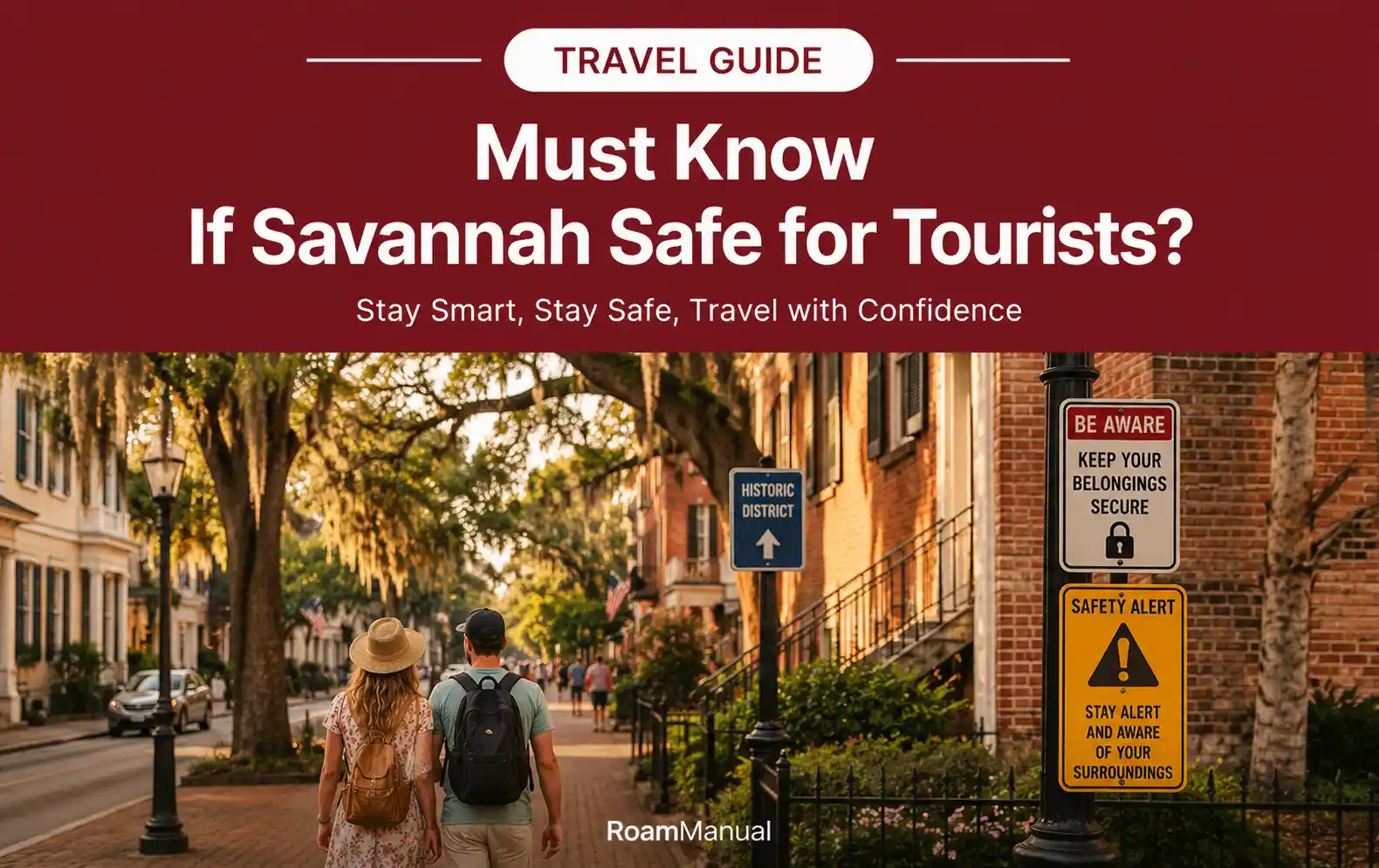
Yes, Savannah is generally safe for tourists. Most visitors have a comfortable experience when they stay in popular visitor areas, follow normal city precautions, protect their belongings, and plan their transportation after dark.
Planning your first trip to Savannah and wondering whether it is safe to visit? For most travelers, the answer is yes. Tourists regularly explore Savannah without experiencing serious problems, especially when they spend their time in the city’s main visitor districts and use the same practical precautions they would follow in any popular U.S. destination. If this is your first visit, our Savannah travel guide for first-time visitors covers the main decisions to make before you arrive.
Like many cities, Savannah has neighborhoods with different safety conditions. Most visitors, however, spend their trip exploring the Historic District, River Street, City Market, Forsyth Park, and nearby attractions. These areas are well traveled and generally comfortable during the day.
For practical visitor-safety advice, read our guide on Savannah travel safety tips.
The key is understanding where visitors normally go, how conditions may change after dark, and which simple precautions can make your trip more comfortable. This guide explains Savannah’s tourist safety, walking conditions, common risks, traveler-specific advice, and practical ways to explore with confidence.
Savannah Safety at a Glance
| Question | Answer |
|---|---|
| Is Savannah safe for tourists? | Yes. Most visitors enjoy a safe trip by following normal urban precautions. |
| Best areas for first-time visitors | Historic District, River Street, City Market, and Forsyth Park. |
| Is Savannah walkable? | Yes. Many major attractions are close together in the Historic District. |
| Can you visit without a car? | Yes. Walking and rideshare services work well for many visitors. |
| Main safety habit | Stay aware of your surroundings and plan nighttime transportation. |
Is Savannah Safe for Tourists?
Yes. Savannah is generally safe for tourists who stay in popular visitor areas and follow normal travel precautions.
For most travelers, Savannah is a comfortable destination known for its historic streets, public squares, restaurants, museums, waterfront views, and walkable attractions. The city has a strong tourism presence, and its central visitor districts are usually active with travelers, guided tours, local businesses, and hospitality staff.
One reason Savannah raises safety questions is that online searches often display citywide crime statistics. Those figures provide context, but they do not always reflect the places where tourists spend most of their time.
Citywide data can include residential, industrial, and commercial areas that typical visitors are unlikely to enter. Most tourists stay closer to the Historic District, River Street, City Market, Broughton Street, and Forsyth Park.
This does not mean visitors should ignore safety. Savannah is still an urban destination, and travelers should remain aware of their surroundings, keep belongings secure, and avoid unnecessary risks late at night. These are normal precautions that also apply in cities such as Charleston, New Orleans, and Nashville.
Understanding Safety in Savannah
Safety in Savannah depends largely on where you spend your time, when you explore, and how you travel around the city.
Many first-time visitors find mixed opinions when researching Savannah. That usually happens because people are describing different parts of the city or different experiences.
Some neighborhoods experience more crime than the historic center where tourists usually spend their time. As a result, a visitor staying near the Historic District may have a very different experience from what broad city statistics suggest.
Instead of asking whether every part of Savannah is equally safe, it is more useful to ask whether the places on your itinerary are comfortable for visitors.
For most travelers, the answer is yes. Hotels, restaurants, museums, shops, guided tours, and public squares create an active visitor environment throughout the central tourism districts.
These areas also remain active during much of the evening, especially near restaurants, entertainment venues, ghost tours, City Market, and River Street. Extra awareness is still useful after dark, particularly when streets become quieter.
Which Areas of Savannah Feel Safest for Visitors?
Most first-time visitors feel most comfortable in Savannah’s principal tourism districts, including the Historic District, River Street, City Market, and Forsyth Park.
| Area | Daytime | Evening | Best For | What to Know |
|---|---|---|---|---|
| Historic District | Excellent | Generally comfortable | First-time visitors | Main tourism area with historic sites, restaurants, hotels, squares, and walking routes. |
| River Street | Excellent | Busy and lively | Dining and nightlife | Popular waterfront area where visitors should watch their footing on cobblestones and steps. |
| City Market | Excellent | Active | Food and entertainment | Popular with visitors throughout the day and evening. |
| Forsyth Park | Excellent | Best during daylight | Walking and sightseeing | Ideal for daytime walks, photography, and relaxing outdoors. |
| Broughton Street | Excellent | Generally active | Shopping and dining | Central commercial street with shops, cafés, and regular pedestrian activity. |
These areas are established parts of Savannah’s visitor experience. You will usually find other travelers, tour groups, restaurant staff, hotel employees, and transportation options nearby.
For practical transport details, use our guide to Savannah airport to downtown.
Conditions can still change by block and time of day. If a street feels unusually quiet, poorly lit, or uncomfortable, return to a busier route or request a rideshare.
Is Savannah Safe to Walk Around?
Yes. Savannah is highly walkable in its central historic areas, particularly during the day.
Walking is one of the best ways to experience Savannah. The historic squares, architecture, restaurants, museums, and shops are relatively close together, allowing many visitors to explore without driving between each stop.
Walking During the Day
Daytime is when Savannah generally feels most relaxed and active. The Historic District is usually busy with tourists, walking tours, trolley stops, cafés, museums, and local businesses.
Popular daytime walking areas include:
- The Historic District
- River Street
- City Market
- Broughton Street
- Forsyth Park
- Jones Street and nearby historic squares
Keep an eye on your belongings and watch for uneven pavement, historic steps, brick sidewalks, and cobblestones. Comfortable shoes are useful because walking surfaces can be less even than modern sidewalks.
Is Savannah Safe at Night?
Yes, especially in busy visitor areas, but travelers should use additional awareness after dark.
Savannah has an active evening scene with restaurants, rooftop bars, ghost tours, live music, and waterfront dining. Many visitors consider the city’s nighttime atmosphere one of the highlights of their trip.
Use these practical habits after dark:
- Stay on busy, well-lit streets.
- Walk with companions when possible.
- Avoid unfamiliar or isolated residential streets.
- Keep your phone charged for navigation and transportation.
- Use a rideshare if the route feels too quiet or unfamiliar.
- Limit alcohol if you will be walking back to your accommodation.
You do not need to avoid Savannah after sunset. A little extra awareness and a clear transportation plan are usually enough to enjoy dinner, tours, and nightlife comfortably.
Is River Street Safe After Dark?
Yes. River Street remains one of Savannah’s busiest visitor destinations during the evening.
Restaurants, bars, live music venues, shops, and riverfront events keep the area active, especially on weekends and during major events.
Visitors should remember that River Street has its own practical hazards:
- Historic cobblestones can be uneven or slippery after rain.
- Steps and ramps connecting River Street with the upper level can be steep.
- Nightlife can become louder and more crowded later in the evening.
- Visitors who have been drinking should avoid walking long distances alone.
- A rideshare may be more comfortable when returning to accommodations outside the Historic District.
Using Uber and Lyft in Savannah
Rideshare services are useful when you do not want to walk back after dinner, an evening tour, or a night on River Street.
Consider using a rideshare when you are:
- Returning to your hotel late at night.
- Staying outside the Historic District.
- Traveling alone on an unfamiliar route.
- Carrying luggage or shopping bags.
- Traveling with children or older family members.
- Unsure whether a walking route remains active after dark.
Before entering the vehicle, confirm the driver’s name, vehicle model, and license plate in the app. Wait for pickup in a well-lit, visible location when possible.
Is Savannah Safe Without a Car?
Yes. Many first-time visitors can enjoy central Savannah without renting a car.
The Historic District is compact and walkable, and many restaurants, hotels, public squares, museums, and attractions are close together. Rideshares, trolley tours, and local transportation can fill the gaps when you do not want to walk.
For practical transport details, use our guide to how to get around Savannah.
Traveling without a rental car can also help you avoid parking challenges and the risk of leaving belongings inside a parked vehicle.
For practical transport details, use our guide to Savannah parking guide.
A car may still be useful for:
- Day trips outside central Savannah.
- Visiting Tybee Island or other nearby destinations.
- Travelers staying outside the central visitor districts.
- Families carrying substantial equipment or luggage.
- Travelers with mobility needs that make longer walks difficult.
For a short city-focused trip, many visitors will find walking and rideshares more convenient than driving.
Safety Advice for Different Types of Travelers
Savannah works well for many traveler types, but the most useful precautions depend on how you plan to explore.
Solo Travelers
Savannah is popular with solo travelers because its downtown is walkable, attractions are close together, and guided tours provide easy ways to explore with a group.
- Choose accommodations in a convenient, well-reviewed visitor area.
- Join walking, food, history, or ghost tours if you prefer company.
- Avoid isolated streets late at night.
- Share your itinerary with someone you trust.
- Keep your phone charged and carry a backup power bank.
Solo Female Travelers
Many solo female travelers visit Savannah comfortably by following normal urban travel precautions.
- Book accommodations in a central, well-reviewed area.
- Use rideshares when returning late at night.
- Avoid excessive alcohol if walking back alone.
- Stay aware when using headphones or looking at your phone.
- Trust your instincts and leave any situation that feels uncomfortable.
These are sensible habits for most city trips and are not unique to Savannah.
Families
Savannah is a family-friendly destination with parks, museums, trolley tours, historic attractions, and easy sightseeing options.
Families should:
- Keep children close in crowded visitor areas.
- Use extra caution near River Street steps and the waterfront.
- Watch for traffic when crossing streets around the Historic District.
- Plan hydration and rest breaks during hot weather.
- Choose transportation options that suit children’s ages and energy levels.
Couples
Couples can comfortably enjoy Savannah’s restaurants, public squares, riverfront, rooftop venues, and evening tours.
Walking together after dinner is common in the Historic District. Stay on active streets and request a rideshare if your accommodation is farther away or the route becomes quiet.
Seniors and Travelers With Limited Mobility
Savannah’s historic character is part of its appeal, but uneven brick sidewalks, cobblestones, steep steps, and summer heat can make exploration more tiring.
- Wear supportive walking shoes.
- Use trolley tours to reduce walking distances.
- Allow extra time around River Street’s steps and ramps.
- Plan breaks during warm afternoons.
- Use rideshares when a route is longer than expected.
Common Risks Visitors Should Know About
Most visitor concerns are manageable with basic preparation and awareness.
Vehicle Break-Ins
Do not leave luggage, electronics, shopping bags, or other valuables visible inside a parked vehicle. A rental car with bags in view can attract unnecessary attention.
Reduce the risk by:
- Moving luggage into your accommodation before sightseeing.
- Parking in well-lit garages or active areas.
- Locking your vehicle every time you leave it.
- Keeping the passenger area visibly empty.
- Avoiding the use of the trunk while people nearby can see what you are storing.
Crowded Areas and Events
River Street, City Market, festivals, holiday weekends, and major events can become crowded. Savannah’s St. Patrick’s Day celebrations are a notable example.
In busy areas:
- Keep wallets and phones in secure pockets or zipped bags.
- Do not hang a purse loosely over a restaurant chair.
- Keep children close.
- Choose a meeting point if your group becomes separated.
- Plan transportation before crowds begin leaving at the same time.
Alcohol and Nightlife
Savannah has a relaxed nightlife culture, and visitors may encounter people carrying permitted drinks in designated areas. Nightlife itself does not make the city unsafe, but alcohol can reduce awareness and make uneven streets more difficult to navigate.
- Know how you will return to your accommodation before drinking.
- Stay with your group.
- Watch your drink.
- Avoid walking long unfamiliar routes after bars close.
- Use a rideshare when needed.
Heat, Humidity, and Storms
Travel safety is not limited to crime. Savannah’s heat and humidity can affect visitors, especially from late spring through early fall.
Prepare for:
- High temperatures and humidity.
- Strong afternoon sun.
- Dehydration and heat exhaustion.
- Fast-moving thunderstorms.
- Hurricane-season weather from June through November.
Carry water, use sunscreen, take indoor breaks, and check weather alerts before committing to long outdoor walks or tours.
Practical Safety Checklist
Use this simple checklist during your Savannah trip:
- Stay in the main visitor areas if this is your first visit.
- Keep wallets, phones, and valuables secure.
- Lock your vehicle and leave the interior visibly empty.
- Walk on busy, well-lit streets after dark.
- Use a rideshare when a route feels quiet or unfamiliar.
- Confirm rideshare driver and vehicle details before entering.
- Wear comfortable shoes on brick and cobblestone streets.
- Carry water during hot weather.
- Check weather and emergency alerts.
- Keep your phone charged for maps and transportation.
Common Tourist Mistakes to Avoid
Many visitor problems result from small planning mistakes rather than serious safety incidents.
- Assuming every Savannah neighborhood offers the same visitor experience.
- Leaving luggage or electronics visible inside a rental car.
- Walking long unfamiliar routes late at night instead of using a rideshare.
- Drinking heavily before navigating cobblestones, steps, or unfamiliar streets.
- Underestimating summer heat and humidity.
- Wearing unsuitable shoes for historic walking surfaces.
- Ignoring weather forecasts before outdoor tours.
- Focusing on a phone or map without watching the surroundings.
- Waiting until late at night to decide how to return to the hotel.
Planning transportation, weather protection, and walking routes before leaving your accommodation can prevent many avoidable problems.
Should Safety Concerns Stop You From Visiting Savannah?
For most travelers, no. Savannah can be enjoyed safely with sensible planning and normal urban awareness.
Savannah is not a destination where visitors should ignore basic precautions. However, safety concerns alone do not normally justify canceling a trip.
Travelers who stay in established visitor areas, keep their belongings secure, choose sensible transportation after dark, and pay attention to weather conditions are well positioned to enjoy the city comfortably.
Visitors who feel anxious in urban environments may prefer accommodations in the heart of the Historic District, guided tours, daytime sightseeing, and rideshares for evening travel. Those choices can reduce uncertainty without limiting the experience.
The most useful approach is informed awareness rather than fear.
Frequently Asked Questions
Is Savannah safe at night?
Yes. Busy visitor areas such as the Historic District, City Market, and River Street remain popular in the evening. Stay on well-lit routes, avoid isolated streets, and use a rideshare when returning late.
Is Savannah safe for solo female travelers?
Many solo female travelers visit Savannah comfortably. Staying in a central area, remaining aware after dark, limiting alcohol, and using rideshares for late-night transportation can make the trip more comfortable.
Is downtown Savannah safe?
Downtown Savannah, particularly the Historic District where most attractions are concentrated, is generally comfortable for tourists who use normal city precautions.
Which areas should tourists avoid in Savannah?
Most tourists do not need to explore unfamiliar residential or industrial areas, especially late at night. Rather than relying on a fixed list of neighborhoods, stay near established visitor districts and reconsider any route that becomes quiet, poorly lit, or uncomfortable.
Before booking accommodation, use our guide to best area to stay in Savannah.
Is River Street safe after dark?
Yes. River Street remains active with restaurants, bars, entertainment, and visitors. Watch your footing on uneven surfaces, stay aware as nightlife becomes busier, and plan transportation if returning late.
Is Savannah safe for families?
Yes. Families regularly visit Savannah’s parks, museums, historic attractions, trolley tours, and public squares. Keep children close around traffic, crowds, steep steps, and the waterfront.
Is Savannah safe without a car?
Yes. Many visitors can explore central Savannah on foot and use rideshares or tours when needed. Staying near the Historic District makes a car-free visit easier.
Is Savannah safe during St. Patrick’s Day?
Savannah remains a popular destination during St. Patrick’s Day, but crowds, traffic, and nightlife increase significantly. Secure belongings, establish a meeting point, and arrange transportation ahead of time.
Is Savannah safe in summer?
Yes, but heat, humidity, thunderstorms, and hurricane-season weather require preparation. Carry water, plan breaks, and monitor forecasts and local alerts.
Is it safe to walk from River Street to Forsyth Park?
The route through the Historic District is commonly walked during the day, although it is longer than some visitors expect. Wear suitable shoes, carry water in warm weather, and use a rideshare after dark if you are tired or unfamiliar with the route.
Are there tourist scams in Savannah?
Savannah is not widely defined by tourist scams, but visitors should still protect personal belongings, confirm tour and transportation details, and avoid giving money or personal information when a situation feels suspicious.
Is Savannah safer than Charleston?
Both Savannah and Charleston are popular Southern destinations with heavily visited historic districts. Your experience depends more on the area, time of day, accommodation location, and personal precautions than on a simple citywide comparison.
Final Thoughts
Savannah is generally safe for tourists, especially those who stay in established visitor districts and use sensible city precautions. The Historic District, River Street, City Market, Forsyth Park, and nearby attractions give travelers plenty to explore in active, visitor-friendly surroundings.
The most important habits are simple: protect your belongings, leave parked vehicles empty, stay on well-lit streets after dark, plan your return transportation, prepare for the weather, and trust your instincts.
With those precautions in place, first-time visitors can confidently enjoy Savannah’s historic streets, public squares, restaurants, parks, tours, and waterfront atmosphere.
