



Last updated: October 1, 2026
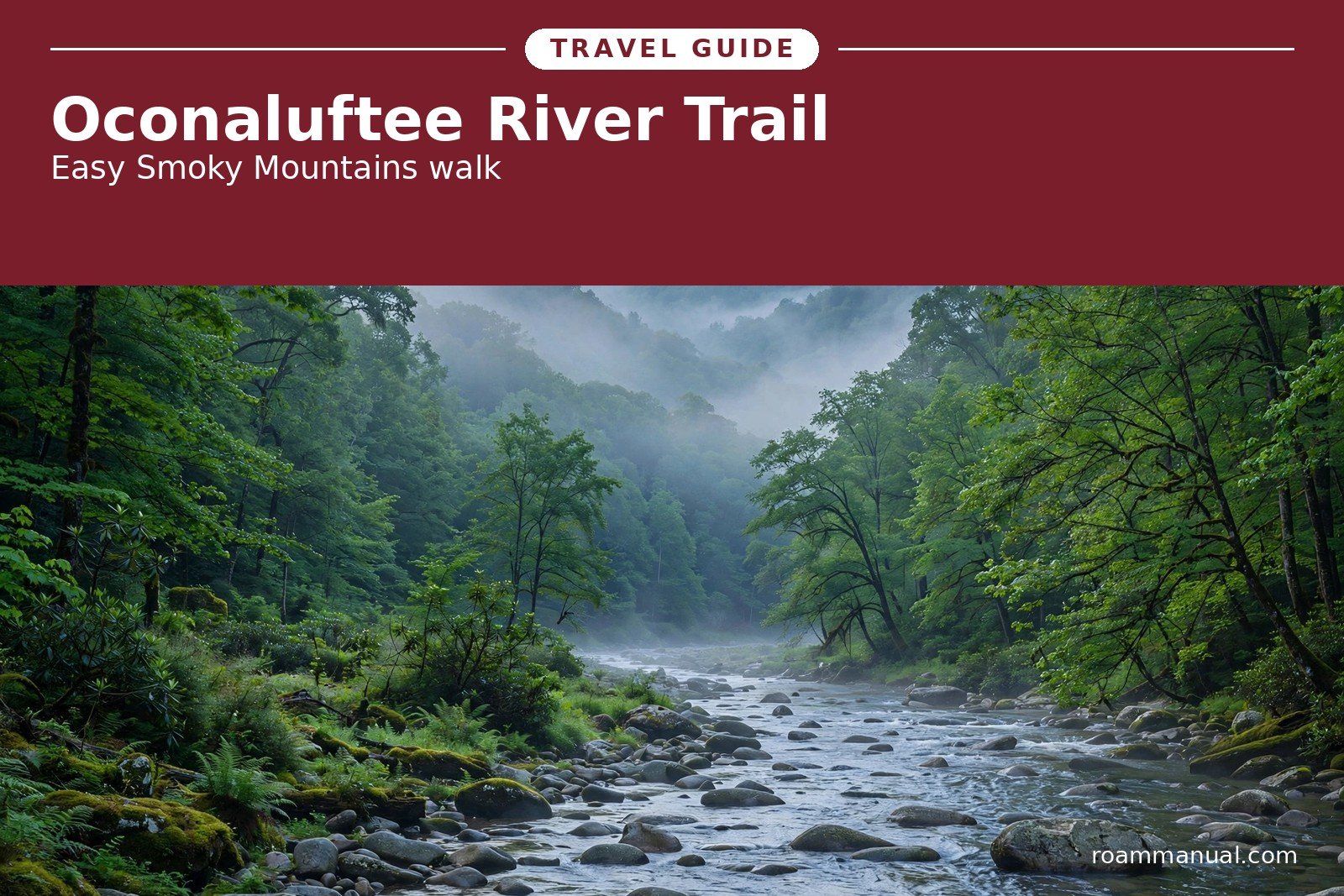
The Oconaluftee River Trail is one of the easiest and most rewarding walks in Great Smoky Mountains National Park. This flat, 3-mile roundtrip path follows the Oconaluftee River from the Oconaluftee Visitor Center to the edge of Cherokee, North Carolina.
It is also one of only two trails in the entire park where leashed dogs are welcome.
Wide gravel tread, riverside scenery, and frequent elk sightings make it a favorite for families, casual walkers, wheelchair users, and anyone who wants an easy mountain outing without a big climb.
Because the walk is short and flat, it works as a morning or afternoon break between other Smoky Mountains stops.
Many visitors pair it with the Mountain Farm Museum and Mingus Mill, both sitting within a short distance of the trailhead.
Quick Trail Facts
- Length: 3 miles (4.8 km) roundtrip, 1.5 miles each way
- Location: Oconaluftee Visitor Center near Cherokee, North Carolina
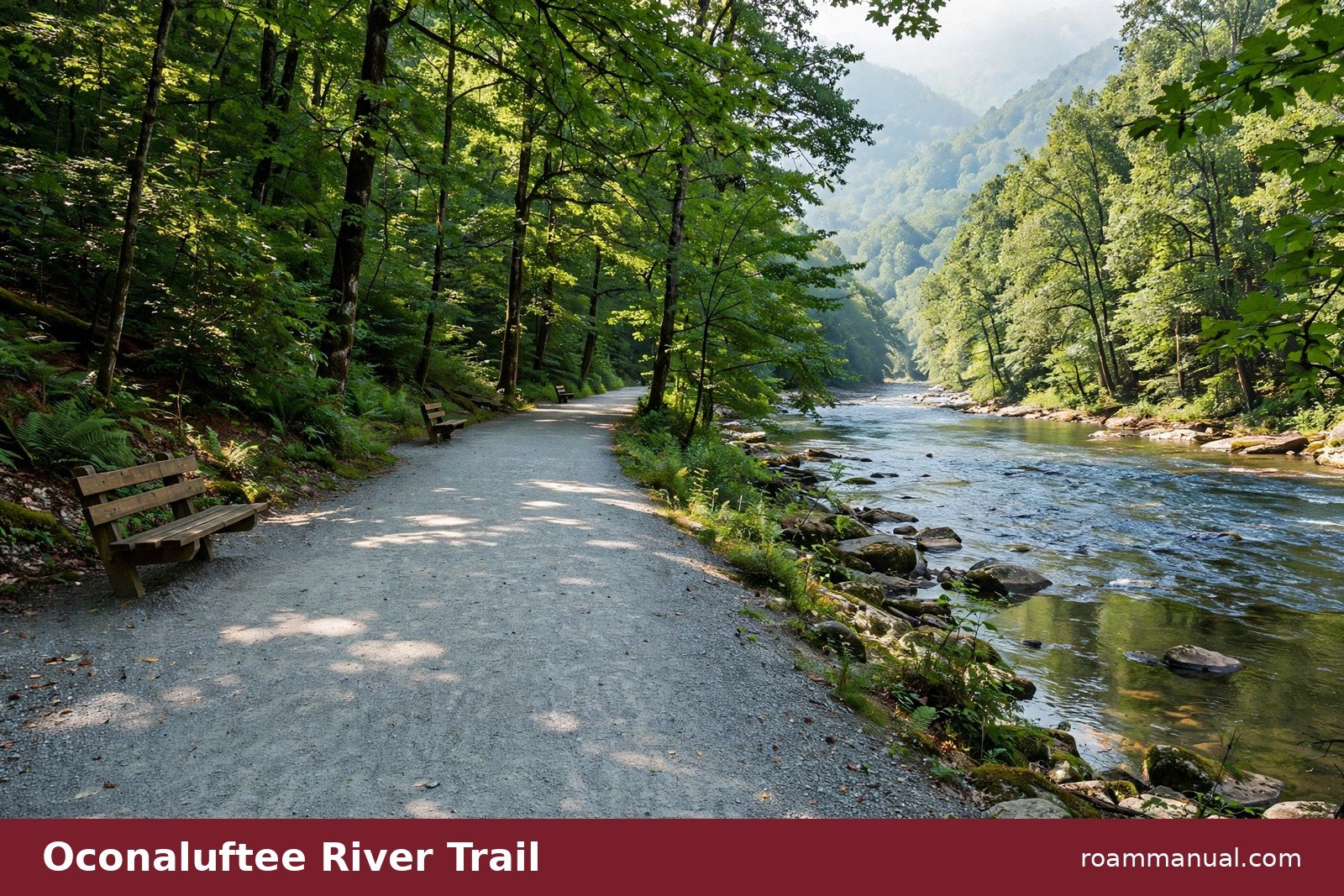
- Surface: Flat, wide gravel with some sections of larger gravel; occasional roots and rocks
- Difficulty: Easy and leisurely
- Pets and bikes: Yes, leashed dogs and bicycles are allowed
- Accessibility: Wheelchair and stroller friendly
- Parking: Oconaluftee Visitor Center lot; a parking tag is required
- Restrooms: At the Oconaluftee Visitor Center
Why the Oconaluftee River Trail Is Special
Most trails in Great Smoky Mountains National Park ban pets and bicycles. This trail allows both, which is rare.
Only the Oconaluftee River Trail and the Gatlinburg Trail on the Tennessee side permit dogs, so this is the only option for visitors entering from Cherokee who want to walk with their dog.
The grade is gentle and the tread is wide, so the trail suits people who use wheelchairs or push strollers.
Benches sit along the route for anyone who wants to rest and watch the water. Cyclists use it for an easy riverside ride.
Wildlife is the other big draw. The trail passes through elk habitat, and elk graze the low fields along the river almost every afternoon from spring through fall.
Wild turkeys, squirrels, and songbirds show up too. Because the path stays close to the river, the sound of moving water follows hikers the whole way.
Where the Trail Starts and Ends
Park at the Oconaluftee Visitor Center at 1194 Newfound Gap Road. Walk from the visitor center parking lot toward the Mountain Farm Museum, and you will find the trailhead behind the museum buildings.
Remember to display a parking tag on your vehicle.
The trail runs 1.5 miles to the park boundary at the edge of Cherokee. The path ends on Cherokee Tribal lands a short distance past the park line.
Footbridges across the river connect the Cherokee end of the trail to shops and restaurants, so walkers can combine the hike with lunch or sightseeing in town.
There are no restrooms or trash cans along the trail itself, so plan to carry out everything you carry in. Dog owners should bring their own waste bags, since bins are scarce past the visitor center area.
What You Will See Along the Way
The trail stays close to the Oconaluftee River the entire time. Clear water slides over smooth stones while low-elevation hardwood forest rises on both banks.
Several spots along the path give easy access to the riverbank for photos or a quiet break.
Interpretive signs in English and Cherokee explain the spiritual importance of the mountains, river, and trees to the Cherokee people. This valley once held a Cherokee village, and the signs add meaning to what would already be a pretty walk.
Benches appear at intervals along the path, giving walkers places to sit and listen to the water. Birdsong is constant here.
Wild turkeys strut through the open areas, squirrels work the forest floor, and lucky hikers have spotted river otters in the water.
The setting feels peaceful even on busy days, because the river noise drowns out most trail chatter.
Wildflowers line the trail in spring, and the canopy turns brilliant red, orange, and gold in fall.
Because the elevation is low, this trail is pleasant in early spring and late fall when higher trails may be cold or closed.
If riverside scenery has you wanting more water sights, the nearby Blue Ridge Parkway waterfalls make a great next stop on a Smoky Mountains trip.
Elk Watching Along the Trail
Elk are the stars of Oconaluftee. The herd that roams these meadows was reintroduced to the park, and the low fields near the visitor center are one of the most reliable places to see them in the wild.
Early morning and late afternoon are the best times to spot them in spring, summer, and fall.
Fall brings the mating season, called the rut. Bull elk bugle to attract females, and the animals are more active and visible.
Hearing a bugle echo across the valley at dawn is one of the great wildlife experiences in the Smokies.
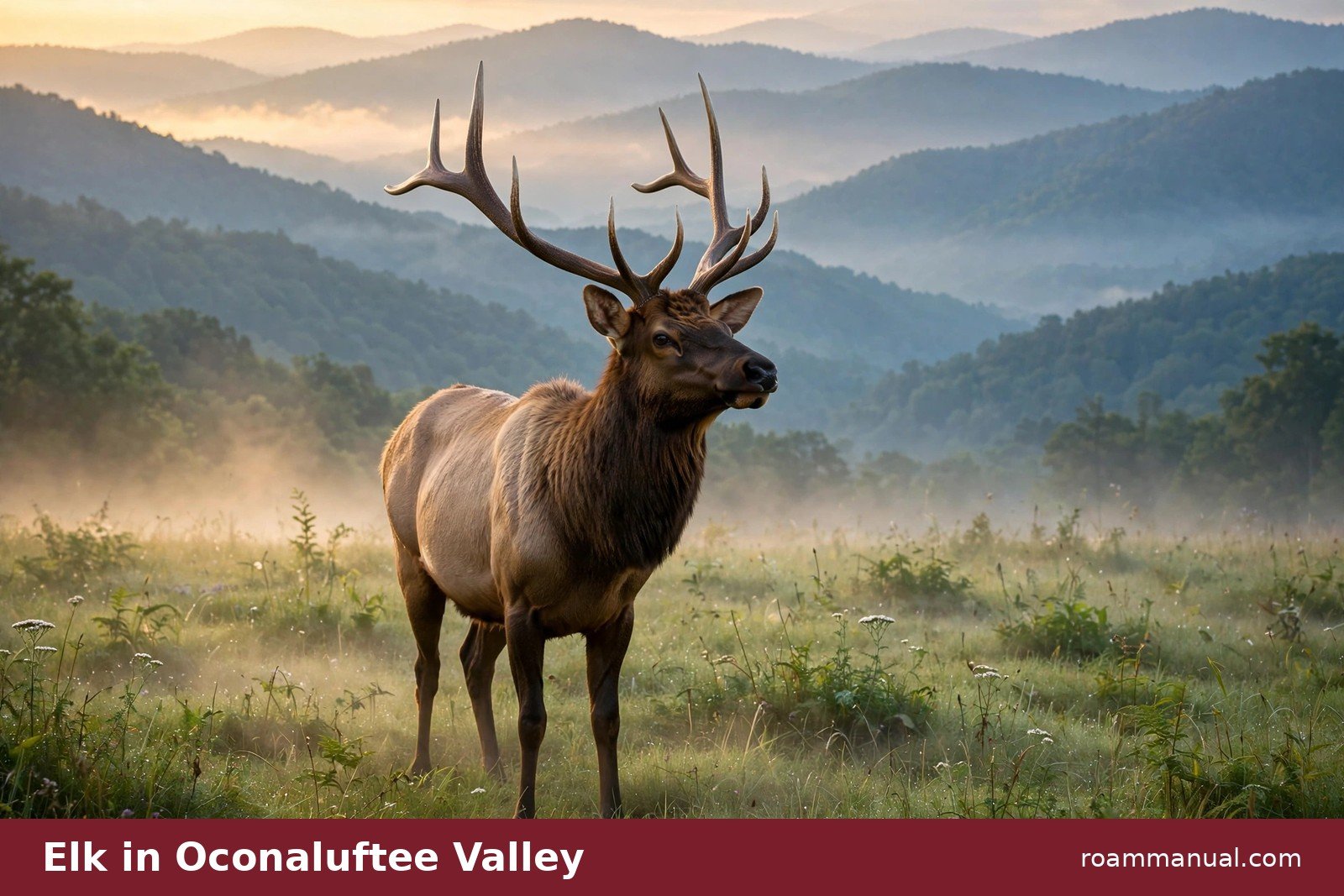
Safety comes first with these large animals. The National Park Service asks visitors to stay at least 50 yards from elk and all wildlife.
Elk seem calm around people, but they are wild and can charge. Keep dogs leashed and under control, and never try to get closer for a photo.
The Mountain Farm Museum at the Trailhead
Before you start walking, spend time at the Mountain Farm Museum. This collection of nineteenth-century log buildings sits right beside the trailhead and shows how Appalachian families lived in the 1800s and early 1900s.
The grounds include:
- A farmhouse
- A springhouse
- A blacksmith shop
- Corn cribs
- A meat-house
- A chicken house
The huge timber barn, with its roof of nearly 16,000 hand-split shingles, is the only building original to this site. The rest were moved here from other parts of the park.
Look closely at the farmhouse walls. The chestnut logs were split in half and placed in matching positions on opposite walls, so each pair of walls mirrors the other.
It is a small detail that shows the skill of the builders. The blacksmith shop still hosts demonstrations, and the apple house once stored fruit for cider, vinegar, and applesauce.
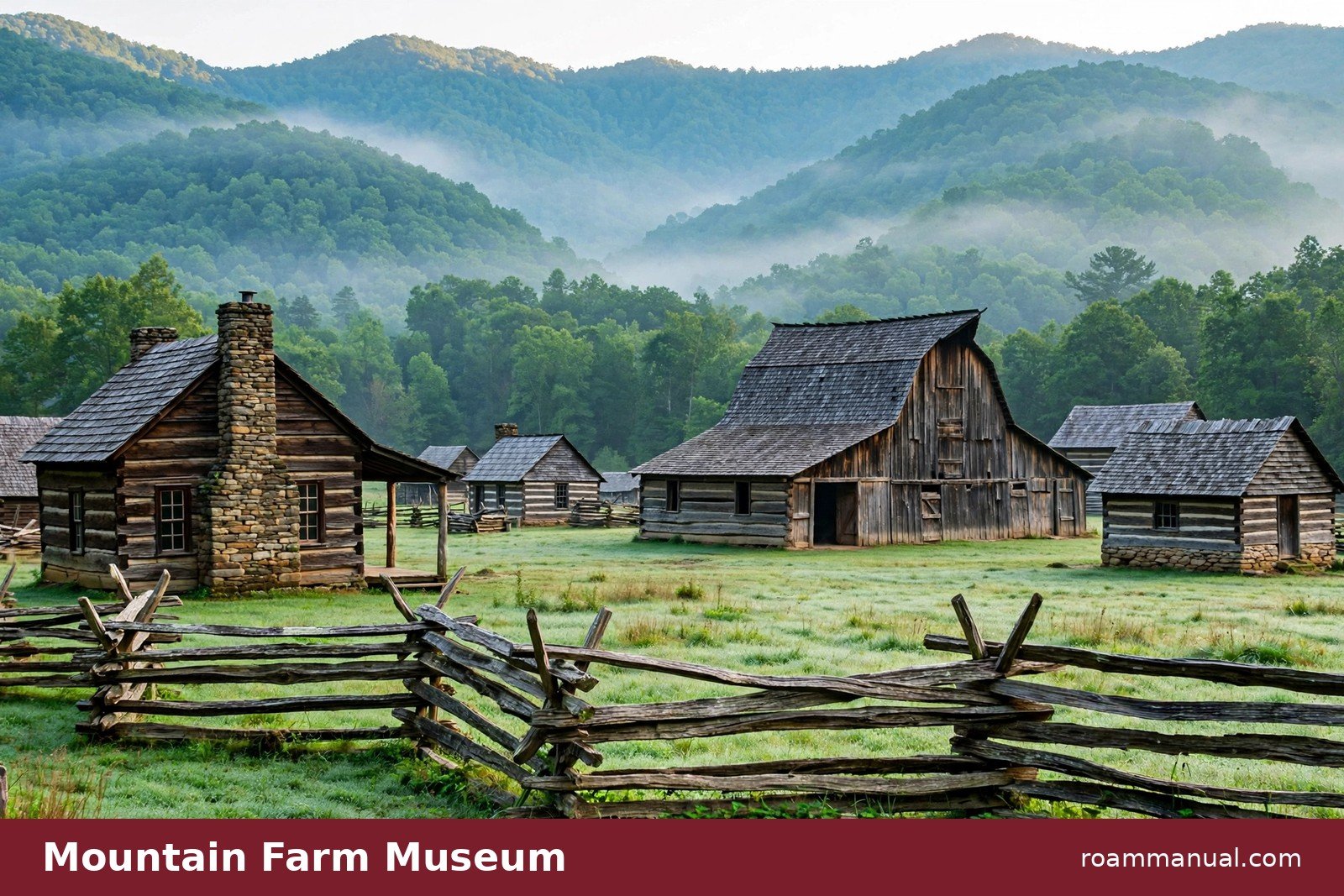
Staff and volunteers tend livestock and demonstrate old-time farming through much of the year.
On one Saturday in late September, the park holds the free Mountain Life Festival here, with sorghum molasses making, apple butter, lye soap, and bluegrass music.
Check the park schedule if your visit falls near that date.
Mingus Mill: A Worthy Side Stop
Just half a mile north of the visitor center sits Mingus Mill, one of two working mills in the park. Built in 1886, the mill uses a water-powered turbine instead of a traditional waterwheel to grind corn into cornmeal.
The mill is open for touring from mid-March through Thanksgiving weekend. When a volunteer miller is on duty, visitors can watch the gears turn and buy fresh stone-ground cornmeal to take home.
The short walk from the mill parking lot to the building follows a shaded, easy path along the creek.
Mingus Mill ground corn and wheat for local families for more than 50 years before the national park was formed.
A millrace channels water from the nearby stream to the turbine, and the walk along it makes a nice photo stop on its own.
Pair the trail, the museum, and the mill into one half-day outing. The three sites sit within a mile of each other, and together they cover nature, wildlife, and mountain history without much effort.
Key Takeaways for Your Visit
- The trail is 3 miles roundtrip, flat, and gravel, from the Oconaluftee Visitor Center to Cherokee.
- Leashed dogs and bicycles are allowed, a rare perk in this park.
- Elk graze the nearby meadows. Watch from at least 50 yards away.
- Start at the Mountain Farm Museum and add Mingus Mill, half a mile north, to your stop.
- Bring a parking tag, waste bags for dogs, and carry out all trash.
Tips for a Great Visit
Arrive early or late for the best elk viewing and the softest light on the river. Midday draws the biggest crowds at the visitor center, especially on fall weekends.
Early mornings in October can be chilly, so bring a layer even if the afternoon looks warm.
If you are driving up from Cherokee, the Oconaluftee Visitor Center sits on US 441, also called Newfound Gap Road, just north of town.
The same road climbs over the mountains to the Tennessee side, so the trail makes a natural first or last stop on a cross-park drive.
Dog owners should keep leashes short near the meadows. Elk can appear suddenly, and a lunging dog can turn a calm encounter into a dangerous one. The 50-yard rule applies to everyone, paws included.
Wear sturdy shoes rather than sandals. The gravel surface is mostly smooth, but a few sections have larger stones that can roll underfoot. A light daypack with water, snacks, and a trash bag covers everything the trail lacks, including bins.
Season by season:
- Spring: wildflowers and fewer crowds.
- Fall: peak foliage and the elk rut, but also the busiest parking lots.
- Winter: quiet and peaceful, with snow-dusted scenery on clear days.
The trail itself is open year-round, though Mingus Mill and some museum buildings close in winter.
Families do well here because the distance is short and the ground is level. Let kids burn energy on the path while you keep an eye on the meadows for elk.
Benches give grandparents a comfortable spot to wait and watch.
Keep Exploring the Smokies
The Oconaluftee River Trail fits neatly into a bigger Smoky Mountains itinerary. Many visitors pair it with a drive over Newfound Gap or a loop through the Blue Ridge Parkway.
Our Blue Ridge Parkway road trip guide lays out a 3-day plan with the best stops, mileage, and seasonal advice for the drive just south of the park.
If you are building a list of easy walks near Cherokee, the Oconaluftee River Trail should sit at the top. It delivers river views, history, and wildlife in one short, flat outing that almost anyone can enjoy.
FAQs
How long is the Oconaluftee River Trail?
The trail is 3 miles roundtrip, or 1.5 miles each way. It runs from the Oconaluftee Visitor Center to the park boundary at the edge of Cherokee, North Carolina.
Most walkers finish the out-and-back in one to two hours at a relaxed pace.
Are dogs allowed on the Oconaluftee River Trail?
Yes. The Oconaluftee River Trail is one of only two trails in Great Smoky Mountains National Park where dogs are allowed. Dogs must stay on a leash at all times.
Bring your own waste bags, since trash cans are scarce along the trail.
Can you see elk on the trail?
Yes. Elk graze the low meadows along the river and near the visitor center almost every afternoon from spring through fall. The best viewing times are early morning and late afternoon. Stay at least 50 yards away from all elk.
Is the trail wheelchair and stroller friendly?
The National Park Service describes the trail as relatively flat, wide, and graveled, with a grade that suits wheelchairs, strollers, and bicycles.
There are occasional roots, rocks, and sections of larger gravel, so some spots may need a bit of help or caution.
Where do I park for the Oconaluftee River Trail?
Park in the Oconaluftee Visitor Center lot at 1194 Newfound Gap Road near Cherokee. Walk toward the Mountain Farm Museum to find the trailhead. A parking tag must be displayed on your vehicle.
What is the Mountain Farm Museum?
The Mountain Farm Museum is a collection of nineteenth-century log buildings beside the trailhead that shows how Appalachian farm families lived.
It includes a farmhouse, barn, blacksmith shop, and other outbuildings. Staff demonstrate old-time farming skills through much of the year.
When is the best time to visit?
Spring brings wildflowers and active wildlife. Fall offers peak foliage and the elk rut, when bulls bugle in the mornings. Winter is quiet with few crowds. For elk, aim for early morning or late afternoon in spring, summer, or fall.
Are bicycles allowed on the trail?
Yes. Bicycles are permitted on the Oconaluftee River Trail, which makes it one of the few places in the park to ride. The flat, wide gravel surface suits casual riders of all ages.
