



Charleston sits on a harbor, not the open ocean. For real sand and surf, you cross a bridge to one of the barrier islands, and each one feels different.
This guide compares all six Charleston beaches, from lively Folly Beach to gated Seabrook Island. You will find drive times, parking costs, lifeguard info, dog rules, and the honest vibe of each shore.
Beach days pair well with city days, so keep our guide to things to do in Charleston handy for the rest of your trip.
Charleston beaches at a glance
- Folly Beach: about 25 minutes from downtown. Best for surfing, the pier, and a lively beach town scene.
- Sullivan’s Island: about 20 minutes from downtown. Best for quiet walks, wide sand, and a local feel.
- Isle of Palms: about 30 minutes from downtown. Best for families who want lifeguards, restrooms, and rentals.
- Kiawah Island (Beachwalker Park): about 45 minutes from downtown. Best for pristine sand and elbow room.
- Seabrook Island: about 45 minutes from downtown. Private and gated, so it suits owners and rental guests only.
- Edisto Beach: about 1 hour from downtown. Best for shelling, sunrises, and a slow, old-school pace.
Folly Beach
Folly Beach is the classic Charleston beach town. Six miles of sand wrap the island, and Center Street adds surf shops, seafood spots, and a low-key party energy.
It is the easiest beach to love on a first visit. The drive from downtown takes about 25 minutes, and everything you need sits within a few blocks of the sand.
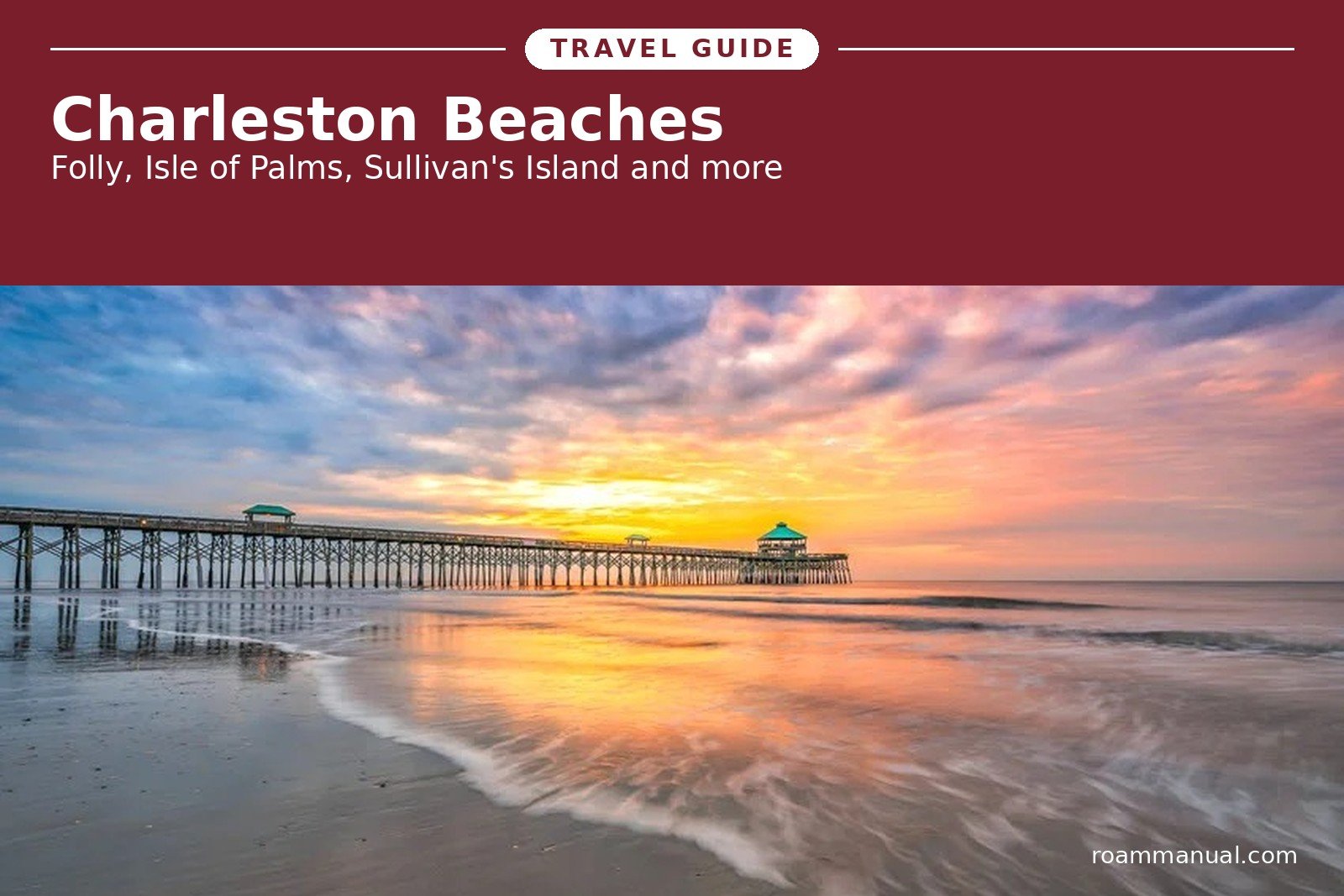
The centerpiece is the Edwin S. Taylor Folly Beach Fishing Pier. Here is what to know before you go:
- The pier stretches 1,049 feet into the Atlantic and reopened in late 2022 after a full rebuild.
- A daily fishing pass costs $7 for adults and $4 for kids 12 and under and seniors.
- Rod rentals run $15 per day, and the pier has a gift and tackle shop plus oceanfront dining.
- Swimming and surfing stay 200 feet away from the pier at all times.
Surfers head to the Washout, a stretch of beachbreak on the island’s east end. Hurricane Hugo reshaped this spot in 1989, and locals rate it among the best waves in South Carolina.
Good to know before you spread a towel:
- Lifeguards watch the county park beach and the zone from 2nd Street East to 3rd Street West, May through Labor Day.
- The city bans alcohol, glass, and smoking on the beach.
- Dogs stay off the beach from 10 a.m. to 6 p.m., May 1 through September 30. Leashed dogs are fine at other times, but never on the pier.
- From mid-May to mid-September, surfing is not allowed in the swimming zone from 10 a.m. to 6 p.m.
For the easiest parking, use Folly Beach County Park at the island’s quiet west end. It has restrooms, outdoor showers, picnic areas, a snack bar, and chair and umbrella rentals.
Parking there follows the county schedule in the box below. The park beach also feels calmer than the busy blocks near the pier.
Sullivan’s Island
Sullivan’s Island is the quiet achiever of the Charleston coast. It guards the north side of the harbor entrance, and its beach stays wide, flat, and uncrowded.
There is no boardwalk and no rental row. You get soft sand, gentle water, and a residential street grid named by station numbers, a nod to the old trolley stops.
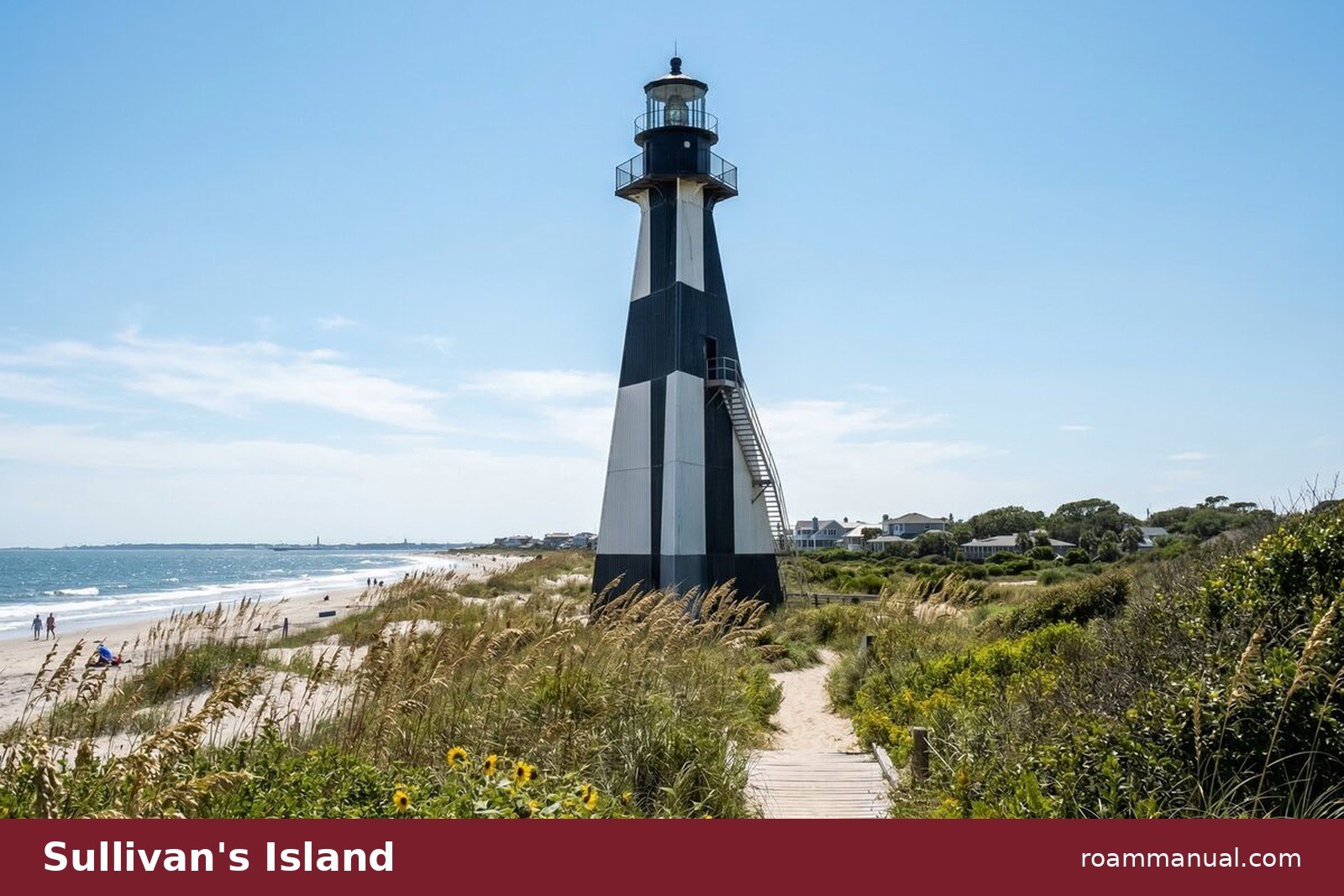
The island’s landmark is Charleston Light, the black and white lighthouse near Station 18.5. A few facts for your visit:
- The tower first lit in 1962 and stands 163 feet at its focal plane.
- Its triangular shape is rare. The design helps it stand up to hurricane winds.
- The tower is closed to visitors, but you can view it from the beach and the grounds.
Sullivan’s plays by strict rules, and the town enforces them:
- No lifeguards are on duty at any time. Everyone enters the water at their own risk.
- Alcohol is prohibited on the beach, boardwalks, and streets.
- Glass, plastic, and polystyrene containers are banned on the sand.
- Street parking is free in marked right-of-way areas, but all four tires must sit off the pavement.
- Beach activity stops at 11 p.m.
Dog owners face the island’s most unusual rule. Every dog, even a day visitor’s dog, needs a license from Town Hall before it can use the beach.
Licensed dogs get generous hours, though. In summer they run off leash from 5 a.m. to 10 a.m., stay off the beach until 6 p.m., then return on leash.
Facilities stay scarce here by design. Trash and recycling bins sit at the end of each beach path, and that is about it, so pack what you need.
When you get hungry, the small restaurant row on Middle Street sits a short walk from the sand. It keeps dinner easy after a slow beach day.
Isle of Palms
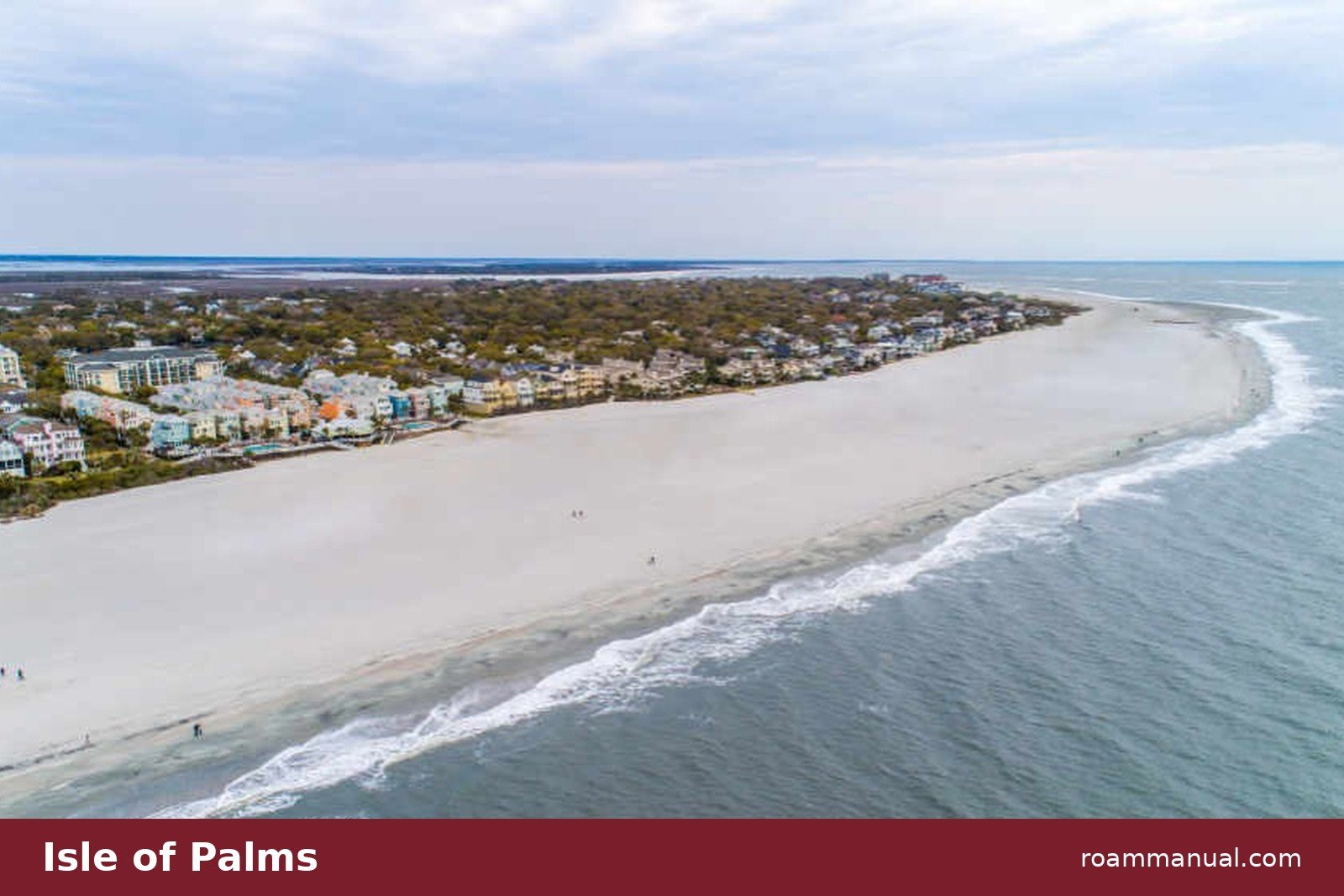
Isle of Palms is the polished, family-first beach of the group. Wide sand runs the length of the island, and the town keeps a tidy, resort feel.
Most day visitors aim for Isle of Palms County Park, right on 14th Avenue in the island’s commercial center. It packs in the most facilities of any Charleston beach.
Here is what the county park gives you:
- A designated swimming area with seasonal lifeguards.
- Restrooms, dressing areas, and outdoor showers.
- A playground, sand volleyball courts, and picnic areas with grills.
- A seasonal snack bar plus chair and umbrella rentals.
- Boardwalks and accessible ramps over the dunes.
Those lifeguards only cover the county park swim area. The rest of the island’s beach has no guards, so choose your spot with that in mind.
Rules here are simple and strict:
- Alcohol, smoking, and glass are banned on the beach.
- Dogs need a leash, except during set off-leash hours. From April 1 to September 14, that window runs 5 a.m. to 9 a.m.
- From September 15, dogs may run off leash from 4 p.m. to 10 a.m.
Parking is the main chore. The county park lot is the simplest choice for day trips, and the city also runs municipal lots and paid on-street parking near Ocean Boulevard.
Families rate this island highly, and it pairs well with the ideas in our roundup of things to do in Charleston with kids.
For a splurge, the Wild Dunes Resort anchors the island’s north end. Its beaches serve resort guests, and the marina on the Intracoastal side adds boat days to the mix.
Kiawah Island and Beachwalker Park
Kiawah Island holds ten miles of some of the finest sand on the East Coast. Most of it sits behind gates, reserved for residents and resort guests.
Day visitors get one door in: Kiawah Beachwalker Park, run by Charleston County Parks. It stands at the island’s west end, where the beach meets the Kiawah River.
The park earns its longer drive, about 45 minutes from downtown. What you get in return:
- A designated swimming area with seasonal lifeguards.
- Restrooms, dressing rooms, and outdoor showers.
- A picnic area with grills and a boardwalk through live oaks and palmettos.
- A seasonal snack bar and beach rentals.
- Space. Even in summer, the sand here rarely feels packed.
The sand at Kiawah is firm and flat at low tide. Plenty of visitors bike right along the waterline, which might be the prettiest ride in the Lowcountry.
A few planning notes matter here:
- The parking lot is modest. On summer weekends it can fill, so arrive early.
- The park charges the same per-vehicle parking schedule as the other county beach parks, shown below.
- Dogs must stay leashed in the park. The Town of Kiawah Island sets its own dog rules for the wider beach, so check posted signs.
- Alcohol is not allowed in the park’s beach area outside permitted events.
If you want Charleston’s most beautiful beach day and do not mind the drive, this is the one. Serious trip planners can fold it into our guide to day trips from Charleston.
Seabrook Island
Seabrook Island sits right beside Kiawah, and it draws a lot of search traffic. So let us be direct: this is a private, gated community, not a public beach.
There is no public parking lot and no day-use beach access. The gates check passes, and the beach serves property owners, club members, and their guests.
Renting a home on the island changes the picture:
- Rental guests enter with a gate pass arranged by their rental agency.
- An amenity card unlocks the Beach Club pools and beach access points.
- Without that card, club facilities stay off limits.
The reward for staying here is a calm, residential island with miles of quiet sand. It suits long stays and low-key weeks rather than quick beach days.
For everyone else, Beachwalker Park next door delivers a near-identical shoreline with none of the access hurdles. Keep Seabrook on your list only if a rental there tempts you.
Edisto Beach
Edisto Beach is the far shore, about an hour southwest of downtown. The extra drive buys you the most laid-back beach in this guide.
The anchor is Edisto Beach State Park, a 1,255-acre park where the forest meets the sea. Its 1.5-mile beach is famed for shelling, sunrises, and fossils.
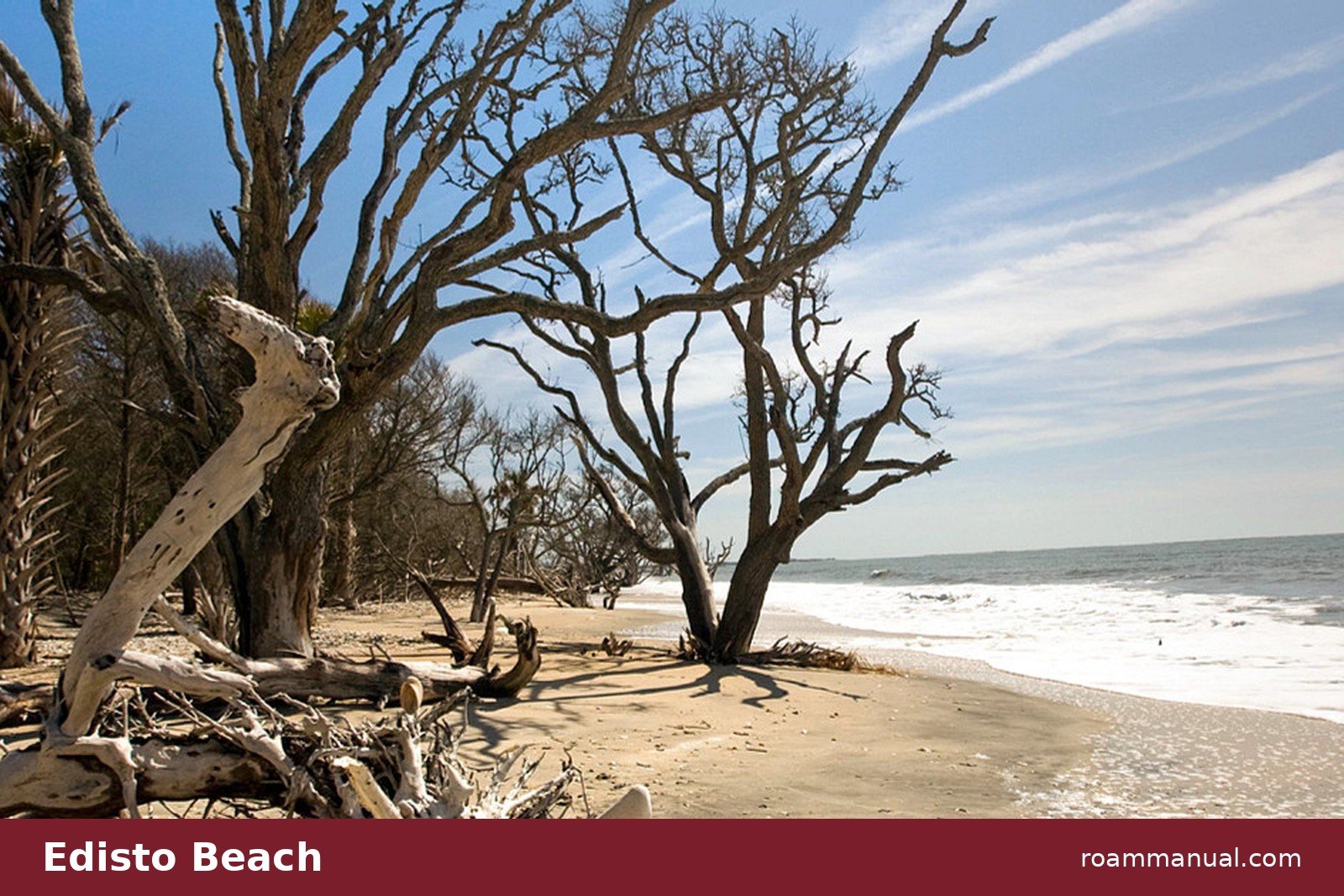
Park basics, straight from South Carolina State Parks:
- Admission costs $8 per adult, $5 for South Carolina seniors, and $4 for kids ages 6 to 15. Kids 5 and under enter free.
- The park opens 7 a.m. to 6 p.m., with hours extended to 8 p.m. during daylight saving time.
- Swimming is at your own risk. No lifeguards watch this water.
- Dogs are welcome in outdoor areas on a leash of six feet or less.
- The park also offers an oceanfront campground, picnic shelters, and trails through maritime forest and marsh.
Beyond the park, the Town of Edisto Beach runs a string of public access points along Palmetto Boulevard. Town rules ban glass containers and beach fires, and camping on the sand is not allowed.
Dog rules split by season on the town beach:
- From May 1 through October 31, dogs must stay on a leash.
- From November through April, dogs may go off leash if they stay under voice control.
That off-season freedom makes Edisto the most dog-friendly shore in this guide. It also makes a strong case in our Charleston family vacation guide for families who travel with a pet.
One caution: watch your footing near the rock groins along the town beach. The town warns of sharp drop-offs on both sides of them.
Loggerhead sea turtles nest here in summer. From May 1 through October 31, lights that shine on the beach must stay off after dark to protect them.
Which Charleston Beach Should You Pick?
Still torn? Match your crew and your mood to a shore:
- Parents with young kids: Isle of Palms County Park. Lifeguards, restrooms, a playground, and rentals remove most of the stress.
- Surfers: Folly Beach. The Washout is the region’s benchmark break, and 10th Street East offers a mellower option.
- Couples who want quiet: Sullivan’s Island on a weekday, or Beachwalker Park if you can spare the drive.
- Dog owners: Edisto Beach outside the summer leash season, or early mornings on Sullivan’s Island with a town license in hand.
- Nature lovers and shell hunters: Edisto Beach State Park at low tide, or the river end of Beachwalker Park.
- First-timers who want it all easy: Folly Beach. It is close, social, and simple to navigate.
Timing matters too. Shoulder seasons bring warm water and thinner crowds, and our guide to the best time to visit Charleston breaks down the trade-offs month by month.
Practical Tips for a Charleston Beach Day
A little planning prevents the classic beach day mistakes. Start with parking, since it shapes the whole trip.
County beach park parking, quick numbers
- The three county beach parks are Folly Beach County Park, Isle of Palms County Park, and Kiawah Beachwalker Park.
- Standard cars pay $5 to $15 per day most of the year. From May through Labor Day, weekends and holidays cost $25.
- January and February are the cheapest months at $5 per day.
- Walk-ins and bicyclists enter free. A Charleston County Parks Gold Pass covers parking all year.
- Chair rentals cost $15 per day, umbrellas $25, and a set of two chairs plus an umbrella $45.
More habits that pay off:
- Arrive early on summer weekends. County park lots and Folly’s paid lots can fill by late morning.
- Check the tide chart. Low tide leaves wide, firm sand for walks and bikes. High tide squeezes dry sand against the dunes.
- Swim near guards where they exist. The City of Folly Beach warns that strong rip currents are common, so use the lifeguarded zones there.
- Respect the dunes and turtles. Stay on boardwalks, fill in any holes you dig, and keep beach lights off at night during nesting season.
- Leave no trace. Items left on the sand after sunset count as abandoned at Folly and Edisto, and crews can remove them.
- Watch for stingers. Portuguese man o’ war sometimes wash up on South Carolina beaches. Do not touch one, even on the sand.
Deciding where to sleep changes which beach fits best. Our breakdown of where to stay in Charleston compares downtown hotels with beach town rentals.
And if you are still sketching the whole trip, start with our step-by-step planner for planning a trip to Charleston. Then pick your beach and go.
Charleston Beaches FAQ
What is the closest beach to downtown Charleston?
Sullivan’s Island and Folly Beach are the closest, at roughly 20 to 25 minutes by car. Sullivan’s feels quieter and more residential, while Folly adds a pier, surf scene, and more food and drink nearby.
Which Charleston beach is best for families?
Isle of Palms County Park is the top pick for most families. It offers seasonal lifeguards, restrooms, dressing areas, outdoor showers, a playground, and rentals in one spot, plus wide sand for kids to roam.
Can you drink alcohol on Charleston beaches?
No. Folly Beach, Isle of Palms, and Sullivan’s Island all ban alcohol on the beach, and the county beach parks ban it too outside permitted events. Save drinks for the bars and restaurants off the sand.
Are dogs allowed on Charleston beaches?
Yes, with rules that change by beach and season. Folly bans dogs midday in summer, Sullivan’s Island requires a town dog license, and Isle of Palms sets off-leash hours. Edisto Beach is the most relaxed outside its May to October leash season.
Which Charleston beaches have lifeguards?
The three county beach parks post seasonal lifeguards in set swimming areas. Folly also guards the pier-area zone from May through Labor Day. Sullivan’s Island has no lifeguards at any time, and Edisto Beach has none either.
Can the public visit Kiawah Island and Seabrook Island?
Kiawah, yes, through Beachwalker Park, the island’s only public beach access. Seabrook is different. It is fully gated, so its beach is limited to property owners, club members, and rental guests with amenity cards.
