



Last updated: October 1, 2026
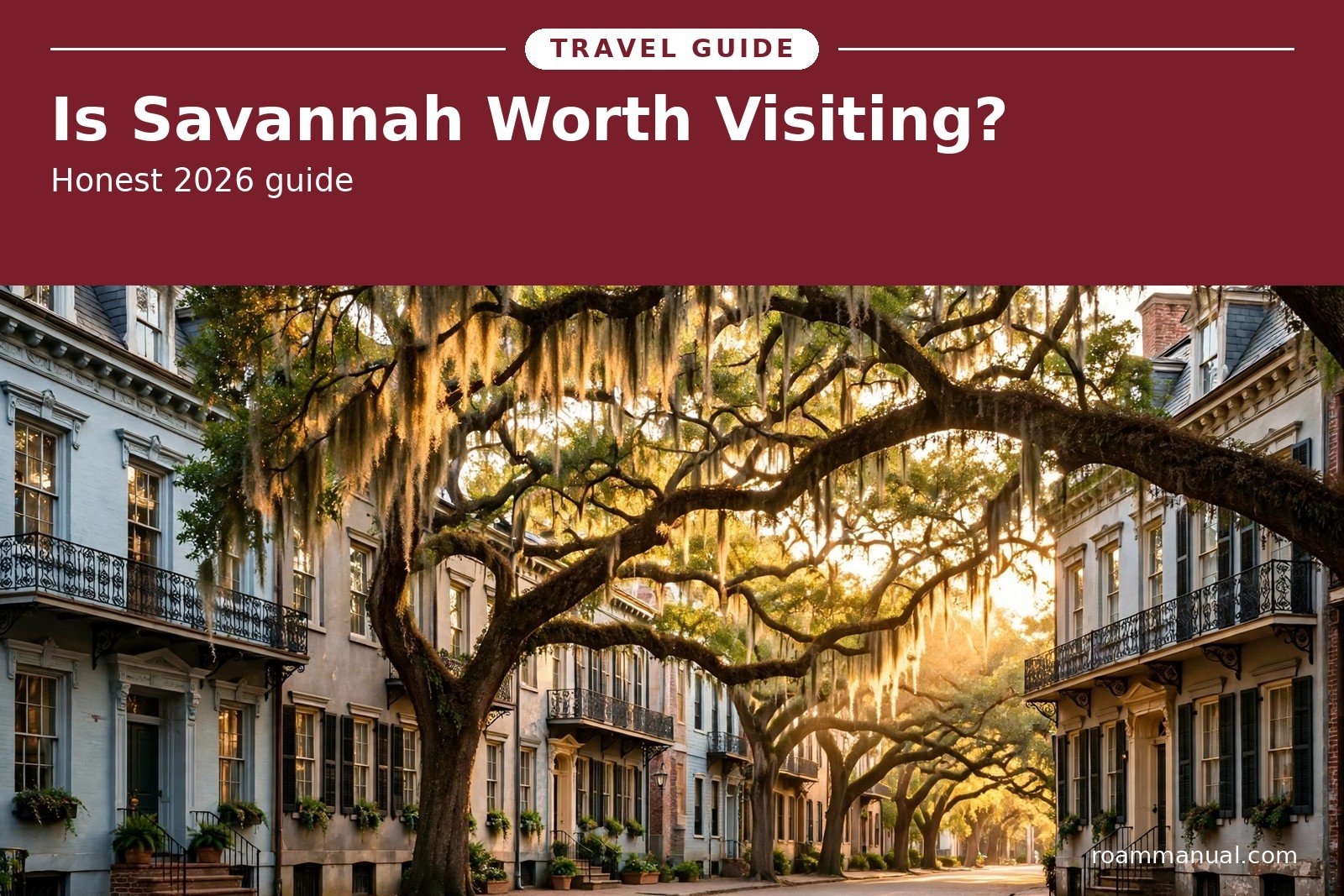
Savannah, Georgia looks like a movie set. Moss hangs from giant live oaks. Cobblestone streets wind past 22 leafy squares. Horse-drawn carriages clip past mansions that are older than the country itself.
But pretty pictures do not answer the real question: is Savannah worth visiting in 2026? The honest answer is yes, for most travelers, with a few caveats you should know before you book.
This guide gives you the real pros and cons, current costs, the best months to go, and who should skip it.
Is Savannah Worth Visiting? The Short Answer
- Verdict: Yes. Savannah earns a 2 to 3 day trip for most travelers.
- Best for: history lovers, foodies, couples, photographers, and slow-paced explorers.
- Best months: March to May and October to November for weather and crowds.
- Budget: mid-range. A casual restaurant meal runs about $20, and hotels cost far less in January, August, and December.
- Biggest catches: brutal summer heat, spring crowds, and property crime that calls for common sense.
Why Savannah Is Worth the Trip
Savannah is one of the oldest cities in America, founded in 1733.
Unlike many Southern cities, it was never burned during the Civil War, so its original street plan survives. That is why the downtown still feels like the 1800s in the best way.
1. The Historic District Is Genuinely Stunning
The Historic District covers 22 public squares connected by oak-lined streets. Each square has its own character: fountains, statues, benches, and shade. You can spend a full day just wandering from square to square, and it costs nothing.
This is one of the most walkable downtowns in the South. Most major sights sit within a compact area, and a free downtown shuttle helps when your feet give out. Few American cities make walking this pleasant.
2. Forsyth Park Lives Up to the Hype
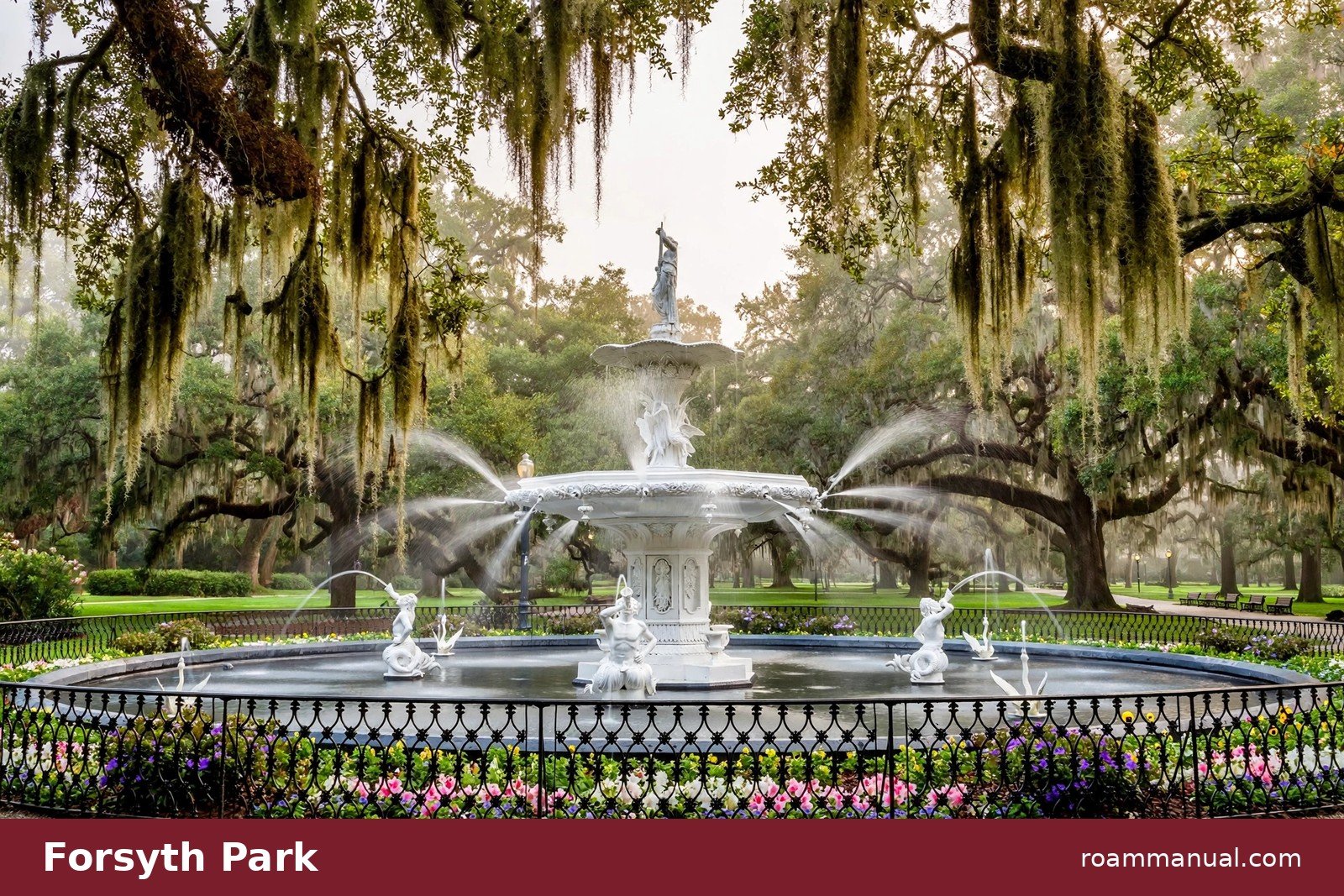
Forsyth Park is the green heart of the city. Its famous fountain, framed by towering oaks, is the most photographed spot in Savannah. Locals jog here, families picnic here, and on weekends the paths fill with a relaxed, friendly energy.
The park anchors the southern edge of the Historic District. It works as a morning stroll, a sunset stop, or a shady break between sights. If you only see one park in Savannah, make it this one.
3. The Food Scene Punches Above Its Weight
Savannah takes Southern cooking seriously. Shrimp and grits, fried chicken, she-crab soup, and Lowcountry boils show up on menus across the city. Praline shops on River Street hand out free samples that rarely fail to sell a box.
Prices stay reasonable for a tourist city. A meal at an inexpensive restaurant averages about $20, and a mid-range dinner for two runs around $60, based on July 2026 cost data.
You can eat very well here without a luxury budget.
4. River Street Has Real Character
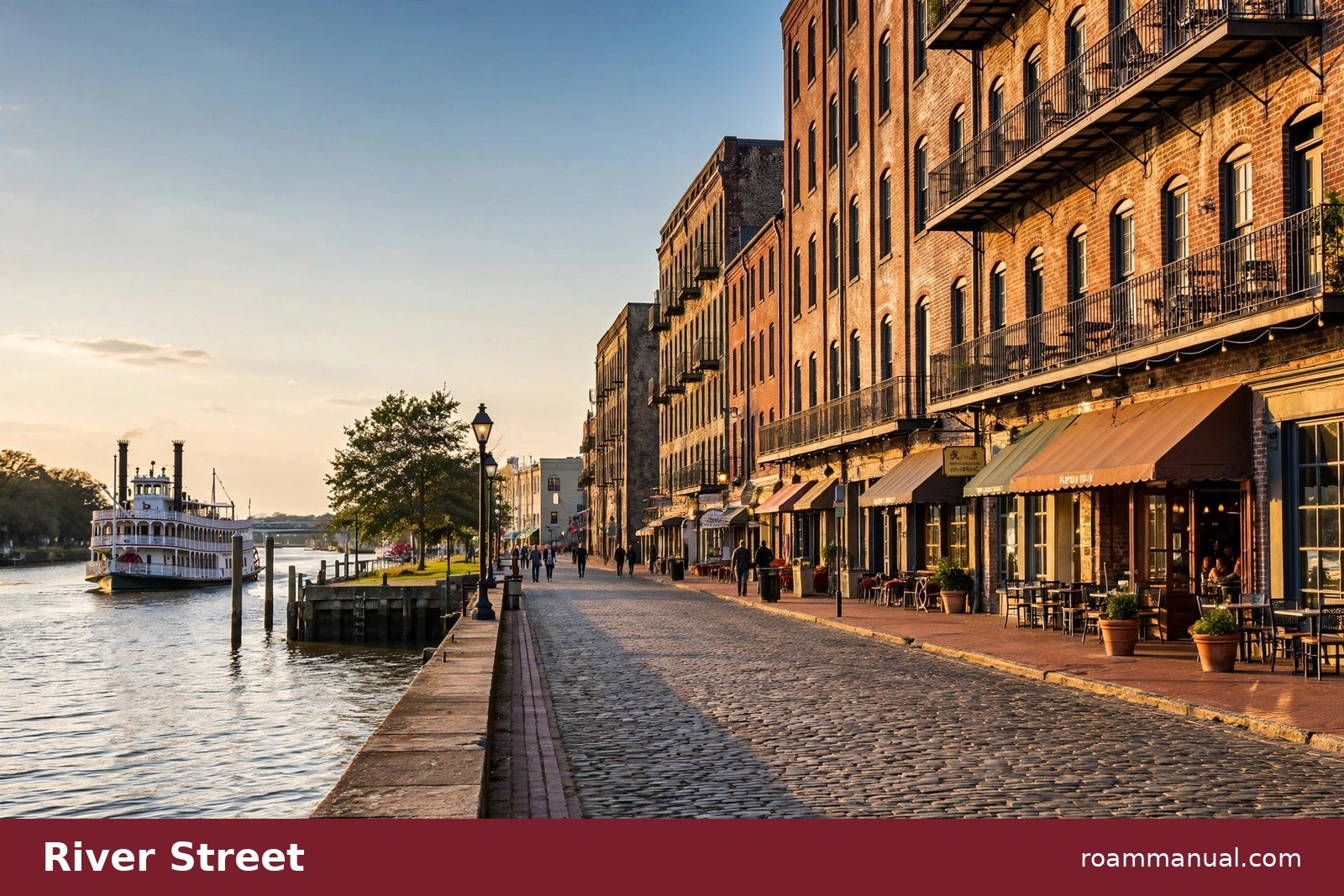
River Street runs along the Savannah River on old cobblestones, some of them original ballast stones from sailing ships.
Warehouses from the cotton era now hold restaurants, galleries, and candy shops. Massive container ships glide past, close enough to feel enormous.
Riverboat cruises leave from here, and the views across the water at sunset are excellent. It is touristy, yes, but it earns the visit. Go early in the morning for quiet photos or in the evening for the atmosphere.
To compare the riverboat cruises, trolley rides, and ghost tours on offer, see our guide to Savannah tours.
5. Bonaventure Cemetery Is Free and Unforgettable
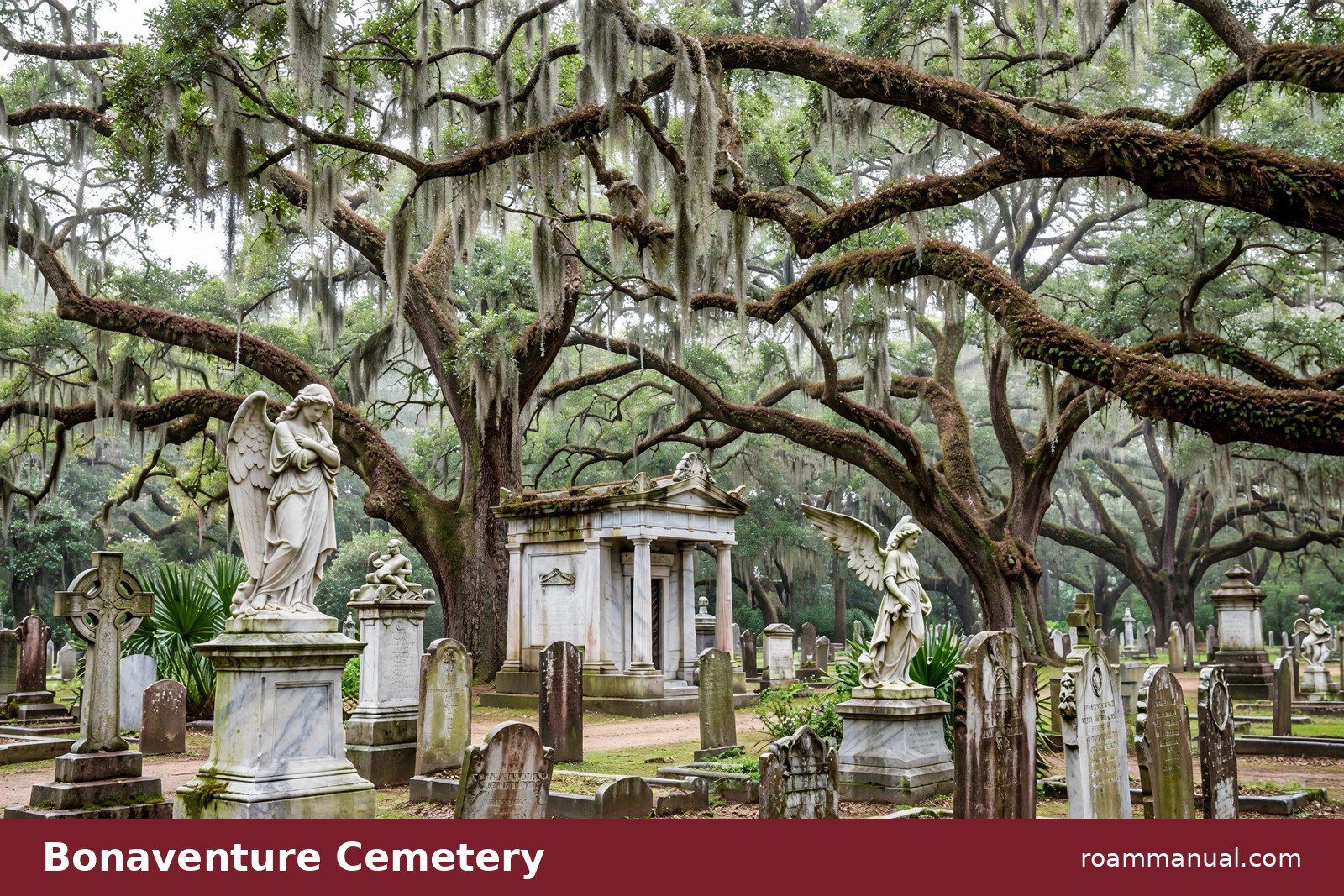
Bonaventure Cemetery sits on a bluff above the Wilmington River, about 15 minutes from downtown. Victorian angels, carved obelisks, and elaborate family plots rest under a canopy of moss-draped oaks. It is hauntingly beautiful, not creepy.
Admission is free, and the gates open daily from 8 a.m. to 5 p.m. Fans of the book Midnight in the Garden of Good and Evil will recognize the setting. Give it at least an hour, and wear walking shoes.
6. Wormsloe Is Worth the Short Drive
Wormsloe Historic Site protects the famous oak avenue you have seen in a thousand photos: a 1.5-mile corridor of live oaks dripping with Spanish moss. It sits about 20 minutes southeast of downtown, and admission runs about $12 for adults.
Beyond the avenue, you get tabby ruins from a colonial estate, nature trails, and a small museum. Go on a weekday morning for the fewest crowds and the best light through the trees.
7. The Beach Is 25 Minutes Away
Tybee Island sits just 25 minutes east of downtown Savannah. That means you can tour mansions in the morning and swim in the Atlantic in the afternoon. Few historic cities offer that combination.
Tybee itself is low-key: a lighthouse, a fishing pier, beach bars, and sea turtles nesting in summer. It makes an easy half-day or full-day escape when you want a break from sightseeing.
If you stay on Tybee instead of downtown, you get beach mornings and city afternoons. Many travelers split their trip: two nights in the Historic District, one night on the island.
8. The Ghost Tours Are Actually Fun
Savannah is often called one of the most haunted cities in America. Whether you believe in ghosts or not, the evening ghost tours are a fun way to see the old streets after dark.
Guides mix real history with local legends, and the candlelit squares look completely different at night.
Even skeptics enjoy it. The tours run most nights from the Historic District, and they are an easy add to a 2-day itinerary. Book an earlier time slot if you want smaller groups.
The Honest Downsides
No city is perfect, and Savannah has real drawbacks. Here is what the brochures skip.
Summer Heat Is Brutal
From June through August, Savannah is hot, humid, and sticky. Highs sit in the 90s with humidity that soaks a shirt in minutes. Afternoon thunderstorms are common.
If you visit in summer, plan outdoor sights for early morning and expect to retreat to air conditioning midday.
Spring Brings Big Crowds
March and April are the most crowded months, along with July. Hotel prices peak in spring, and the best Historic District properties sell out fast.
Booking data shows October trips get booked about 33 days ahead, so spring needs even earlier planning.
Property Crime Needs Common Sense
Here is the honest safety picture. The Historic District and River Street are heavily patrolled and considered safe for tourists.
Violent crime in Savannah runs above the national average, and property crime runs higher still. Car break-ins are the most common problem.
The practical rules are simple:
- Lock your car and leave nothing visible inside.
- Stay in well-lit tourist areas after dark.
- Use a rideshare instead of walking alone late at night.
In September 2026, a late-night shooting downtown made headlines, a reminder that the tourist bubble has edges. Stick to the main corridors and you will be fine.
Parking and Pests
Parking in the Historic District can be expensive and hard to find, especially on weekends. If your hotel offers parking, take it.
Also know that mosquitoes and tiny biting gnats thrive in the Lowcountry, particularly near water at dusk. Pack repellent.
Best Time to Visit Savannah
March through May is the sweet spot: highs in the 70s, lower humidity, and everything in bloom. October and November are the strong runner-up, with warm days and thinner crowds.
January, February, and September are the least crowded months, and hotel rates drop in January, August, and December, running about 31 percent below peak, according to Expedia booking data updated in July 2026.
Summer brings the lowest prices but the worst weather. For most travelers, spring or fall wins.
How Much a Savannah Trip Costs
Savannah is a mid-range destination, cheaper than Charleston by most measures. Food costs from July 2026 data:
- Casual restaurant meal: about $20
- Fast food: about $12
- Mid-range dinner for two: about $60
- Draft beer: about $6
Hotels vary widely by season. Spring is the priciest, while January, August, and December offer the best deals.
Staying just outside the Historic District, or visiting midweek instead of Saturday, cuts the bill further. Many of the best sights, the squares, Forsyth Park, Bonaventure Cemetery, and Tybee Island beach, cost nothing at all.
Where to Stay in Savannah
The Historic District is the best base for first-timers. You can walk to nearly everything, and the atmosphere at night is part of the experience. Expect the highest rates here.
The Victorian District, just south of the Historic District, offers cheaper inns and B&Bs in a quieter, residential setting. It is still walkable to the sights.
Budget travelers can also look at Midtown or the airport corridor, but you will need a car or rideshares. If the beach is your priority, stay on Tybee Island and day-trip into the city.
Getting to Savannah and Getting Around
Most visitors fly into Savannah/Hilton Head International Airport (SAV), about 20 minutes from downtown. Rideshares and shuttles cover the airport run.
Drivers can reach Savannah in about 4 hours from Atlanta and 2 hours from Charleston, which makes it an easy add to a Southeast road trip.
Once downtown, you barely need a car. The Historic District is flat and walkable, and a free downtown shuttle loops through the main areas. Save the car for day trips to Wormsloe, Bonaventure, and Tybee Island, where parking is easy.
Best Day Trips from Savannah
Tybee Island is the easiest day trip at 25 minutes each way: beach, lighthouse, and fresh seafood. Wormsloe takes half a day and pairs well with a drive through the marshes.
Hilton Head Island, South Carolina, makes a popular beach and golf day trip across the state line.
Beaufort, South Carolina, is a smaller, quieter historic town worth the drive for travelers who want Savannah’s vibe without the crowds. Both are easy drives from downtown.
Who Should Skip Savannah
Savannah is not for everyone. If you hate heat and humidity, avoid summer entirely or pick another destination.
Nightlife seekers will find bars and live music, but not a big-city club scene. Beach purists may prefer to stay on Tybee or Hilton Head rather than in the city.
Travelers who want mountains, hiking, or theme parks should look elsewhere. And if you are choosing between Savannah and its famous rival, our Charleston vs Savannah comparison breaks down which city fits your trip better.
Is Savannah Worth Visiting? FAQs
How many days do you need in Savannah?
Two to three days is ideal. That covers the Historic District, Forsyth Park, River Street, Bonaventure Cemetery, and a half-day trip to Wormsloe or Tybee Island. One day feels rushed; four days lets you slow down and add day trips.
Is Savannah walkable?
Yes, very. The Historic District’s squares, restaurants, and main sights sit close together on flat streets. A free downtown shuttle covers the gaps. You only need a car for Wormsloe, Bonaventure, and Tybee Island.
Is Savannah safe for tourists?
The main tourist areas are heavily patrolled and safe with normal precautions. Property crime, especially car break-ins, is the biggest risk, so lock up and hide valuables. Avoid unfamiliar neighborhoods late at night and use rideshares after dark.
What is the best month to visit Savannah?
April and May offer the best balance of weather, blooms, and manageable crowds, though prices peak. October is the best-value pick: warm days, fewer tourists, and lower hotel rates.
Is Savannah expensive to visit?
It is mid-range. Casual meals run about $20, and many top sights are free. Hotels are the biggest variable: spring costs the most, while January, August, and December run about 31 percent cheaper.
Is Savannah or Charleston better?
Both are worth visiting, but they differ. Savannah is more affordable, more walkable, and quirkier; Charleston is more polished with a stronger fine-dining scene. Our Charleston vs Savannah comparison covers costs, sights, and crowds in detail.
So, is Savannah worth visiting? For history lovers, foodies, couples, and anyone who likes their cities walkable and atmospheric, the answer is a clear yes.
Go in spring or fall, stay in or near the Historic District, lock your car, and give it at least two full days.
Book spring hotels early, pack mosquito repellent, and leave room in your schedule for unplanned wandering. Savannah rewards travelers who slow down, and that is exactly the point.
